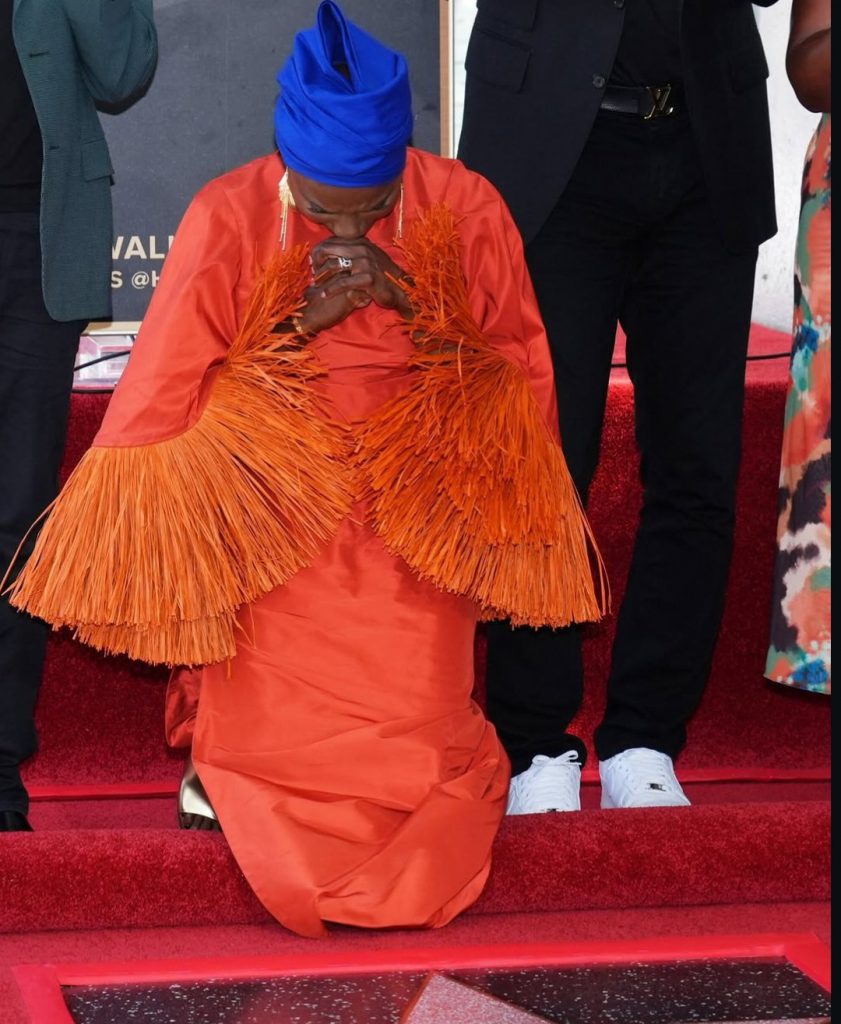
Beninese music icon Angélique Kidjo has become the first Black African artist to receive a star on the Hollywood Walk of Fame, adding one of the entertainment industry’s most recognisable honours to a career spanning more than four decades. The five-time Grammy winner’s Hollywood recognition marks a landmark moment for African music while reflecting more than four decades of cultural influence, global collaboration and advocacy.
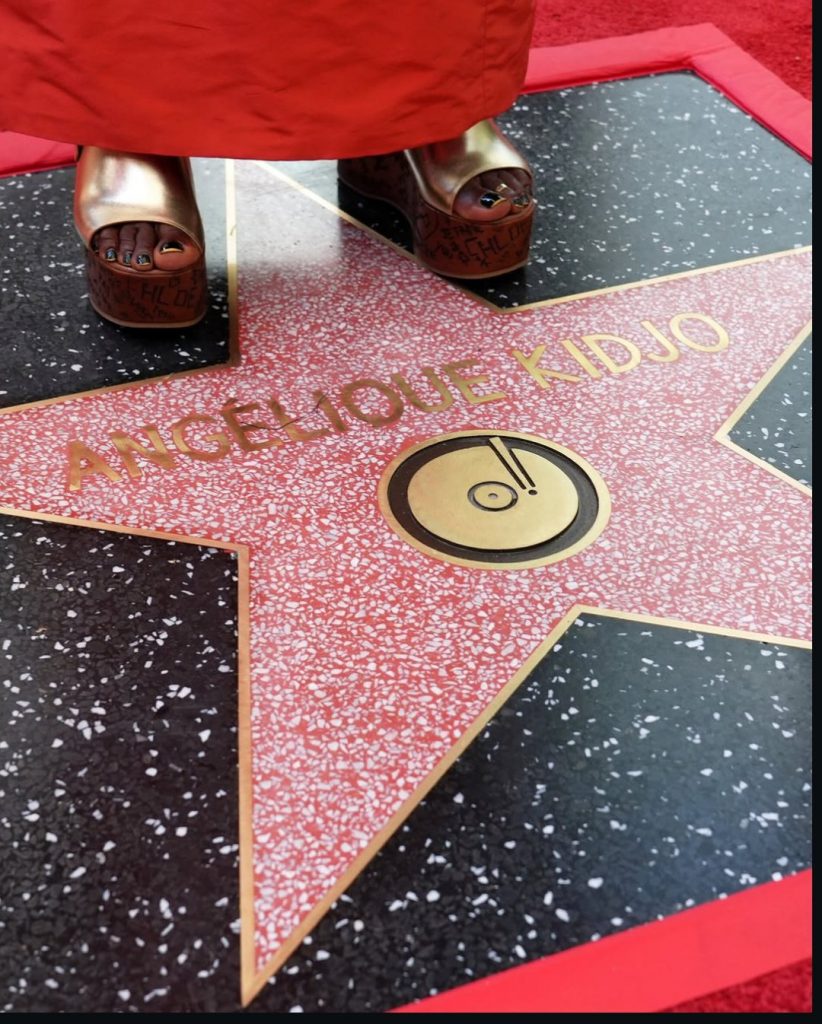
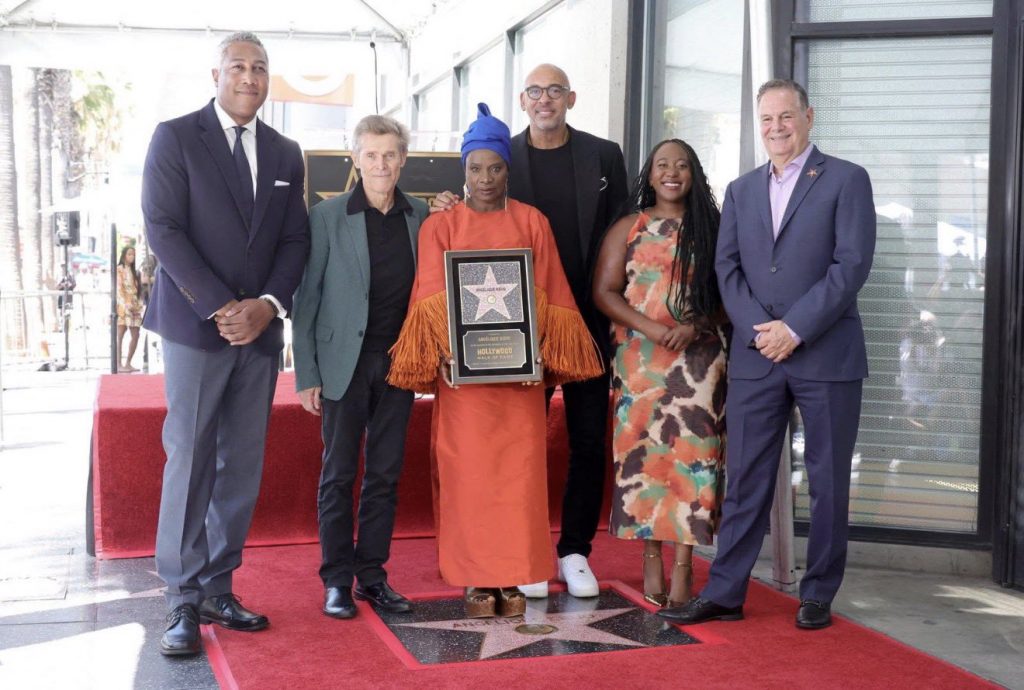
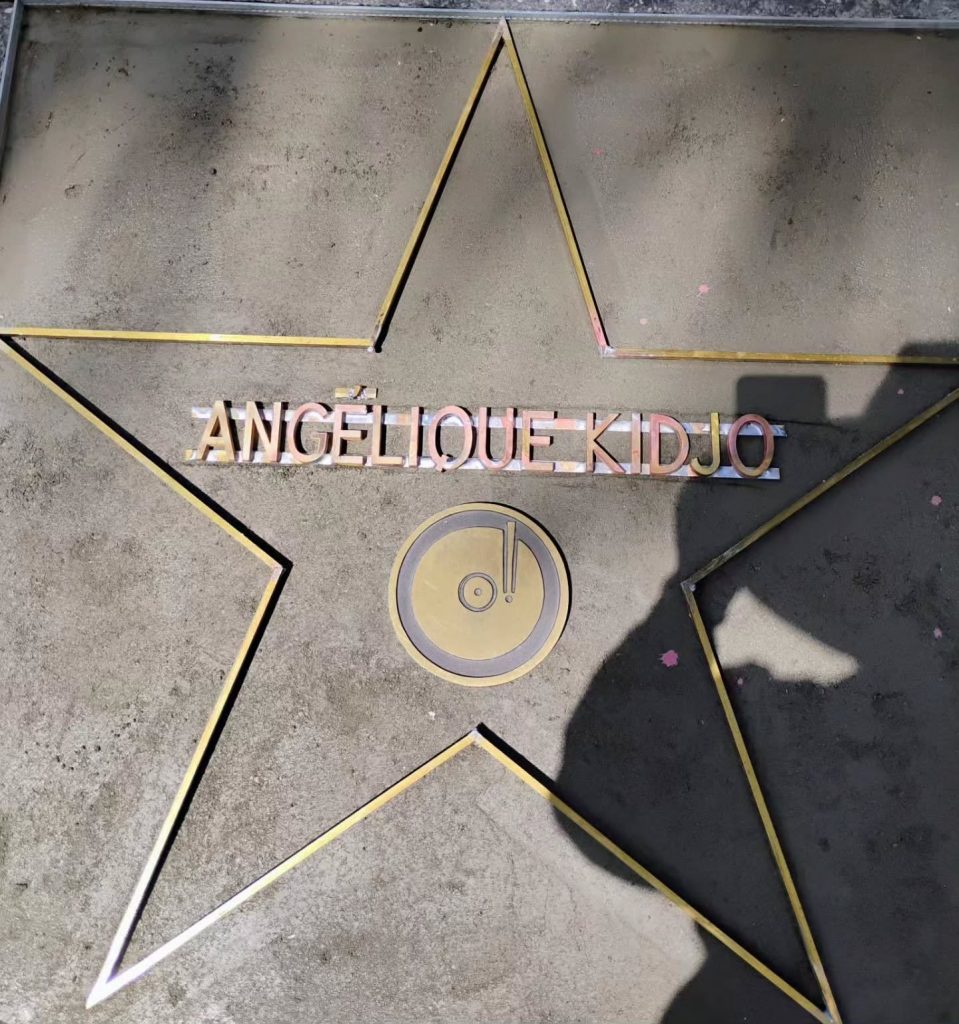
Kidjo received the 2,854th star in the recording category during a ceremony on Tuesday, August 18, 2026, at 7011 Hollywood Boulevard, opposite the historic Hollywood Roosevelt Hotel. The ceremony brought together figures from across music, film and African cultural circles, including Recording Academy CEO Harvey Mason Jr. and Oscar-nominated actor Willem Dafoe, who joined the celebration as guest speakers.
For Kidjo, the moment represented more than a personal career achievement. It placed the African prima donna at one of the most visible intersections of global entertainment, recognising a career that has consistently connected West African musical traditions with audiences, institutions and collaborators around the world.
Angélique Kidjo’s Career Is Built Across Continents
Born in Benin, Kidjo began singing at six and developed a musical language that draws from Beninese and broader West African traditions while incorporating Afrobeat, jazz, funk, reggae, R&B, soul and Latin influences.
Across 18 albums, she has established herself as one of Africa’s most internationally recognised recording artists, using music as both a creative practice and a vehicle for cultural exchange.
Her catalogue includes songs such as “Agolo”, “Wombo Lombo”, “Batonga”, “We We” and “Afrika”, alongside collaborations with artists including Alicia Keys, Bono, Burna Boy, Davido, Ayra Starr, Peter Gabriel, John Legend and Pharrell Williams, while her connection to Nigerian musical history has also been significant, with Fela Anikulapo-Kuti’s Afrobeat tradition serving as an acknowledged influence on the wider musical vocabulary that has shaped her work.
That cross-cultural approach has helped position Kidjo beyond the category of an African artist performing for an international audience. Her career has instead developed around the idea that African music can participate in global culture without being separated from its origins.
From Grammy Recognition To Hollywood
The Hollywood Walk of Fame honour adds another institutional marker to a career already recognised by some of the world’s leading music organisations.
Kidjo has won five Grammy Awards from 16 nominations, with her most recent win in 2022 for Best Global Music Album for Mother Nature. The album featured a younger generation of African artists, including Burna Boy, Yemi Alade, Mr Eazi and Sampa the Great, reflecting another recurring element of Kidjo’s career: creating space for new generations of African musicians within global music conversations.
Her Grammy-winning discography includes acclaimed projects such as Djin Djin, Eve, Sings and Celia, further cementing a body of work that has consistently bridged African musical traditions with global audiences. Kidjo’s Hollywood Walk of Fame selection was announced in July 2025 as part of the Class of 2026, placing the Beninese icon among a distinguished lineup of entertainers being recognised for their contributions to the global entertainment landscape. In the Recording category, she joins names including Miley Cyrus, Josh Groban, Air Supply, Bone Thugs-N-Harmony, Grupo Intocable, Lyle Lovett, Paulinho da Costa and The Clark Sisters.
Harvey Mason Jr and Willem Dafoe Reflect On Kidjo’s Legacy
Speaking at the ceremony, Harvey Mason Jr. celebrated Kidjo as a rare artist whose influence reaches far beyond the music she records and the stages she commands.
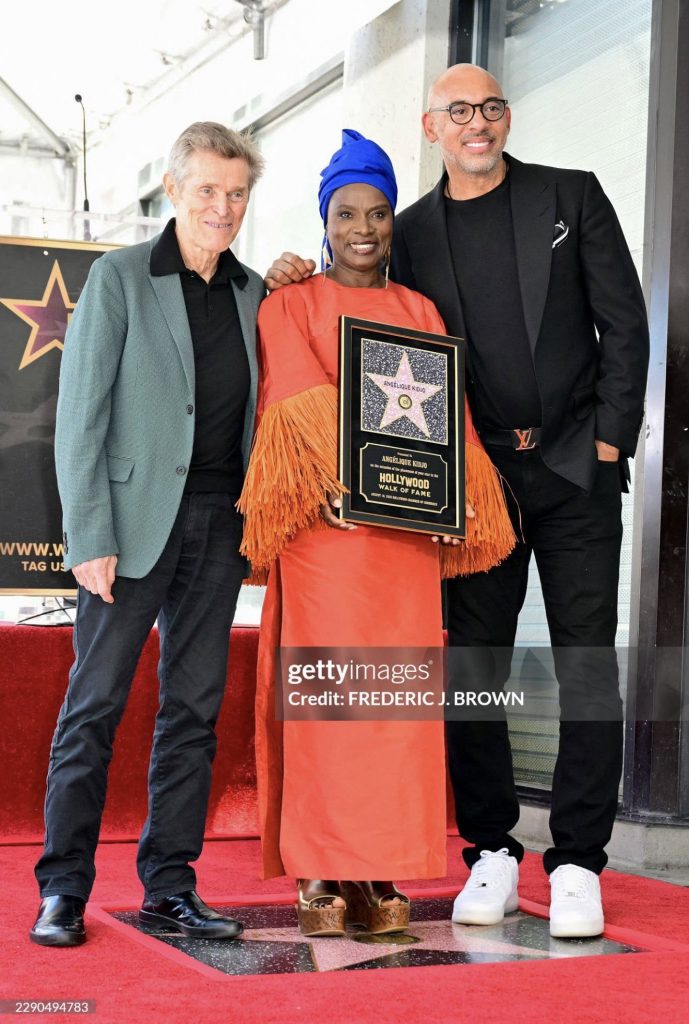
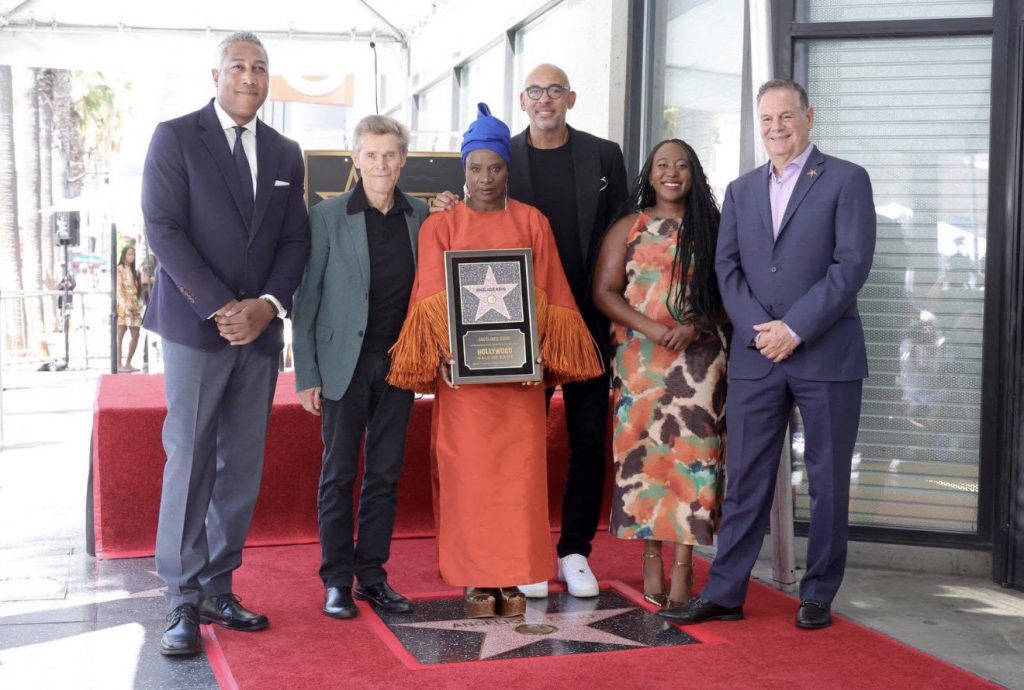
HOLLYWOOD, CALIFORNIA – AUGUST 18: (L-R) Ron Frierson, President and CEO, Hollywood Chamber of Commerce, Willem Dafoe, Angélique Kidjo, Harvey Mason Jr., CEO, the Recording Academy,
He described her as a powerful symbol of artistic excellence, while acknowledging the generations of artists, audiences and communities her work has inspired and connected across the world.
For Dafoe, however, Kidjo’s stage presence was only part of the story.
The actor highlighted her energy as a performer alongside her humanitarian work through the Batonga Foundation, the organisation she founded to support girls and young women in Africa through education and skills development.
That duality — artist and advocate — has become central to understanding Kidjo’s institutional significance.
Her career has repeatedly demonstrated how musicians can operate beyond the traditional boundaries of entertainment, using cultural visibility to engage questions around education, women’s
Angélique Kidjo Uses Hollywood Moment To Speak About Africa
In true Kidjo fashion, her acceptance speech quickly moved beyond the personal triumph of the moment. She used the occasion to shine a light on the people, institutions and communities that have shaped and supported her journey, from her family and management team to Warner Music, the Recording Academy and members of the Beninese delegation.
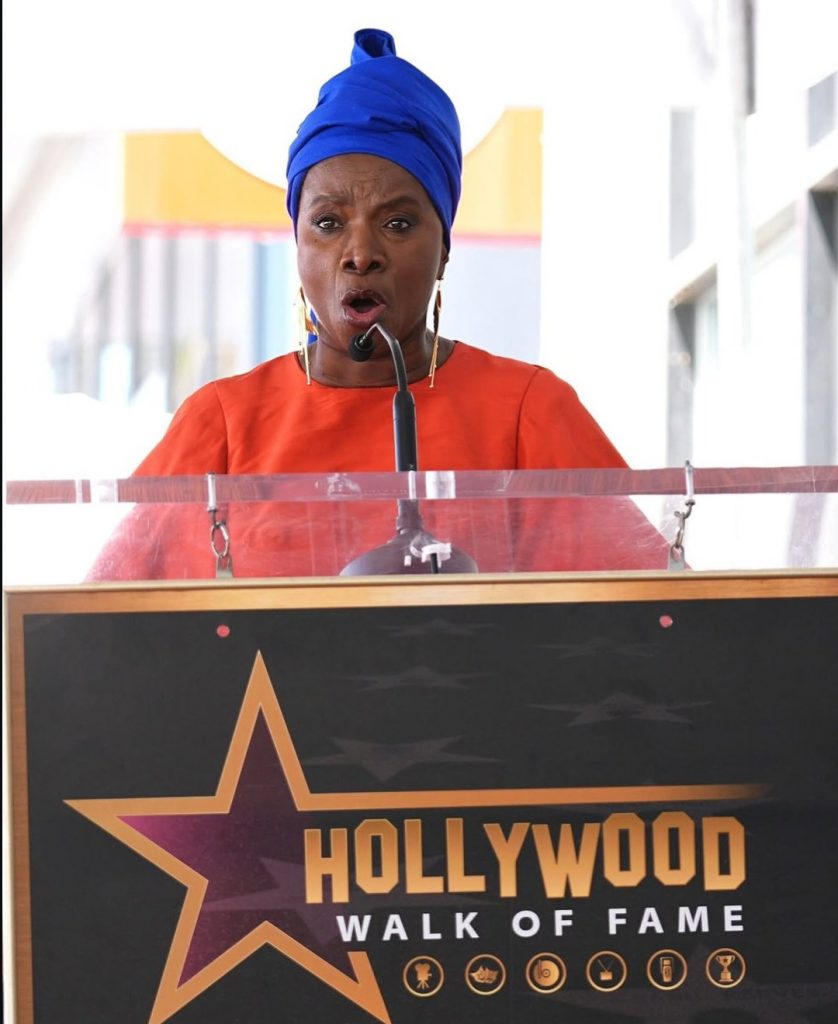
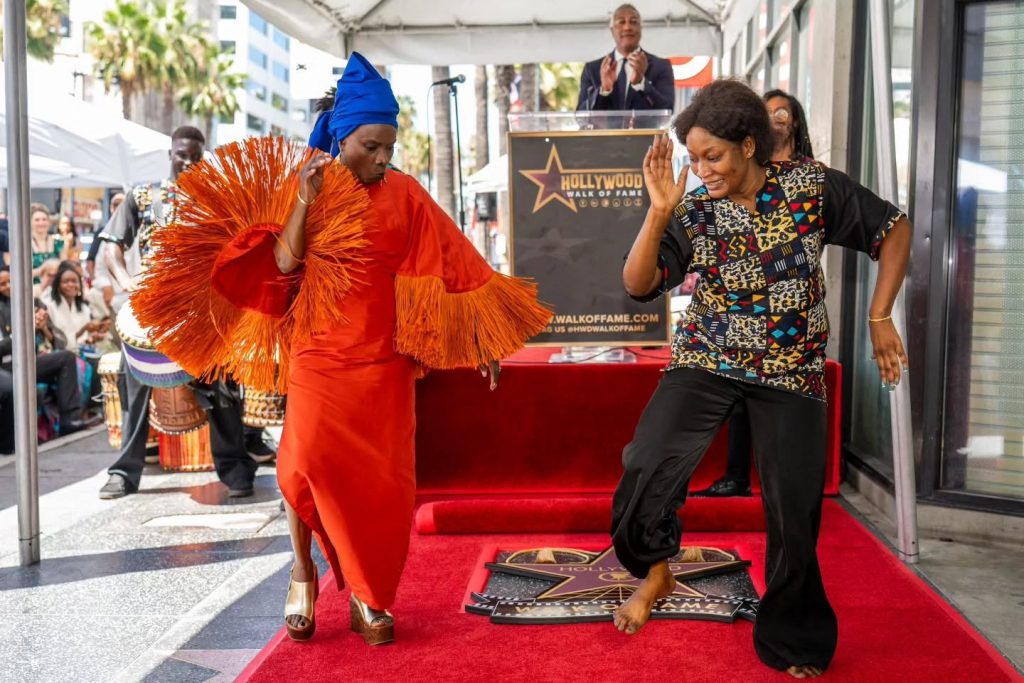
Angélique Kidjo speaks during the ceremony honouring her with a star on the Hollywood Walk of Fame in Hollywood, Los Angeles, on August 18, 2026.
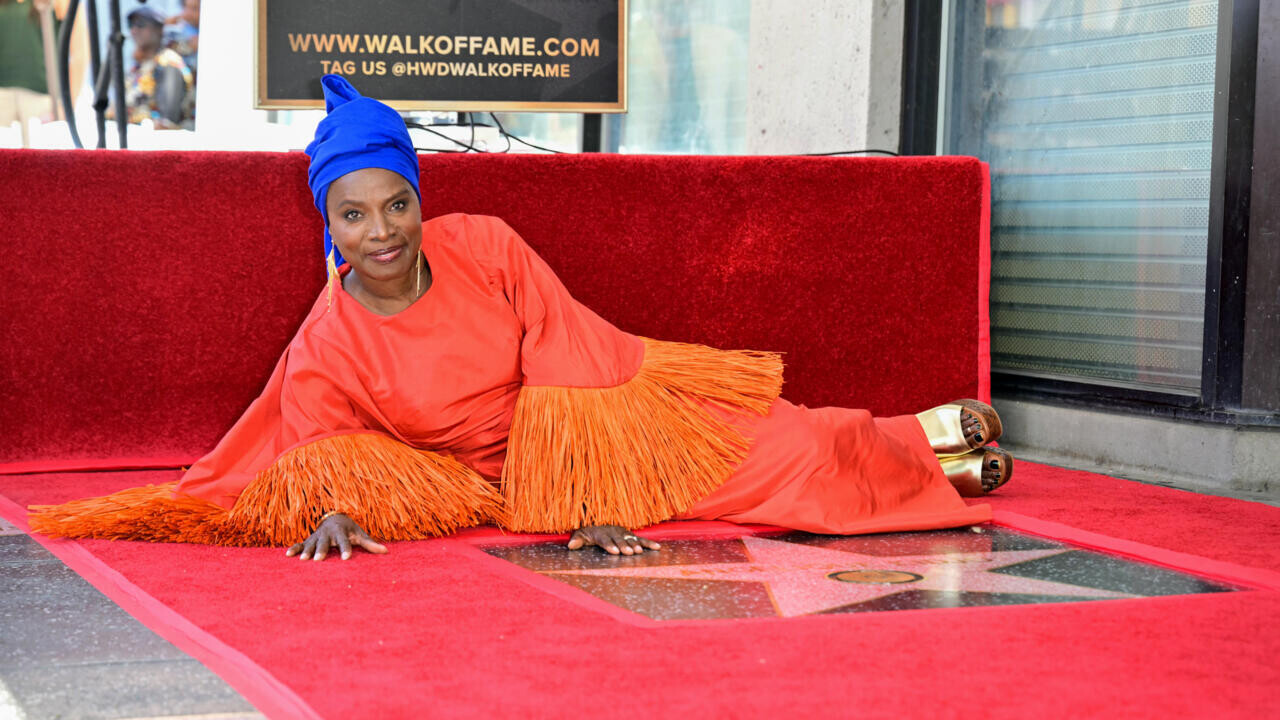
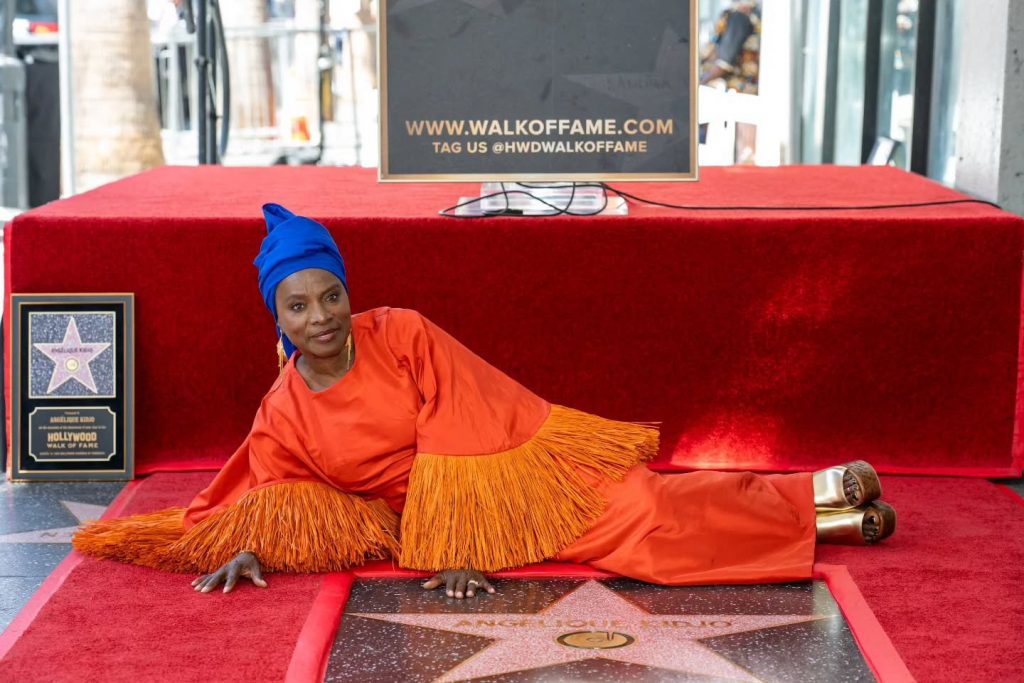
Angélique Kidjo stands on her newly unveiled star during her Hollywood Walk of Fame star ceremony in the Hollywood neighbourhood of Los Angeles on August 18, 2026. (Photo by Frederic J. Brown / AFP)
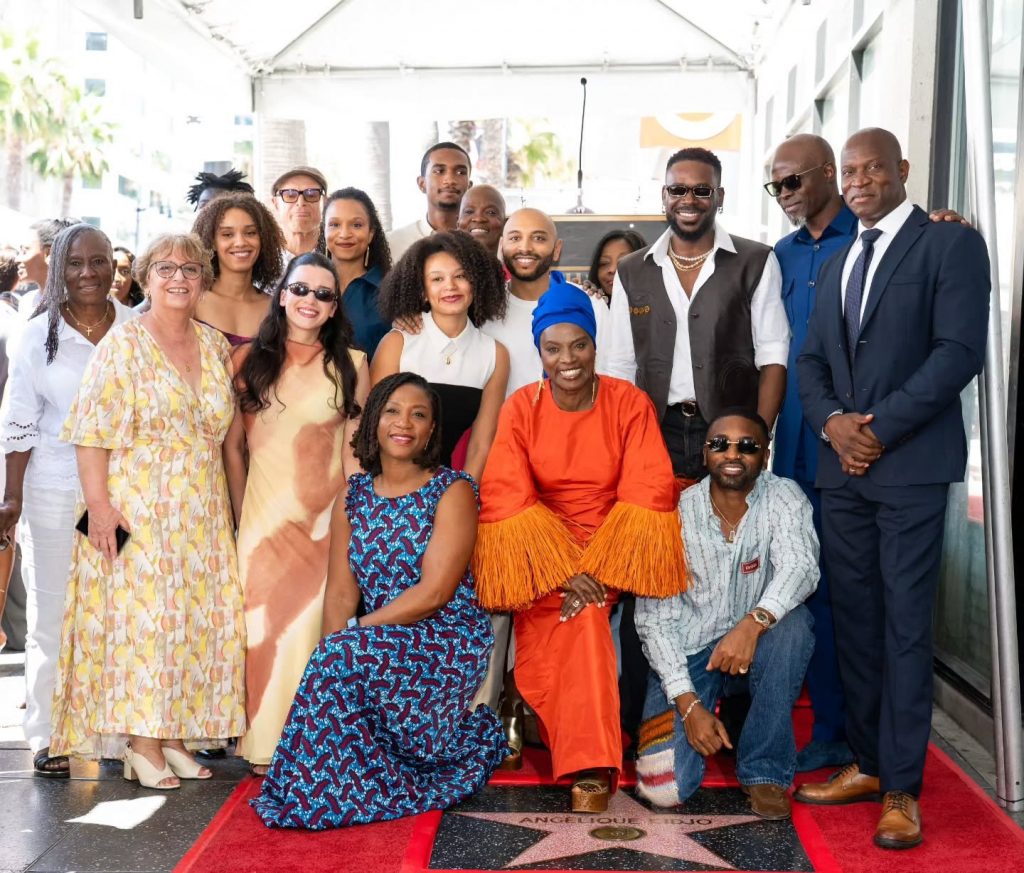
Angélique Kidjo flanked by friends and supporters, Nigerian musician Adekunle Gold, Afrobeats producer Shizzi and Beninese-American actor Djimon Hounsou, during her Hollywood Walk of Fame star ceremony in Hollywood, Los Angeles, on August 18, 2026.
Yet, beneath the acknowledgements was a much bigger message. Reflecting on Africa’s enduring contribution to global culture, Kidjo called attention to a reality that is often overlooked: Africans themselves have not always fully recognised the immense influence the continent has had on the world’s musical traditions.
Her remarks ultimately transformed the Hollywood honour into something far more significant than a personal milestone. Kidjo opened up a broader conversation about who gets recognised as an architect of global music, whose traditions are woven into international popular culture, and the role African artists continue to play in shaping the very systems through which that culture travels.
She also turned her attention to the future, calling for greater investment in Africa’s younger generation and stronger institutions that can translate the continent’s creative wealth into meaningful economic opportunities and sustainable careers for its artists and creatives.
That emphasis is significant. Kidjo’s career has never existed solely around the consumption of African music by international audiences. It has increasingly involved questions around representation, ownership, institutional access and the development of Africa’s creative economy.
Beyond The Stage: A Career In Advocacy
Kidjo’s influence, however, has never been confined to the records she has made or the stages she has graced. For decades, the Beninese icon has used her global platform to champion causes close to home, serving as a UNICEF Goodwill Ambassador since 2002 while advocating for children’s rights, girls’ education and greater opportunities for women across Africa.
That commitment to social impact also lives through the Batonga Foundation, where she has helped create educational and leadership opportunities for girls and young women, particularly in communities where access to formal education remains limited.
Her impact has earned recognition far beyond the music world. In 2021, she was named among TIME’s 100 Most Influential People, while the Polar Music Prize honoured her in 2023 for her contribution to international music.
It is this wider legacy that gives her Hollywood Walk of Fame moment its particular weight. The star does not simply celebrate a celebrated recording artist; it recognises a cultural force whose career has continued to sit at the intersection of music, African identity, philanthropy and global representation.
Why The Hollywood Star Matters For African Music
The significance of Kidjo’s Hollywood recognition lies partly in the institution itself.
The Hollywood Walk of Fame is deeply embedded in the global mythology of entertainment. Receiving a star places an artist within a physical and cultural archive of performers whose careers have shaped popular culture.
Kidjo’s inclusion therefore represents a form of institutional recognition for an African artist whose career has been built across different musical traditions, markets and generations.
It also arrives at a period when African music has moved from being largely positioned as a regional cultural export to becoming a significant force within the global music business.
Artists from Nigeria,Ghana, South Africa, Kenya and other parts of the continent are increasingly operating across international touring circuits, streaming platforms, festivals, publishing systems, brand partnerships and record-company structures.
Kidjo’s career predates much of this current expansion.
Her journey provides a useful historical reference point for understanding how African artists have navigated global music systems long before the current Afrobeats-driven international boom.
A Bridge Between Generations
Perhaps one of the most compelling chapters of Angélique Kidjo’s legacy is not only what she has accomplished, but how deliberately she has made room for those coming after her. Through collaborations with younger African artists and her continued embrace of the continent’s rich musical traditions, Kidjo has approached legacy not simply as an exercise in preserving what came before but as a bridge between generations.
That perspective feels especially timely as African music continues its remarkable global expansion, bringing bigger conversations around infrastructure, ownership, publishing, artist development and who ultimately controls the systems through which African culture is packaged and monetised around the world.
Kidjo’s career offers a powerful blueprint for that journey: an African artist who built a truly global presence while remaining deeply connected to the cultural foundations that first gave her music its voice.
The Next Chapter Of An Already Historic Career
At 66, Kidjo’s Hollywood Walk of Fame star arrives not as a conclusion to her career but as another institutional marker within it. From Benin to Grammy stages, global collaborations, humanitarian work and now Hollywood Boulevard, Angélique Kidjo’s remarkable journey speaks to what an African music career can become when artistic excellence is matched by a sustained commitment to culture, advocacy and community.
Yet, in receiving the honour, Kidjo’s gaze remained firmly fixed on what comes next. She expressed the hope that she would not be the last African woman to receive a star on the Hollywood Walk of Fame — a simple wish that carries a much larger meaning.
Because the significance of a historic first is rarely just about the person who gets there. It is about what their arrival makes possible for everyone coming behind them. A door opens, a precedent is set, and the next generation gets to imagine itself on the other side.
For African music, Kidjo’s star on the Hollywood Walk of Fame is therefore more than a celebration of an extraordinary career. It is a marker of a shifting global cultural landscape — one where African artists are no longer simply finding their place within international music but are increasingly helping to shape, influence and define where it goes next.