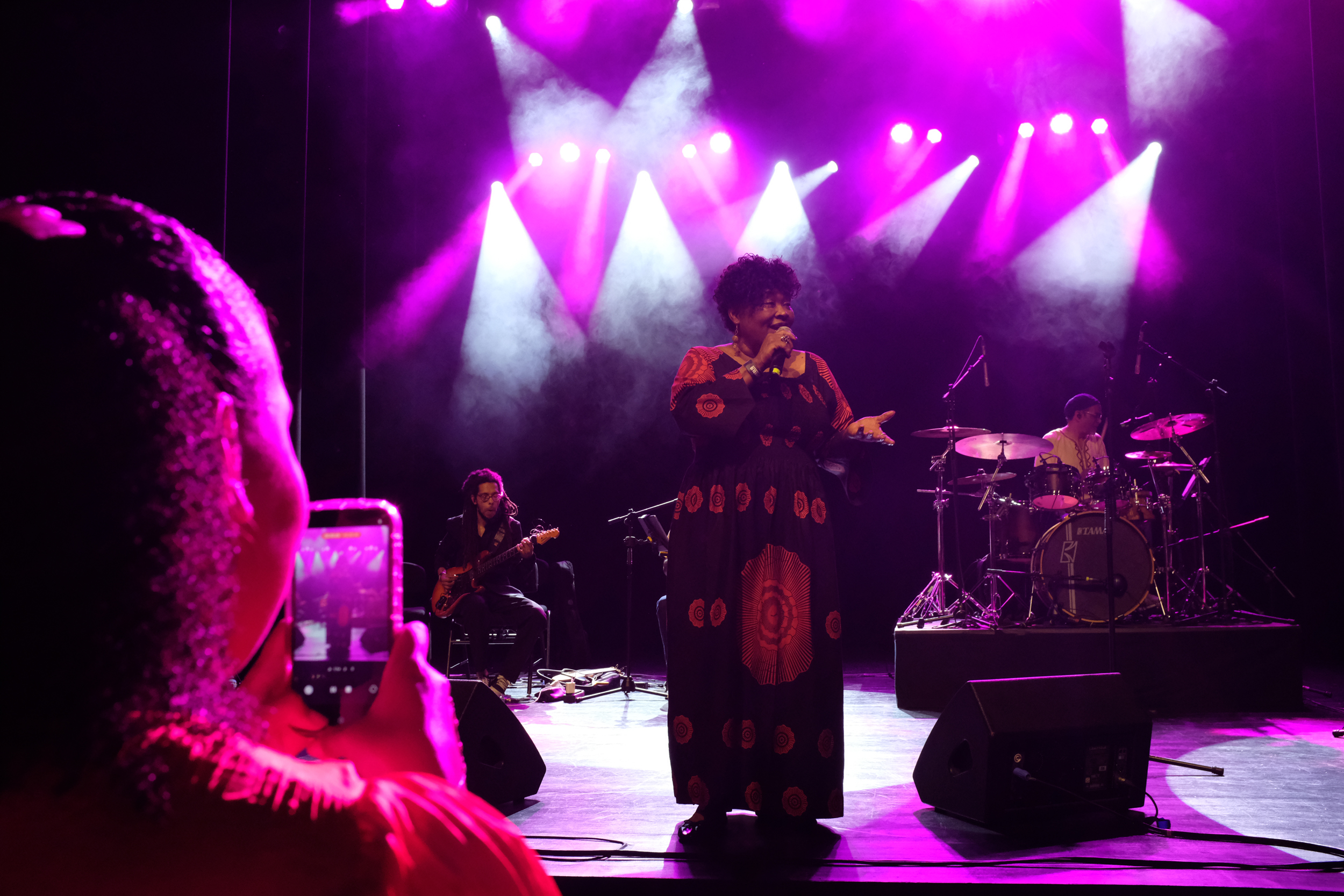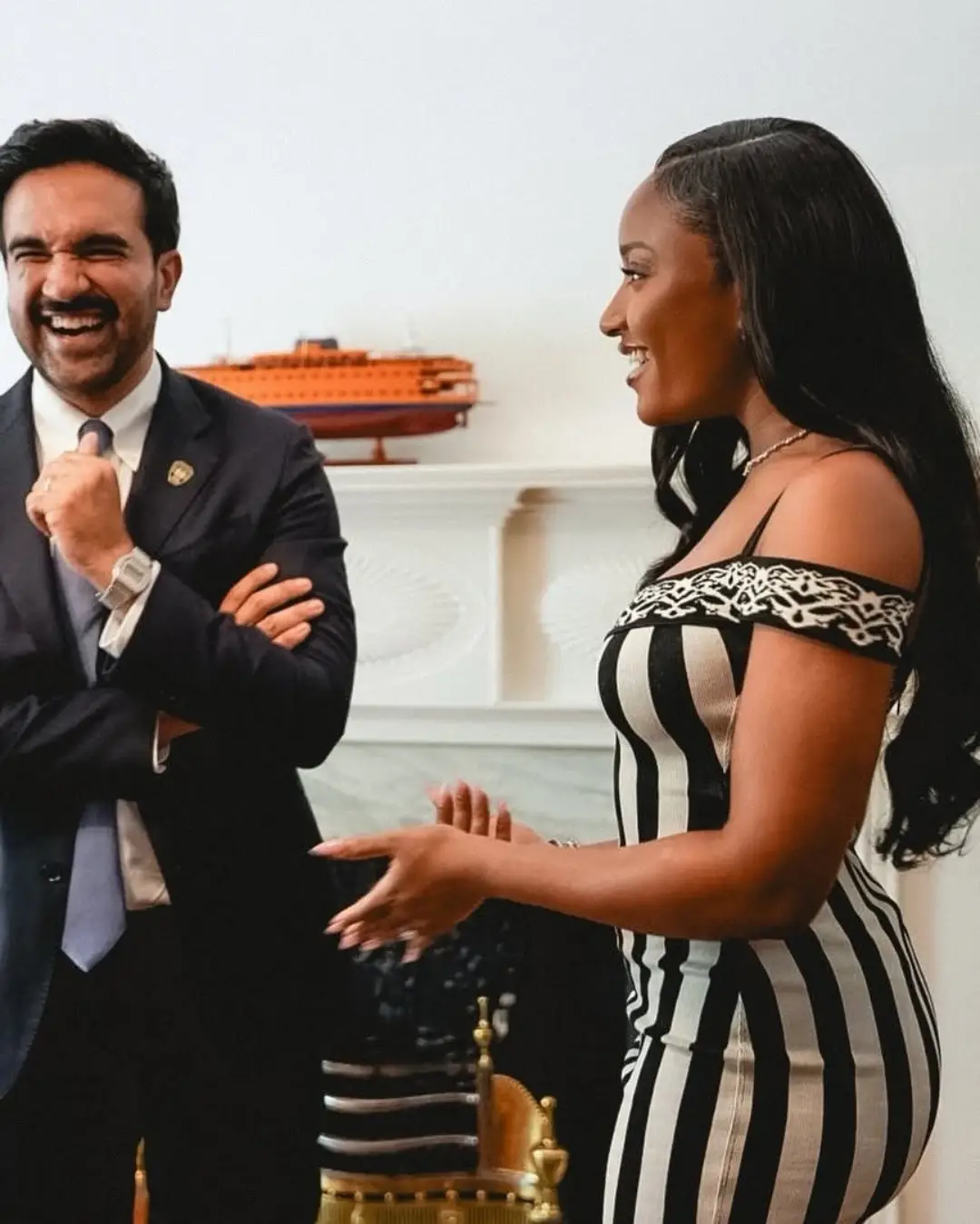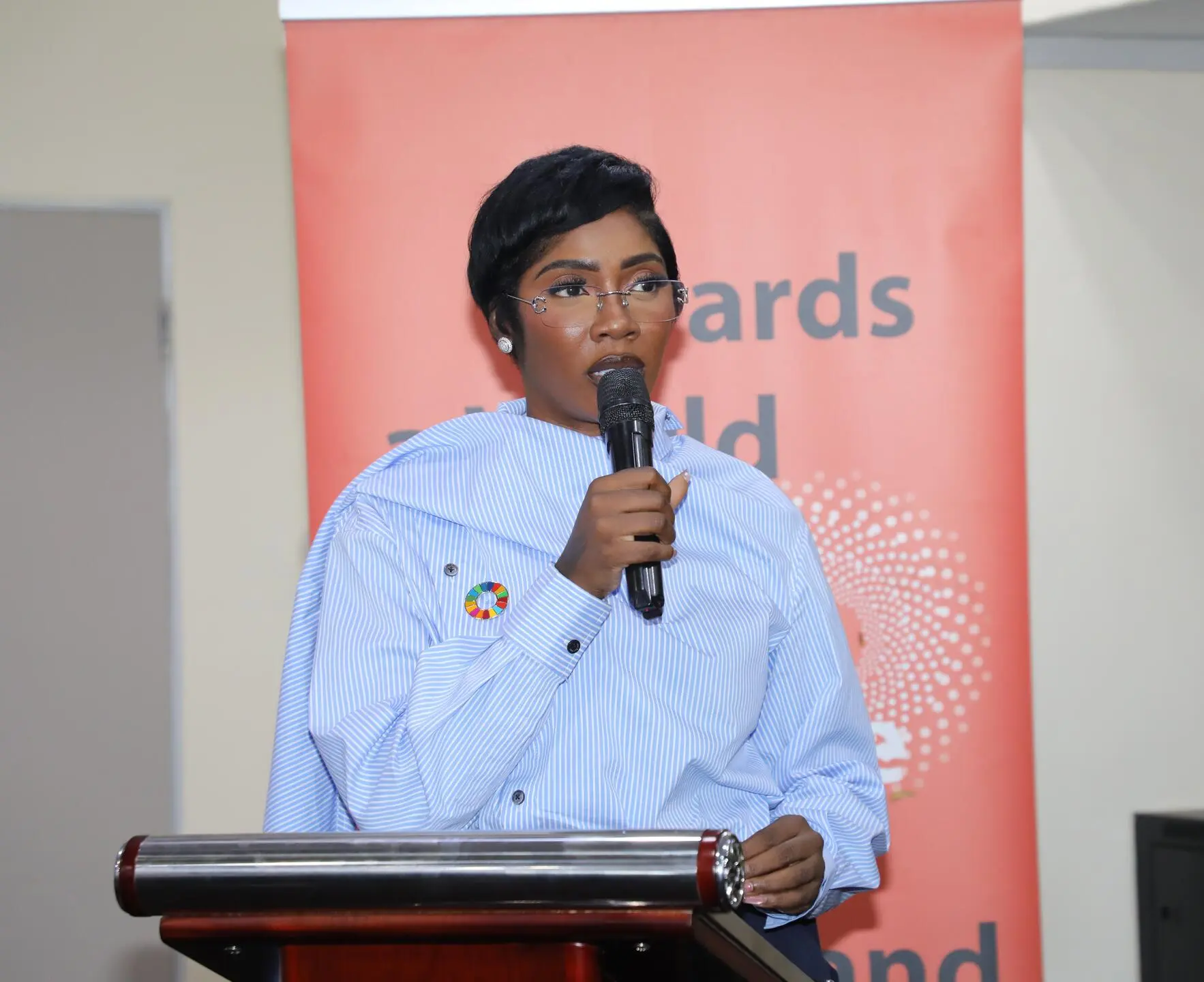
Tiwa Savage arrived in Malawi expecting to cry.
She had prepared herself for it. As she later recalled, she had even packed extra tissues because she expected the stories of women and girls who had experienced violence to overwhelm her. Instead, after spending four days meeting survivors, activists, students, creatives, government officials and representatives of the United Nations and European Union, she left with a different image in her mind.
She had expected to meet victims.
She says she found conquerors.
That distinction sits at the heart of Tiwa Savage’s recent visit to Malawi with the United Nations Spotlight Initiative, where the Nigerian singer and United Nations joint Spotlight Initiative Global Advocate spent time learning about the country’s efforts to prevent violence against women and girls and support survivors.
It is also what makes the visit worth considering beyond the familiar language of celebrity philanthropy.
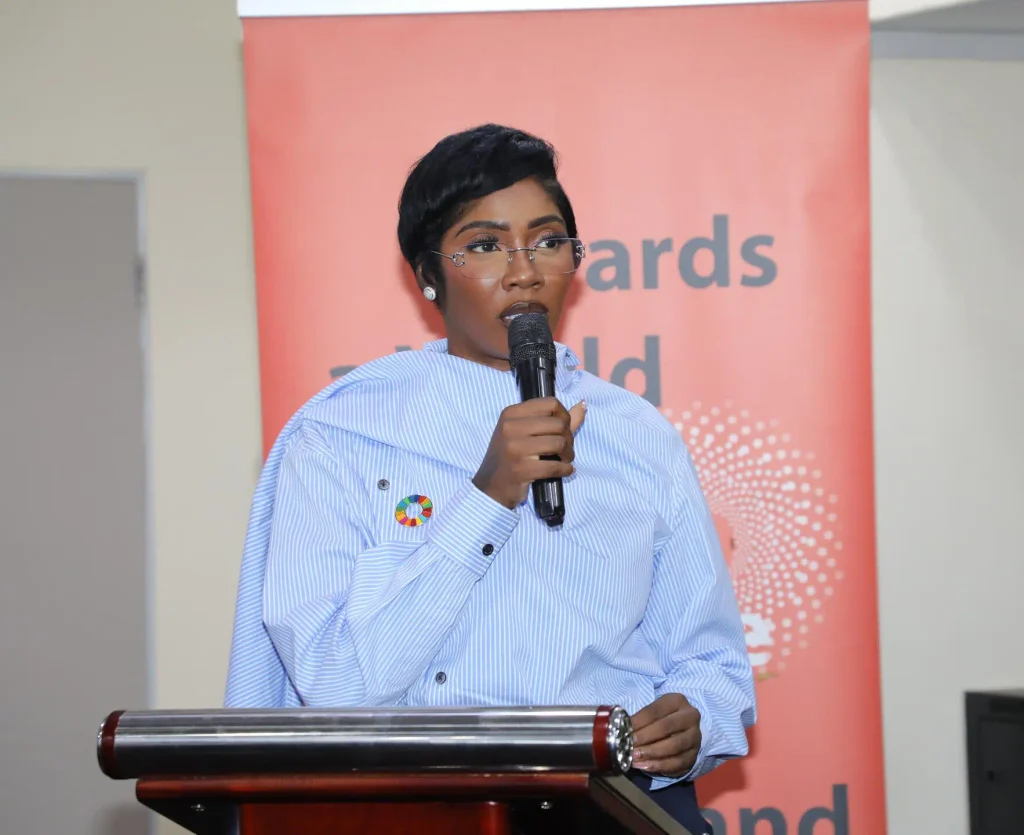
Because there is something important about how we choose to tell stories about survivors.
We can tell the story through what happened to them. We can focus on the violence, the trauma, the loss and the damage. Those realities must never be minimised.
But there is another part of the story.
What happens afterwards?
What does a woman build when she has survived something that could have defined the rest of her life?
What does she dream about?
Who is she becoming?
And what happens when she begins pulling someone else forward with her?
Tiwa Went Looking for Victims. She Met Enesi.
One of the women Tiwa met was Enesi, a mother who had started a small livestock enterprise with two goats.
By the time Tiwa visited, Enesi had eleven.
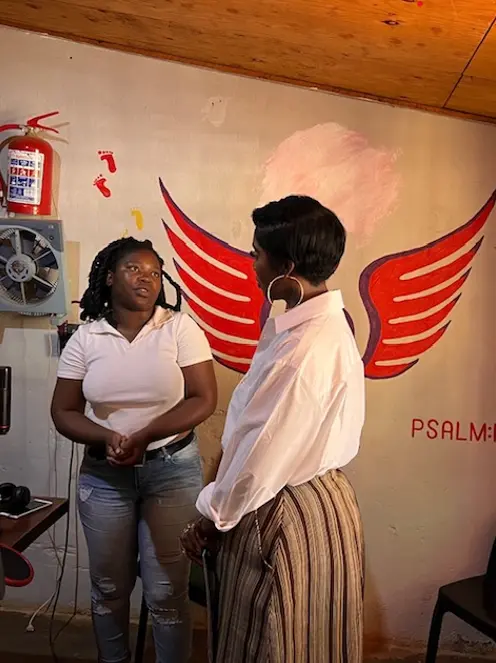
Her next target was sixty.
She also wanted a mobile phone and planned to expand into maize farming. Tiwa remembered her not primarily through the violence she had survived, but through her energy, ambition and determination to build a future for herself and her child.
There is something powerful about that image.
Not because eleven goats erase what happened to Enesi.
They do not.
Not because entrepreneurship somehow makes trauma disappear.
It does not.
But because the goats represent something that is often missing from public conversations about survivors: agency.
Enesi is not only a person to whom something terrible happened.
She is also a mother.
An entrepreneur.
A woman with a business.
A woman with a target.
A woman who has already doubled, then multiplied, what she started with.
And a woman who can imagine having sixty.
That is not a replacement for justice, protection or support. It is another part of the human story.
The Language of Survival Matters
There is a danger in making resilience itself too romantic.
Women and girls should not have to become extraordinarily strong simply because society failed to keep them safe. Survivors deserve more than admiration for their ability to endure. They deserve protection, justice, access to services, economic opportunity and the freedom to build lives that are not organised around what was done to them.
That is why the work surrounding Tiwa’s visit matters.
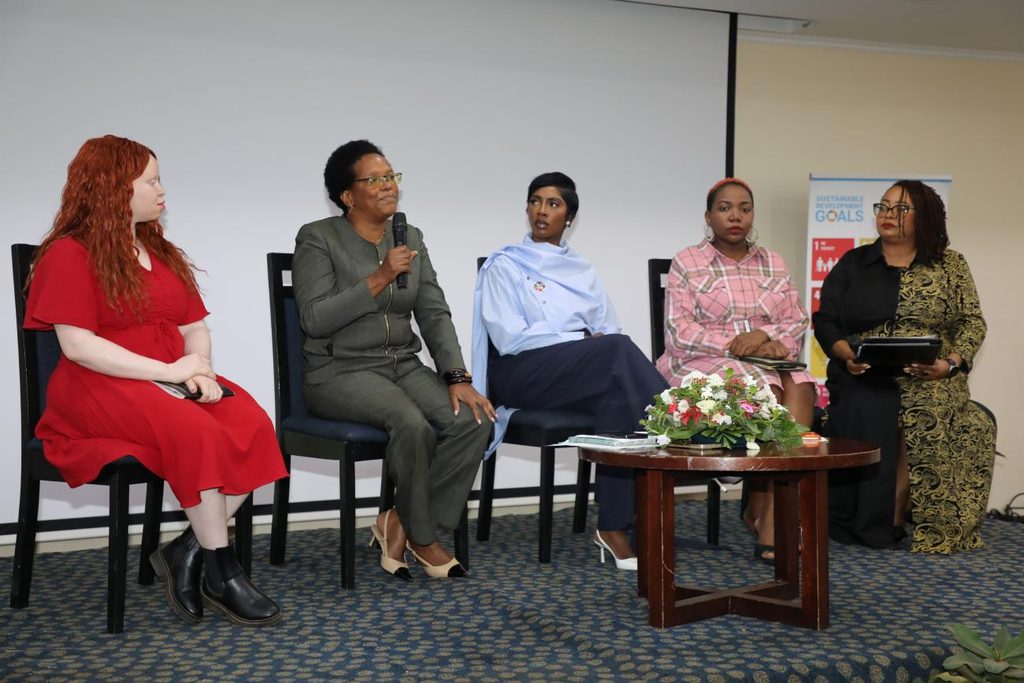
Spotlight Initiative’s programme in Malawi has worked with the Government, civil society, communities and development partners to strengthen laws and policies, improve access to essential services, support women’s rights organisations and challenge social norms that enable discrimination and violence. Its Malawi programme has operated across six districts and includes interventions around prevention, survivor support and economic empowerment.
The initiative’s own guidance on media and gender-based violence makes the same distinction especially clearly: coverage should be survivor-centred, protect dignity and agency, avoid harmful stereotypes and represent survivors as people with voices and futures rather than simply as subjects of tragedy.
That makes Tiwa’s observation unexpectedly useful.
She did not stop seeing the pain.
She simply discovered that the pain was not the whole story.
Two Goats Can Be Part of the Story of Violence
This may sound like an unusual way to discuss gender-based violence, but it is actually central to understanding what meaningful support can look like.
A woman who has experienced violence may also need an income.
She may need a safe place.
She may need legal support.
She may need healthcare.
She may need education.
She may need childcare.
She may need access to capital.
She may need a community that believes her.
And she may need an economic pathway that allows her to make decisions about her own life.
Economic empowerment does not solve gender-based violence by itself. But economic independence can form part of a wider support structure through which women regain agency and create greater stability for themselves and their families.
That is why Enesi’s goats matter.
They are not a sentimental detail.
They are evidence of a woman building something.
But the Conversation Cannot End With Women
Perhaps the most important part of Tiwa’s reflection comes towards the end of her video.
She talks about raising “young men and young kings” who will turn their backs on violence against women.
That is an important shift in the conversation.
Ending violence against women and girls cannot be framed exclusively as a responsibility placed upon women to survive, escape, recover or protect themselves.
Men and boys have to be part of prevention.
Spotlight Initiative’s work in Malawi includes efforts to promote positive masculinities and engage communities in challenging harmful gender norms. The UN’s reporting following Tiwa’s visit also highlighted her call for boys and young men to become allies in ending violence against women and girls.
The future Tiwa says she wants to see in Malawi is therefore not simply one with more survivors supported after violence has occurred.
She wants to see young men participating in making sure fewer girls become survivors in the first place.
That distinction matters.
Support after violence is necessary.
Prevention is the larger ambition.
What Does an Artist Bring to a Conversation Like This?
Tiwa Savage did not arrive in Malawi as a gender-policy expert.
Her value in this context is different.
She arrived with a cultural platform.
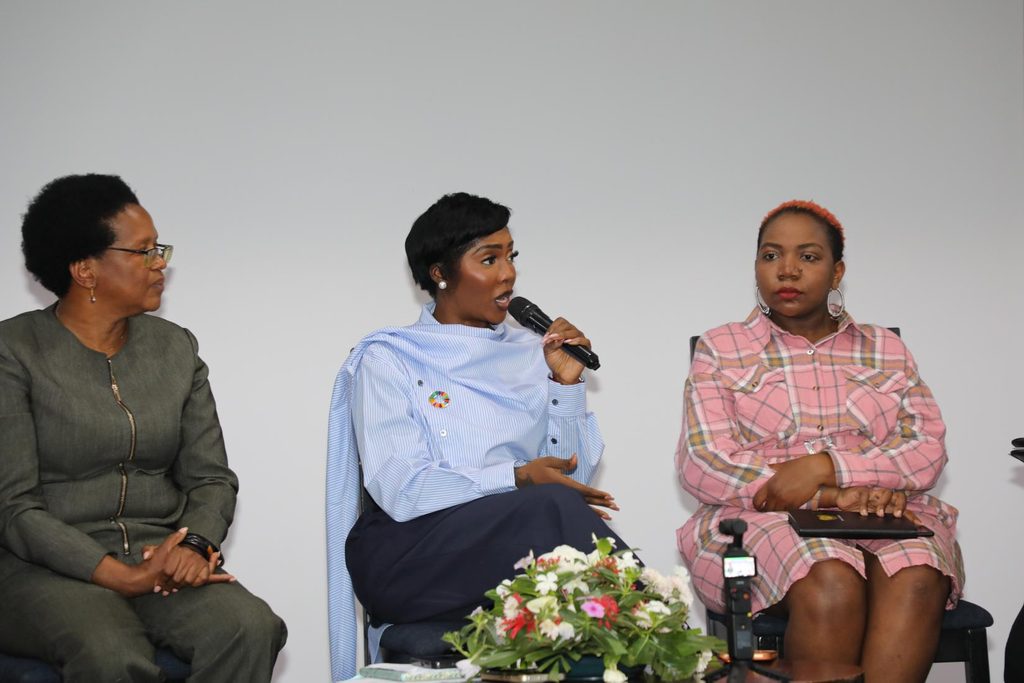
That platform gave her access to audiences that may never encounter a policy paper, programme evaluation or development-sector report. It also gave the women and communities she met another route into public attention.
This is one of the more interesting developments in the role of African artists.
Their influence increasingly extends beyond records and performances. Artists can become cultural intermediaries: people capable of carrying conversations between communities, institutions and audiences that do not normally occupy the same spaces.
That does not mean celebrities should replace specialists.
They should not.
It means cultural influence can complement the work already being done by activists, community organisations, governments, development agencies and survivors themselves.
The important question is what happens when the cameras leave.
The Visit Cannot Be the Intervention
This is where the story becomes bigger than Tiwa.
A powerful visit can raise awareness.
A powerful story can change how people think.
A prominent artist can bring attention to an issue that audiences might otherwise overlook.
But awareness alone does not end violence.
Spotlight’s own media guidance acknowledges that awareness-raising is most effective when integrated into broader prevention and response programmes rather than treated as a standalone intervention. It also stresses the need for survivor-centred services, safe referrals and careful reporting that does not expose survivors to additional harm.
So Tiwa’s visit should not be measured only by how moving the video becomes.
The more meaningful measure is what the attention helps people understand, support and change.
Does it strengthen conversations about prevention?
Does it encourage men and boys to challenge harmful behaviour?
Does it direct attention towards organisations doing the work?
Does it help sustain investment in survivor services and economic opportunities?
Does it give women like Enesi more room to build?
And, ultimately, does it contribute to a society in which fewer women need to demonstrate extraordinary resilience simply to live ordinary lives?
Those are harder questions.
They are also the ones worth asking.
The Artist, the Survivor and the Story After the Story
There is a reason Enesi stayed with Tiwa.
It was not simply because she had survived.
It was because she was building.
Two goats had become eleven.
Eleven were not enough.
There was a dream of sixty.
That is the kind of detail that changes the way a story is remembered.
Tiwa went to Malawi expecting to carry the emotional weight of other people’s suffering. Instead, she encountered women whose futures were still active, unfinished and entirely their own.
That does not make the violence less serious.
It makes the women more fully visible.
And perhaps that is one of the most useful things an artist with a global platform can do: not speak over the people whose stories need to be heard, but help more people see the whole person standing behind the headline.
The survivor.
The mother.
The entrepreneur.
The daughter.
The dreamer.
The woman who started with two goats and is thinking about sixty.
And the young men who will ultimately have to decide what kind of society they are willing to build around her.
Tiwa Savage went to Malawi looking for victims.
She found conquerors.
What happens next should be about making sure those conquerors have the safety, opportunity and systems they need to keep building.