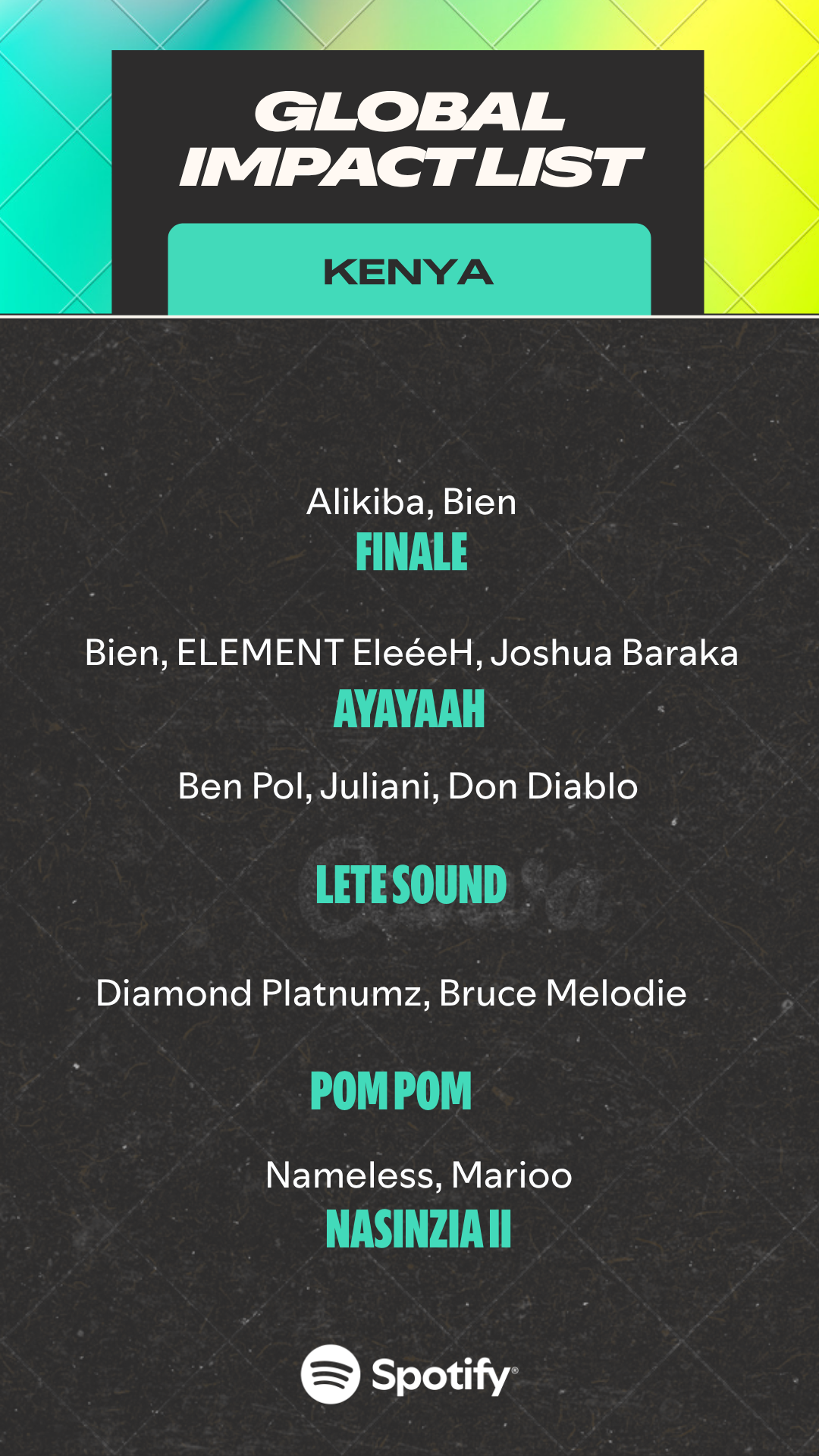
Few songs have united East African audiences in 2026 quite like Finale. The collaboration between Kenya’s Bien and Tanzania’s Alikiba has become more than a commercial success – it has emerged as the region’s most-watched music video released this year, underlining the growing appeal of cross-border collaborations within East Africa’s music industry.
Bien and Alikiba dropped their hit track Finale on 25 March 2026.
Not only did they launch a new collaboration but also created a regional cultural moment. Within 11 days, the music video became the fastest Kenyan-led release to reach 10 million YouTube views. Less than a month later, it crossed 20 million views, setting another East African record. Today, with more than 49 million views, Finale stands as the most-viewed new African music video of 2026.
The numbers are impressive. However, the bigger story is what they reveal about East Africa’s music industry. Finale is not simply a hit song. It is proof that East Africa is building a stronger creative ecosystem that can compete on a continental stage.
Finale Is More Than a Kenya-Tanzania Collaboration
Finale brings together two of East Africa’s biggest stars. Kenya’s Bien and Tanzania’s Alikiba have spent years shaping music in their respective countries. Instead of competing, they combined their audiences and creative strengths.
The rollout reflected that thinking from the start. The song premiered first on all major Kenyan radio stations at 9:00 am EAT. The same rollout happened on all major Tanzania radio stations later the same day at 3:00pm EAT. Rather than treating the countries as separate markets, the release positioned East Africa as one connected audience.


Behind the music, Kenyan producer Hendrick Sam and Tanzanian producer Abbah blended Afropop, Bongo Flava and Kompa influences into one sound. Meanwhile, director Omoke Ogao and executive producer Chiki Kuruka built a cinematic music video that celebrated both countries equally.



He has directed prominent East African music videos, including Elsy Wameyo’s “Conquer,” Bien & Alikiba’s “Finale,” and hits by Buruklyn Boyz and Lil Maina.

The football-inspired artwork carried the same message. Kenya appeared as the home team, Tanzania as the away side, and the score sat at 1-1. It turned rivalry into unity.
The Numbers Tell a Bigger Story
Streaming records often reflect larger industry shifts. According to YouTube rankings, Finale opened a lead of more than 24 million views over Diamond Platnumz’s Happy. It also finished ahead of releases from Harmonize, Asake, Wizkid and Fally Ipupa.
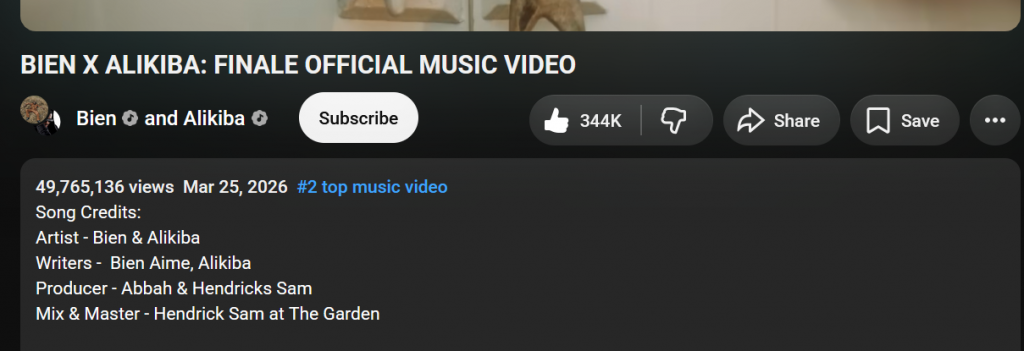
For years, conversations around African music exports centered on Nigeria and South Africa. Those markets remain dominant. However, Finale shows East Africa is no longer waiting on the sidelines. Artists from Kenya and Tanzania are proving they can create regional hits that travel across the continent and beyond.
That shift matters because streaming platforms reward scale. When artists combine audiences across borders, they increase visibility, strengthen algorithmic discovery and create stronger commercial opportunities.
Building East Africa’s Creative Infrastructure
The success of Finale did not happen by chance as every part of the campaign worked together – radio built anticipation, YouTube carried the visual story, TikTok creators pushed the dance challenge, and even celebrity cameos from Khaligraph Jones, Savara, Bensoul, Dennis Ombachi and others expanded the conversation across different audiences.

This is what creative infrastructure looks like. It is not just about recording good music. It is about producers, directors, choreographers, marketers, broadcasters and digital platforms working together to create a cultural event. That approach is becoming one of East Africa’s biggest strengths.






From Streaming to Live Culture
The impact of Finale quickly moved beyond digital platforms. Weeks after its release, Bien and Alikiba brought the song to the One Night Only concert in Nairobi. The performance became one of the event’s biggest attractions and gave fans their first opportunity to experience the collaboration live.




Photographed by EDDIE MWANGI.
This reflects another important shift. Streaming is no longer the end goal. It now drives festival bookings, concert demand and regional touring. Digital success increasingly creates value across the wider creative economy.
Why This Matters for Africa
Finale also signals a broader change across African music. Instead of looking outside the continent first, artists are building stronger regional markets. Kenya and Tanzania are showing that cross-border collaborations can generate massive audiences without depending solely on Europe or North America.
That model has implications for the wider continent. It encourages more regional partnerships, shared production, joint marketing campaigns and integrated touring circuits. It also strengthens Africa’s bargaining power with streaming platforms, brands and global music companies.

Looking Five Years Ahead
Five years from now, Finale may be remembered for more than its 49 million plus YouTube views. It may become the blueprint for how East African music scales globally.
That future is already taking shape. Across the region, artists are no longer building in isolation within Kenya, Tanzania, Uganda or Rwanda. Instead, they are increasingly collaborating across borders and presenting East Africa as one creative ecosystem rather than separate national scenes.
Finale is one example. Bien has also worked with Uganda’s Joshua Baraka and Rwanda’s Element Eleéeh on Ayayah.
Speaking on Joey Akan’s Afrobeats Intelligence, Joshua Baraka observed that East African artists are beginning to think beyond national identities and see themselves as part of a broader regional movement.
That shift matters because it changes how the region competes globally.
That shift matters because it changes how the region competes globally. A united East African market creates larger audiences, stronger streaming numbers and more opportunities for touring, investment and cultural exchange. Instead of exporting isolated stars, the region is beginning to export a connected creative ecosystem.
If that momentum continues, Finale will be remembered not simply as East Africa’s most-viewed song of 2026, but as one of the records that captured a turning point. It showed what becomes possible when the region moves together.
Beyond its commercial success, Finale also reflects the growing confidence with which East African artists are collaborating across borders. In recent years, partnerships between Kenyan, Tanzanian, Ugandan and Rwandan musicians have become increasingly common, driven by digital platforms, regional touring and audiences that are consuming music beyond national boundaries. As a result, records like Finale are no longer viewed as cross-border experiments, but as examples of an increasingly connected East African music ecosystem.
The success of “Finale” reflects more than the popularity of a single record. It illustrates a broader shift in East African music, where collaborations increasingly transcend national borders and audiences are embracing regional sounds as part of a shared cultural identity.
As artists continue to build across markets rather than within them, songs like “Finale” demonstrate the growing commercial and creative potential of an increasingly interconnected East African music ecosystem.