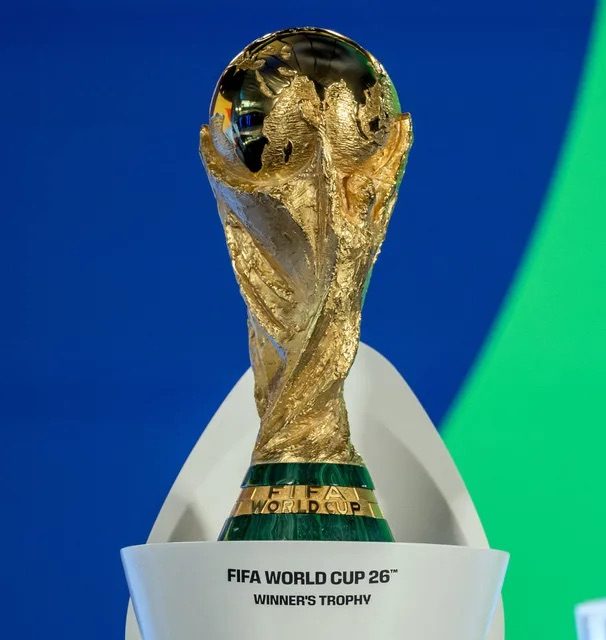
How African Music Became One of the Defining Sounds of the FIFA World Cup 2026
Every FIFA World Cup leaves the world with two enduring memories.
The first belongs to football.
The second belongs to music.
Long after the final whistle blows, long after medals have been lifted and trophies paraded through city streets, the songs remain. They become emotional timestamps – instantly transporting us back to a particular summer, a particular goal, a particular celebration, or an unforgettable night shared by billions across continents.
Few global events possess that unique relationship between sport and sound.
The FIFA World Cup does.
For generations, official anthems have helped define football’s biggest spectacle. Ricky Martin’s The Cup of Life. Shakira’s Waka Waka (This Time for Africa). The records become inseparable from the tournament itself, transforming ninety-minute matches into lasting cultural memory.
Yet the 2026 FIFA World Cup feels fundamentally different, not simply because it is the largest edition in history, bringing together 48 nations across the United States, Canada and Mexico, nor because football itself continues to expand into new territories.
This tournament marks something far more significant. For perhaps the first time, African music is no longer participating in the World Cup’s cultural conversation from the sidelines.
It is helping lead it.
From the opening ceremony to the tournament soundtrack, from stadium performances to viral social moments, African artists have become central to how the world is experiencing football’s greatest celebration.
That evolution deserves to be documented.

Africa at the Centre of Football’s Global Stage
Throughout this tournament, African artists have occupied some of FIFA’s most visible cultural platforms.
Burna Boy joined global icon Shakira on the official World Cup anthem Dai Dai, a record that quickly became one of the tournament’s defining songs. The track reached Spotify’s Global Top 10 while contributing to the remarkable international success of FIFA’s official soundtrack, which has accumulated hundreds of millions of streams worldwide.
Davido brought Nigerian music to one of the tournament’s biggest global stages during the opening celebrations, using the moment not only to celebrate African excellence but also to remind international audiences of the social realities facing communities back home. His decision to wear pins bearing the names of abducted Nigerian schoolchildren demonstrated how artists increasingly understand global stages as opportunities for advocacy as much as entertainment.
Tyla continued her extraordinary international ascent through Game Time, reinforcing South Africa’s growing influence within contemporary global pop culture, while Rema taking the stage with Lisa and Anita for an unforgettable performance at the USA Opening Ceremony in Los Angeles further reflected the remarkable consistency with which African artistes are now occupying some of the world’s biggest cultural platforms.
Taken individually, these moments are noteworthy.
Taken together, they tell a much larger story.
African music has become one of football’s defining languages.
The Soundtrack of a Global Game
Football has always crossed borders.
Now, so does the music that accompanies it.
Across stadiums, fan parks, streaming platforms and social media, today’s football supporters consume music with almost the same enthusiasm they consume the sport itself.
A Brazilian supporter celebrates to Afrobeats.
A Nigerian fan dances to Latin rhythms.
A French audience sings along to amapiano.
A Mexican crowd embraces dancehall.
The soundtrack of football has become genuinely global.
African music sits comfortably within that exchange not as an emerging curiosity, but as an established creative force.
Perhaps nowhere is that reality more evident than in the artists shaping contemporary popular music itself.
Whether through Burna Boy’s collaborations, Tems international acclaim, Tyla’s crossover success, Wizkid’s enduring global partnerships, Rema’s stadium performances in Brazil, or Aya Nakamura’s continued dominance across Europe, African artists increasingly exist within global culture rather than adjacent to it.
The World Cup simply makes that reality impossible to ignore.
One Nation. One Anthem.
It was this observation that inspired Music Custodian’s latest editorial project.
Rather than curate another playlist of football songs, we asked a different question:
If every nation competing at the FIFA World Cup had one defining musical anthem, what would it be?
Not necessarily its biggest song.
Not necessarily its newest release.
But the record that most faithfully represents its sonic identity.
The result is One Nation, One Anthem – a carefully researched editorial playlist selecting one song for each of the 48 qualified nations.
Some selections were straightforward.
South Africa’s Water by Tyla has become one of the continent’s defining global records.
Ghana’s Kwaku The Traveller captures the confidence and storytelling that continue defining modern Ghanaian music.
Japan’s Shinunoga E-Wa, Argentina’s Quedate, Sweden’s Levels, Canada’s Blinding Lights, and England’s Shape of You have each become internationally recognisable cultural exports.
Elsewhere, editorial judgement became essential.
Where streaming numbers alone failed to represent a nation’s musical identity, authenticity took precedence over popularity. Traditional genres, cultural heritage and sonic fingerprints guided our choices just as much as chart performance.
The result is more than a playlist.
It is a musical atlas.
Forty-eight countries.
Forty-eight stories.
Forty-eight distinct ways of hearing the world.
Looking Towards Football’s Next Cultural Chapter
History continues to unfold.
The FIFA World Cup Final will introduce a halftime show of unprecedented scale, bringing together some of the world’s biggest artists in a celebration that mirrors football’s growing relationship with live entertainment. With Burna Boy once again among the featured performers alongside Shakira and an internationally curated lineup, the message is unmistakable.
African music is no longer visiting football’s biggest stage.
It belongs there.
Perhaps that is the defining cultural lesson of this World Cup.
Football determines who wins trophies.
Music determines how we remember them.
Years from now, supporters will remember extraordinary goals, dramatic upsets and unforgettable celebrations.
They will also remember the songs that carried those emotions across continents.
At Music Custodian, we believe documenting those moments is every bit as important as documenting the matches themselves.
Because culture is rarely shaped by sport alone.
It is shaped by the music that gives those moments a heartbeat.