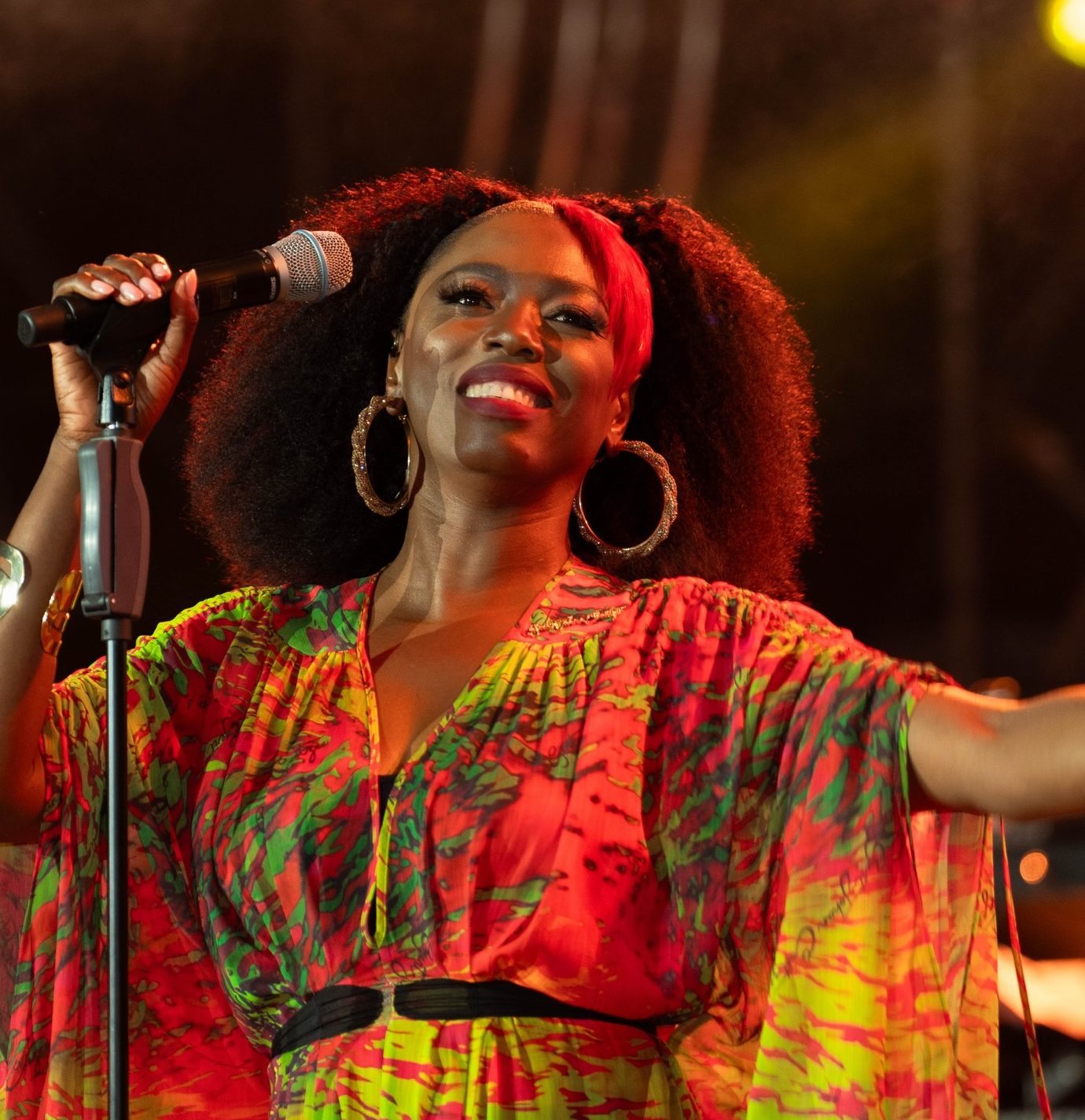
Lira’s return following her 2022 stroke offers a deeper lens into music as therapy, the reconstruction of voice, and the question of sustainability within African music.
The trajectory of an artist’s career is often evaluated through continuity. – measured by sustained output, public visibility, and uninterrupted engagement with audiences. Within this framework, interruption is frequently interpreted as decline. However, the return of Lira to performance following her 2022 stroke complicates this assumption. Rather than a simple resumption of activity, her re-emergence represents a process of neurological recovery, artistic reconfiguration, and personal recalibration.
This essay examines Lira’s return not as a conventional comeback, but as a case study in the relationship between music and cognitive rehabilitation, as well as its implications for understanding sustainability within the African music industry. It argues that her experience reveals the extent to which artistic practice can function as both expressive medium and therapeutic mechanism, while also foregrounding the structural pressures that shape artistic labour.
In 2022, Lira suffered a stroke that significantly affected her speech, interrupting a career defined by vocal expression. Aphasia, a condition commonly associated with stroke, impairs language production and comprehension, thereby disrupting one of the primary tools through which musicians operate. In Lira’s case, this disruption extended beyond professional limitations into fundamental aspects of identity, as the capacity to communicate – both musically and verbally – was compromised.
The significance of this interruption lies not only in its severity but in its implications for artistic continuity. Within popular music economies, absence often leads to displacement, as audiences and industry structures rapidly shift toward emerging acts. Lira’s withdrawal from performance therefore positioned her at the intersection of personal recovery and professional uncertainty.
Music as Therapeutic Modality
A critical dimension of Lira’s recovery process is the role of music as a therapeutic modality. Neurological research has long demonstrated that singing and speech are processed through partially distinct pathways within the brain. While speech production is typically localized within specific language centers, musical processing engages broader and more distributed neural networks.
This distinction helps to explain a key development in Lira’s rehabilitation: the relative accessibility of singing compared to speaking. As reported in her recovery journey, melodic expression became a means through which she could bypass impaired linguistic pathways, allowing her to reconnect with her voice in a functional capacity. In this context, music operates not merely as artistic output but as a form of neuro-cognitive reorganization.
The implications of this are twofold. First, it underscores the capacity of music to facilitate recovery in cases of neurological trauma. Second, it reframes artistic practice as an adaptive system, capable of sustaining expression even when conventional mechanisms are disrupted.
The process of recovery necessitated a reconfiguration of Lira’s relationship to her voice. Rather than returning to a pre-existing state, her artistic identity underwent a gradual reconstruction shaped by new physical and cognitive realities. This reconstruction involved both technical adaptation- relearning aspects of vocal control and speech – and conceptual reassessment, as the meaning of performance itself was reconsidered.

In this regard, her return challenges dominant narratives of resilience that emphasize restoration over transformation. Lira’s trajectory suggests that recovery is not a process of returning to an original condition, but of negotiating a new equilibrium. Her performances following recovery are therefore not continuations of past practice but expressions of a reconstituted artistic self.
An additional dimension of Lira’s experience concerns the reorientation of time. Prior to her stroke, her career operated within the accelerated tempo characteristic of the contemporary music industry, where productivity and visibility are closely linked. The demands of touring, recording, and public engagement create a continuous cycle of output that leaves limited space for rest or reflection.
Recovery introduced a different temporal framework, one defined by slowness, repetition, and incremental progress. This shift foregrounds a tension between the biological requirements of recovery and the economic imperatives of the music industry. In Lira’s case, the necessity of rest became non-negotiable, thereby challenging the assumption that artistic sustainability is contingent upon constant activity.

This tension is not unique to her experience. It reflects broader structural conditions within the African music industry, where rapid growth and increasing global visibility often intensify pressures on artists without corresponding investment in support systems.
Implications for the African Music Industry
Lira’s return has implications that extend beyond individual experience. As African music continues to gain prominence within global markets, the sustainability of its practitioners becomes an increasingly urgent concern. Industry discourse has largely focused on expansion – measured through international collaborations, streaming metrics, and festival appearances. However, less attention has been given to the conditions under which artists operate.
Her experience introduces a necessary counterpoint to dominant narratives of growth. It highlights the importance of health, well-being, and long-term support structures as integral components of artistic ecosystems. Without such considerations, the expansion of African music risks being undermined by the vulnerability of its practitioners.
Furthermore, her case underscores the need for institutional frameworks that can accommodate interruption without resulting in displacement. This includes mechanisms for reintegration, as well as broader recognition of the non-linear nature of artistic careers.

In conclusion, Lira’s return to performance cannot be adequately understood within the conventional framework of comeback narratives. It represents a complex process involving neurological recovery, artistic redefinition, and structural critique. Her experience demonstrates that music can function simultaneously as a medium of expression and a tool for rehabilitation, while also revealing the limitations of industry models that prioritize continuity over sustainability.
Ultimately, her trajectory invites a reconsideration of what it means to sustain an artistic career. Rather than emphasizing uninterrupted productivity, it suggests the need for systems that accommodate disruption and support recovery. In doing so, it shifts the focus from performance as output to performance as process – one that is shaped by the interplay between the body, the mind, and the structures within which artists operate.