Across cinema, music, literature, fashion, food and art, the second edition of MAMA AFRICA offered something more consequential than another European celebration of “African culture”: a meeting point shaped around Africa’s Portuguese-speaking cultural worlds and the diasporic city they have helped build.
African culture has never spoken in one language.
Yet as African music and popular culture have expanded internationally, the stories most easily circulated through global media have often followed a familiar linguistic map. Lagos, Accra, Johannesburg and, increasingly, Nairobi occupy significant space within international conversations about contemporary African culture. English-language media, streaming platforms, social networks and entertainment industries have helped make those centres unusually legible to audiences outside the continent.
That visibility is valuable. But it is not the whole map.
From 11 to 13 September, MAMA AFRICA 26 returned to Lisbon for its second edition with another proposition: what happens when African cultural exchange is organised around a different linguistic and historical corridor?
The festival describes itself as an encounter between Africa, the Portuguese language and the city of Lisbon. Organised by BOKAMUNDO — Associação de Artes Lusófonas de Língua Portuguesa com Voz Africana — its three-day programme brought cinema, music, literature, fashion, visual art, craft and gastronomy into the same cultural conversation.
That framing matters.
Africa Has More Than One Cultural Highway
Contemporary discussions around African music frequently organise the continent through genres and markets: Afrobeats from Nigeria, Amapiano from South Africa, Gengetone and an evolving alternative ecosystem from Kenya, Bongo Flava from Tanzania, Francophone rap and pop across parts of West and Central Africa.
Language, however, remains another form of infrastructure.
It determines which journalists encounter an artist, which markets understand a film, which publishers carry a writer, which audiences inherit a cultural reference and sometimes which African countries remain visible to one another.
Portuguese-speaking African countries – including Angola, Mozambique, Cabo Verde, Guinea-Bissau and São Tomé and Príncipe – carry histories and contemporary cultures that complicate any simplified idea of a singular African experience. Their relationships with Portugal, Brazil, Europe, neighbouring African societies and their respective diasporas have created cultural routes with their own musical languages, political memories and patterns of migration.
MAMA AFRICA 26 enters that geography through Lisbon.
The choice is not incidental. The festival itself treats Lisbon not simply as its venue but as part of its story, positioning the city as a place where African histories, Portuguese language and diasporic life encounter one another.
That transforms the festival from a showcase into something closer to a cultural junction.
Cinema Before the Concert
One of the more revealing choices in the MAMA AFRICA programme was how the festival began.
Before the open-air concerts and cultural market, its first evening at Cinema Ideal was dedicated to African cinema in Portuguese, with screenings of Denise Fernandes’ Hanami and Zézé Gamboa’s O Herói.
For a festival carrying “Africa” in its name, opening through cinema rather than constructing the entire experience around live music is significant.
African culture abroad is frequently packaged through its most immediately consumable forms: the concert, the dancefloor, the food stall, the colourful garment. Those forms are culturally important in their own right, but when they become the only vocabulary through which Africa is presented, celebration can flatten into spectacle.
Cinema asks an audience to stay with a story.
It makes room for memory, interiority, politics, landscape, language and contradiction.
Placing African cinema at the beginning of MAMA AFRICA therefore established an important tone: this would not only be a space in which Africa could be heard. It would also be somewhere Africa could be watched, read, discussed, worn, tasted and remembered.
From Cabo Verde to Guinea-Bissau
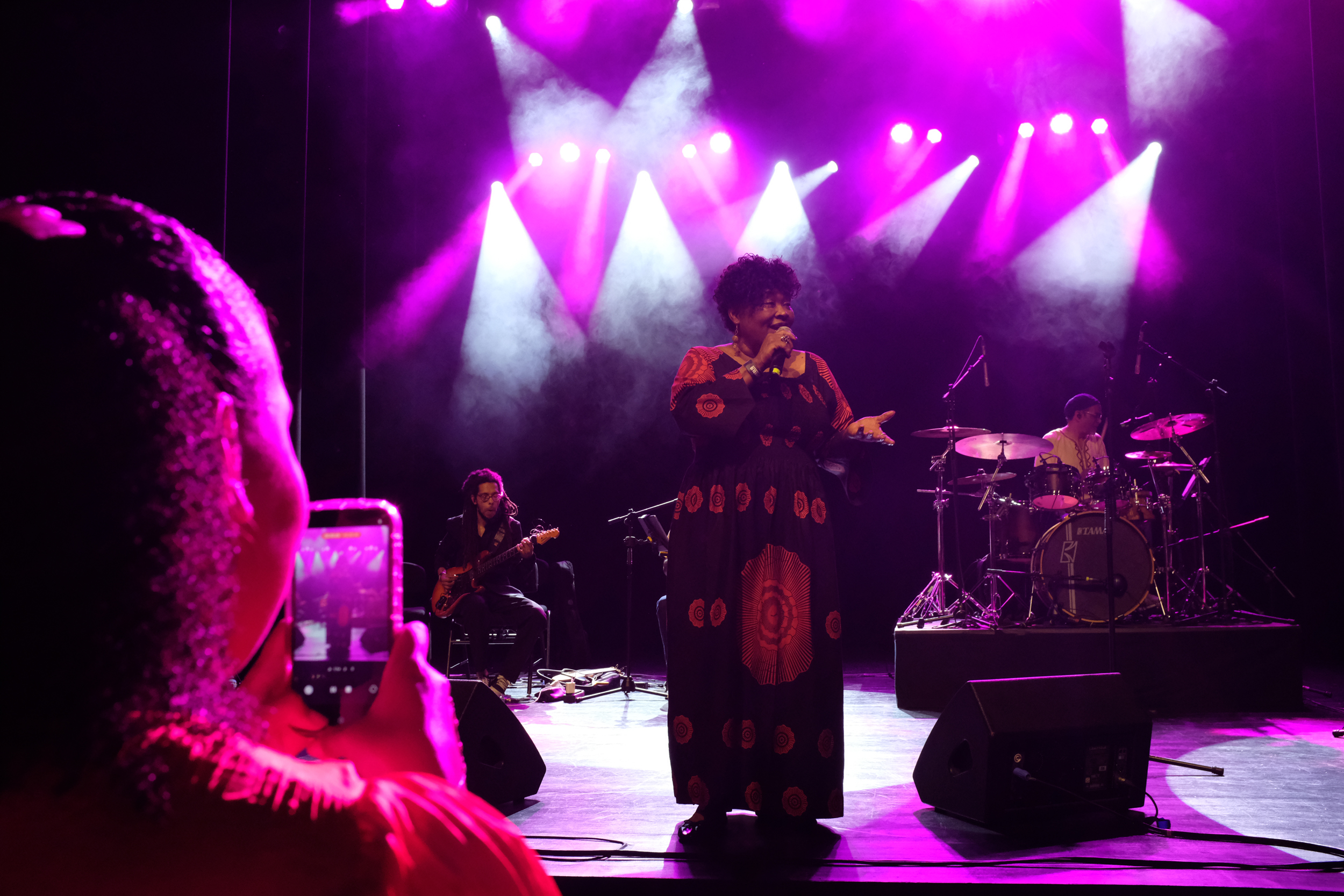
Music entered more directly on the second day at Lisbon’s Jardim do Miradouro de São Pedro de Alcântara.
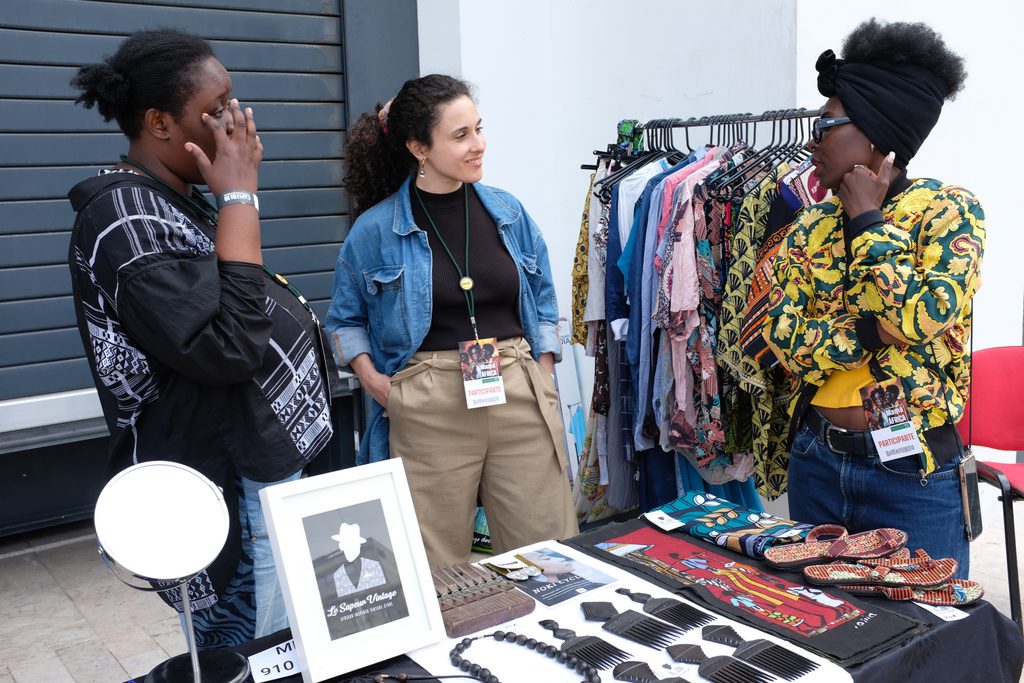
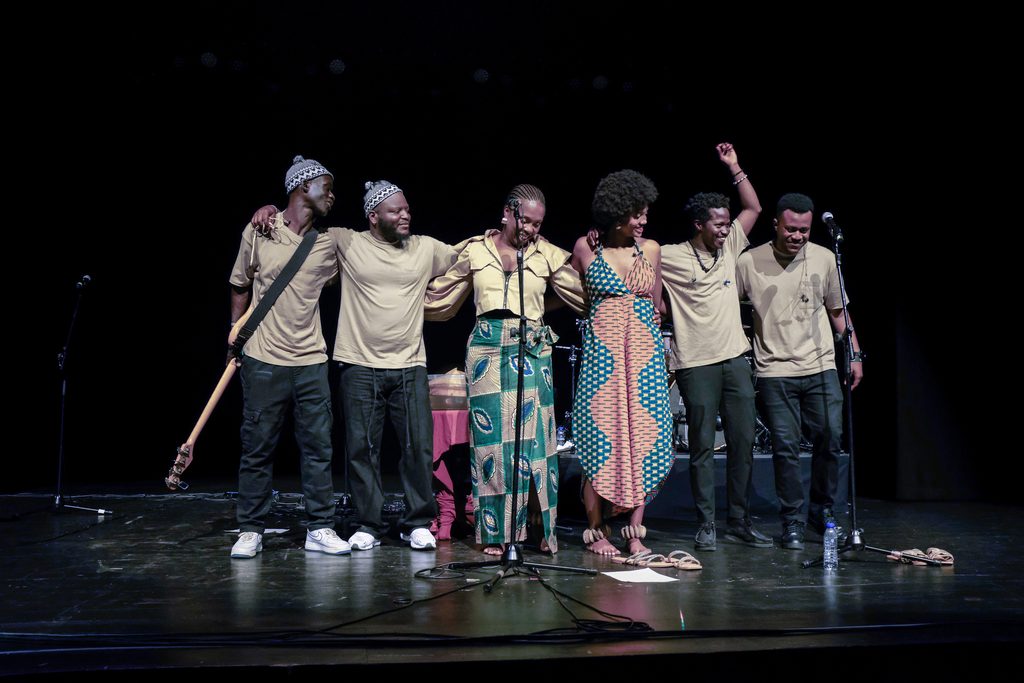
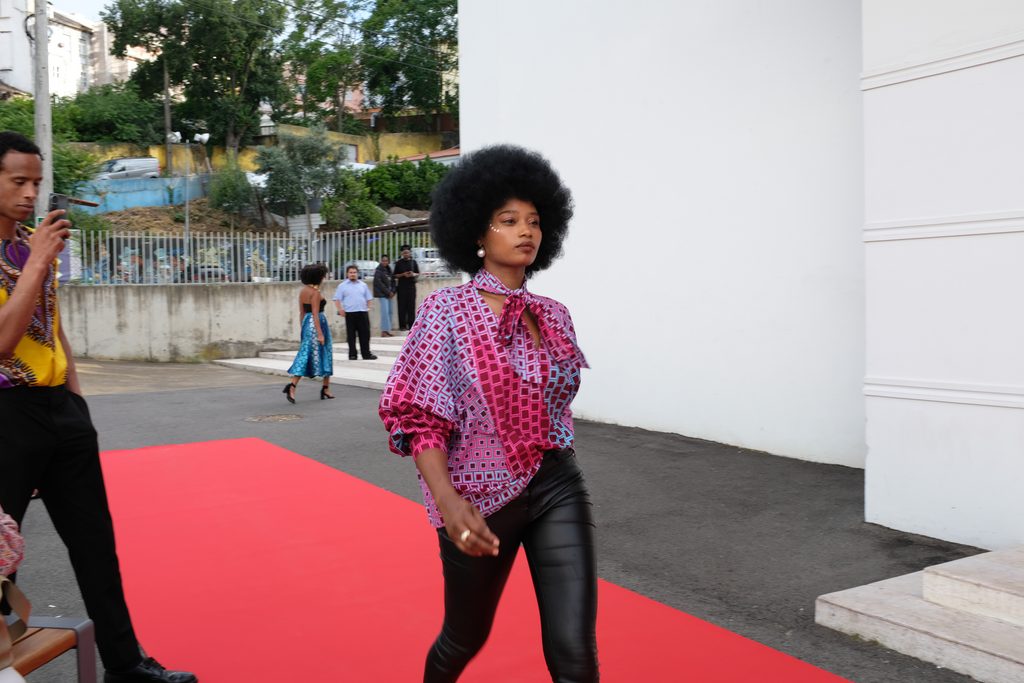
The programme paired an African market – bringing together craft, painting, literature, gastronomy and cultural projects – with performances from Cabo Verde’s Ecos & Corda and Guinea-Bissau’s Dara Haniel. The following day extended the interdisciplinary format through another cultural market, an African literature conversation and a fashion runway.
Seen individually, these are familiar festival components.
Seen together, they reveal the more interesting proposition.
A musician does not exist separately from a writer. Fashion does not develop outside visual culture. Food carries migration and memory. Film documents the societies from which music emerges. Craft contains knowledge. Literature preserves language. Markets create economic exchange around cultural production.
Culture works as an ecosystem.
And that ecosystem becomes particularly important for communities whose international visibility does not always match the depth of their cultural production.
The question is therefore not merely whether Lusophone African artists can become more visible.
It is whether the infrastructure through which African culture travels can become broad enough to accommodate more than the parts of Africa already easiest for global media to understand.
MAMA AFRICA Lisbon Is Not Just the Backdrop
There is another layer to the story.
African culture in Lisbon is not simply imported into the city for a September weekend.
Portugal’s relationship with Africa is inseparable from colonialism, migration, language, independence and the generations of African and Afro-descendant communities who have subsequently shaped Portuguese cultural life.
That history means any contemporary celebration of African culture in Lisbon exists within a more complicated relationship than host city and visiting continent.
MAMA AFRICA’s strongest potential lies precisely there: in treating Lisbon as a site of encounter rather than a neutral European stage upon which Africa performs.
Its organisers describe the festival through connections between memory and future, tradition and creation, Africa and Lisbon.
The distinction is important.
Diaspora culture is not simply culture preserved after migration. It changes cities.
Languages acquire new accents. Recipes travel. Genres collide. Children inherit multiple cultural references. Designers reinterpret symbols. Musicians encounter different technologies and audiences. Old identities survive while new ones are produced.
The diaspora does not merely carry culture from one place to another.
It creates additional places from which culture can speak.
Beyond the Anglophone Lens Of MAMA AFRICA
For Music Custodian, this is perhaps the most useful way to understand MAMA AFRICA 26.
The global expansion of African music has created extraordinary opportunities, but it has also exposed the limitations of the vocabulary through which the continent is sometimes discussed.
“African music” can become shorthand for whichever African music is currently most commercially visible.
“Global African culture” can quietly become a conversation dominated by the countries, languages and industries with the strongest international distribution.
Neither adequately describes the continent.
A genuinely Pan-African cultural ecosystem must be capable of moving between Lagos and Luanda, Nairobi and Maputo, Accra and Praia, Johannesburg and Bissau, Dakar and Lisbon without treating any one route as the default African experience.
That does not require diminishing the extraordinary international achievements of Anglophone African markets. Nor should “Lusophone Africa” become another convenient box into which radically different countries and cultures are compressed.
The task is expansion.
More languages. More archives. More routes. More centres.
Culture Needs Meeting Points
This is ultimately where a festival such as MAMA AFRICA becomes more interesting than its programme.
Festivals are temporary. Cultural infrastructure is not.
The deeper measure of initiatives like this is what survives after the stages are dismantled: which artists discover one another, which filmmakers find new audiences, which designers establish relationships, which books are purchased, which businesses acquire customers, which institutions begin collaborating and which members of a diaspora encounter a piece of their cultural inheritance differently.
That question becomes even more urgent as African culture grows economically.
Visibility alone is insufficient.
Creative economies require networks. Artists require markets. Communities require archives. Diasporas require spaces of cultural continuity. Emerging creators require institutions capable of placing their work within histories larger than a social-media cycle.
MAMA AFRICA’s second edition does not solve those questions by itself. No three-day festival can.
But its architecture suggests something useful: African cultural exchange becomes richer when music is allowed to sit beside cinema, literature, fashion, food, art and memory — and when the continent is approached through more than one linguistic doorway.
The next phase should therefore be about continuity.
Can meetings become networks? Can visibility become opportunity? Can festival audiences become year-round cultural communities? Can Lisbon’s position between Portuguese-speaking African cultures, Europe and the wider diaspora support durable systems for collaboration and exchange?
Those are more consequential questions than whether another African festival can fill a European square.
Because Africa’s global cultural future will not be adequately understood through Lagos, Johannesburg, Accra or Nairobi alone.
It will also move through Praia. Through Luanda. Through Maputo. Through Bissau. Through São Tomé. Through their diasporas. And through cities like Lisbon, where histories that once travelled through empire are increasingly being renegotiated through culture.
MAMA AFRICA 26 offers one meeting point on that much larger map.
Pan-Africanism becomes more meaningful when we can hear one another beyond the languages through which the world first learned to hear us.