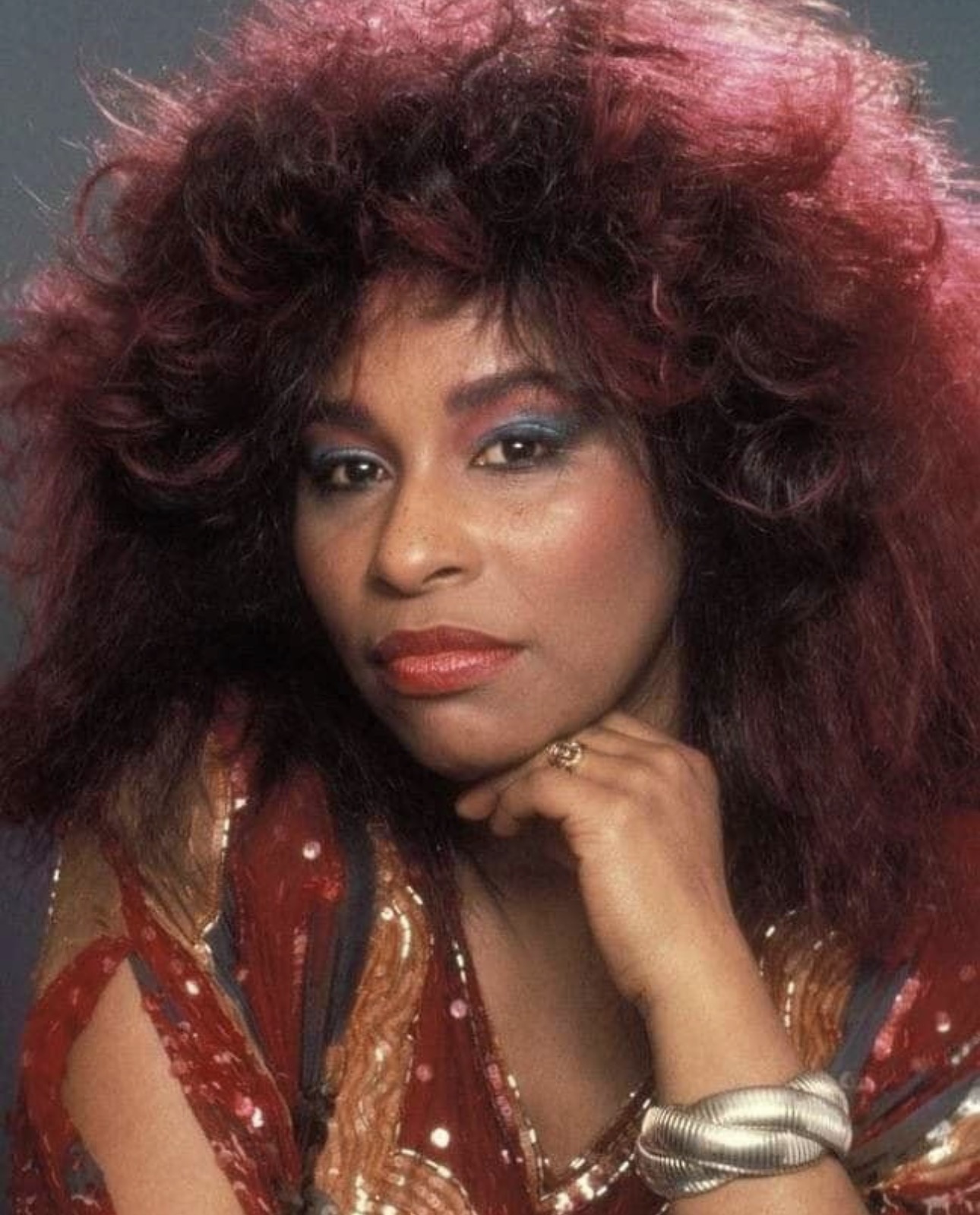
As social media users turn to artificial intelligence to imagine themselves in the 1980s, Chaka Khan has responded with something better: the archive.
The internet is busy imagining itself in the 1980s. Chaka Khan has receipts.
Across social media, a new AI-driven nostalgia trend has users transforming present-day photographs into imagined portraits from the decade – complete with enormous hairstyles, vintage clothing, warm studio lighting and the grainy texture associated with analogue photography. The exercise is playful: upload the person you are today and ask artificial intelligence to imagine the person you might have been forty years ago.
Khan, however, does not need the simulation.
Responding to the craze with an actual photograph of herself from the period, the music legend offered a wonderfully simple reminder: while much of the internet is asking AI to manufacture its relationship with the 1980s, she actually lived it.
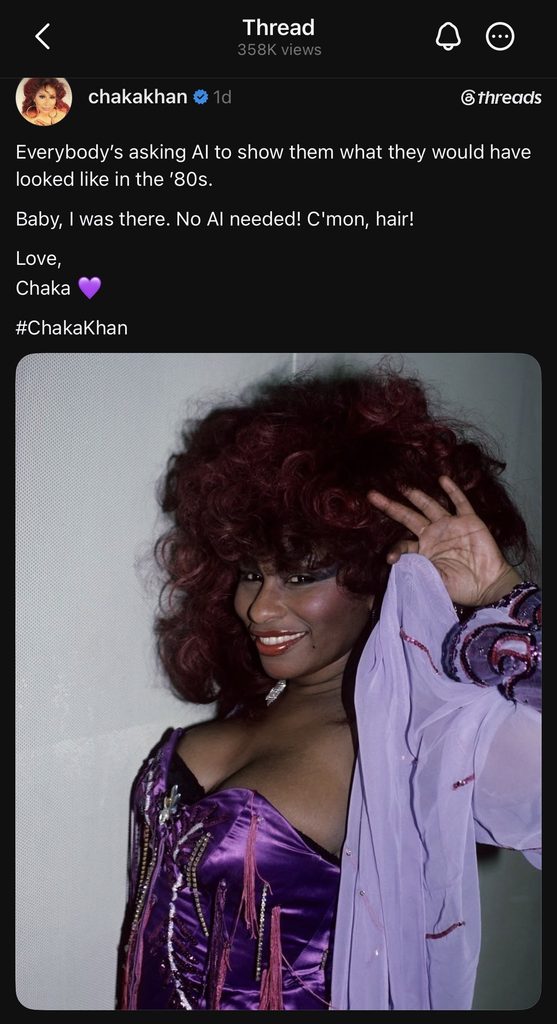
And Chaka Khan did considerably more than simply live through the decade.
By the early 1980s, Khan had already established herself through Rufus and a solo career that began with “I’m Every Woman” in 1978. But the decade would produce some of the records most closely associated with her enduring cultural image.
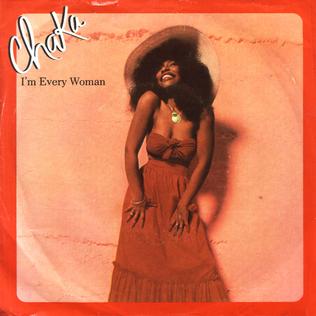
Rufus and Chaka Khan released “Ain’t Nobody” in 1983, before I Feel for You arrived the following year – an album whose title track brought Khan’s extraordinary voice into conversation with a Prince composition, Grandmaster Melle Mel’s rap, Stevie Wonder’s harmonica and the electronic possibilities reshaping popular music.
The accompanying “I Feel for You” video is particularly revealing when viewed four decades later. Breakdancing, DJ culture, bold colour, exaggerated silhouettes and Khan’s own unmistakable presence occupy the same frame. What now reads immediately as “the ’80s” was not yet historical costume. It was contemporary culture being constructed in real time.
That distinction matters.
AI can now reproduce many of the signs through which contemporary audiences recognise the decade. It can enlarge the hair, change the clothes, soften the photograph, introduce film grain and place a modern face inside a convincing approximation of another time.
But those visual signs did not appear by themselves.
An era does not create its own aesthetic. People do.
Musicians, photographers, designers, stylists, dancers, filmmakers, neighbourhoods and subcultures make thousands of creative decisions without knowing which of them history will eventually preserve as representative of their time.
Black musicians were not peripheral to that process in the 1980s. Across pop, R&B, funk, rock and the rapidly expanding language of hip-hop, they were helping construct the sounds, silhouettes, movements and images that would become inseparable from how the decade is remembered.
Khan’s playful response therefore raises a question more interesting than the internet trend that inspired it.
When artificial intelligence is asked to show us “the ’80s,” whose ’80s is it remembering?
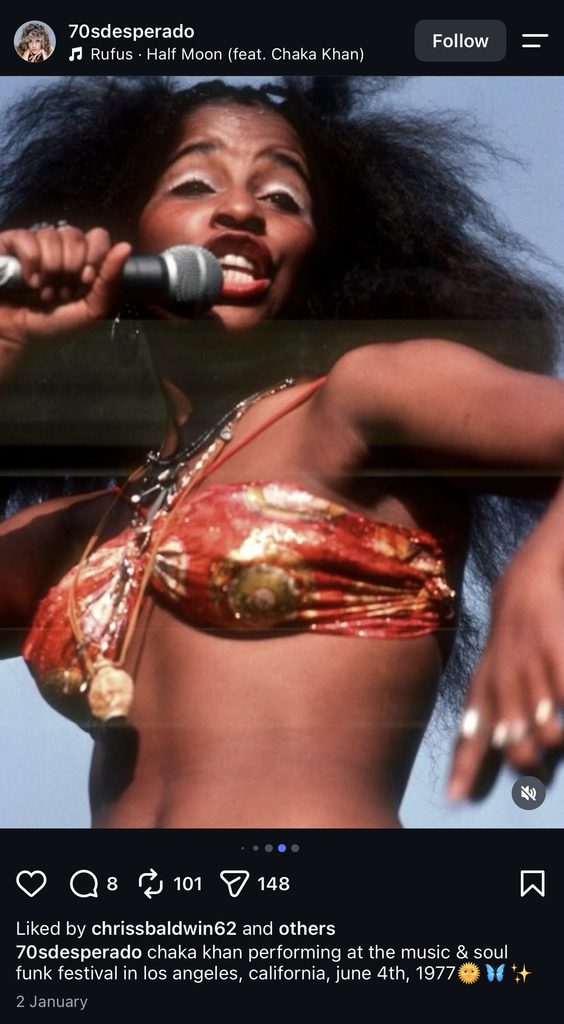
Was there ever one coherent aesthetic belonging to the decade? Or have decades of photographs, music videos, album covers, films, advertising and nostalgia compressed several competing cultural worlds into the handful of signs we now instantly recognise as 1980s?
Chaka Khan is one place to begin looking for an answer.
But she is certainly not the only one.
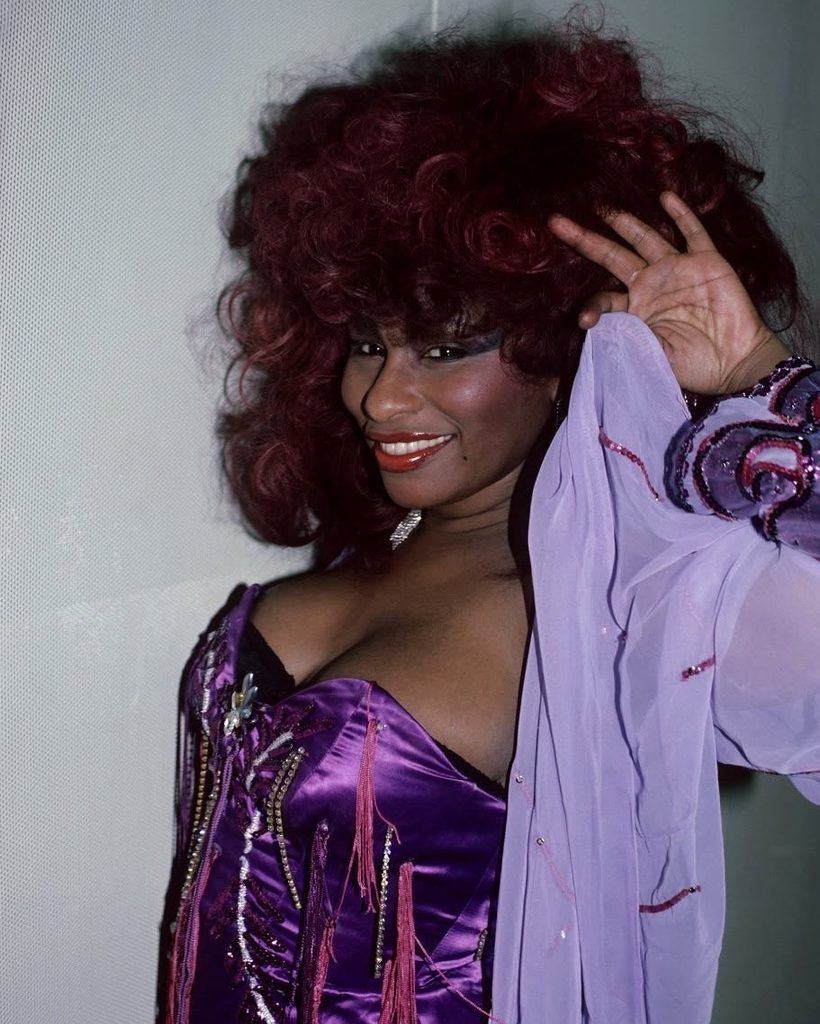
Prince was dismantling boundaries around genre, sexuality and masculine presentation. Grace Jones turned the Black body into architecture and performance. Michael Jackson helped transform the music video into global spectacle. Whitney Houston represented another scale of Black pop glamour. Janet Jackson made choreography, uniformity and control part of her visual language. Run-D.M.C. helped move street style into global popular consciousness. Sade offered restraint and tailoring in a decade remembered for excess. Tina Turner made reinvention itself look powerful.
Their aesthetics were not identical.
Yet all of them belonged to the same decade people are now asking machines to reconstruct.
Perhaps that is where the joke in Khan’s post becomes something worth preserving.
Artificial intelligence can make a remarkably convincing approximation of cultural memory. The archive can tell us where that memory came from.
And as the internet continues imagining what it might have looked like in the 1980s, Music Custodian will be going back to the people who were actually there – and asking a different question:
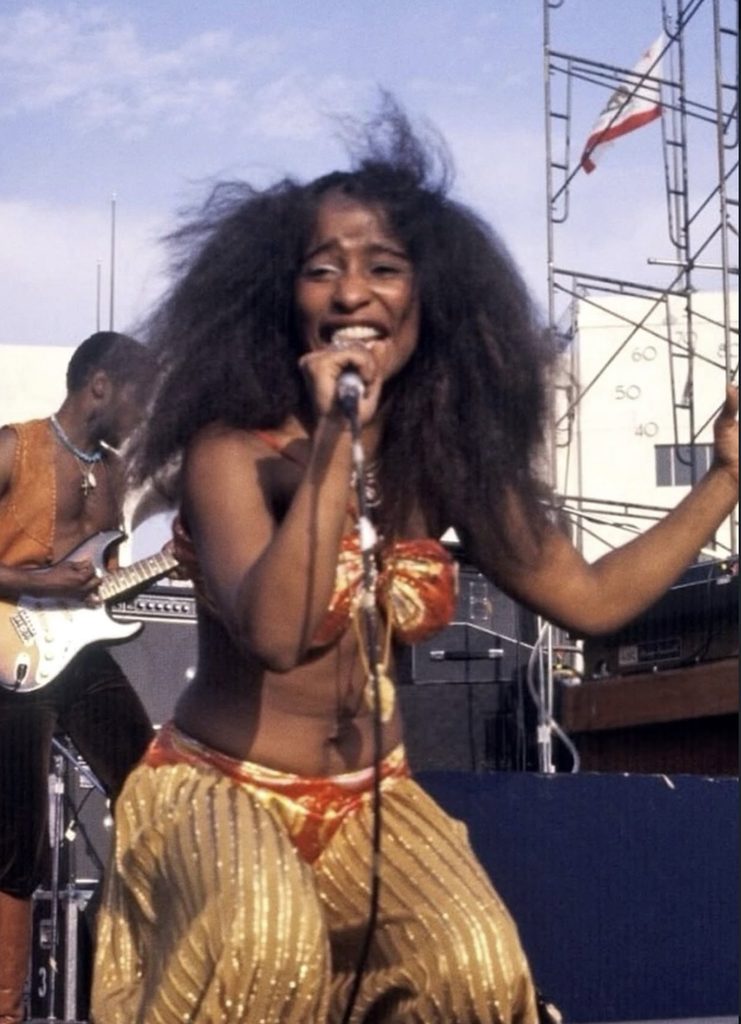
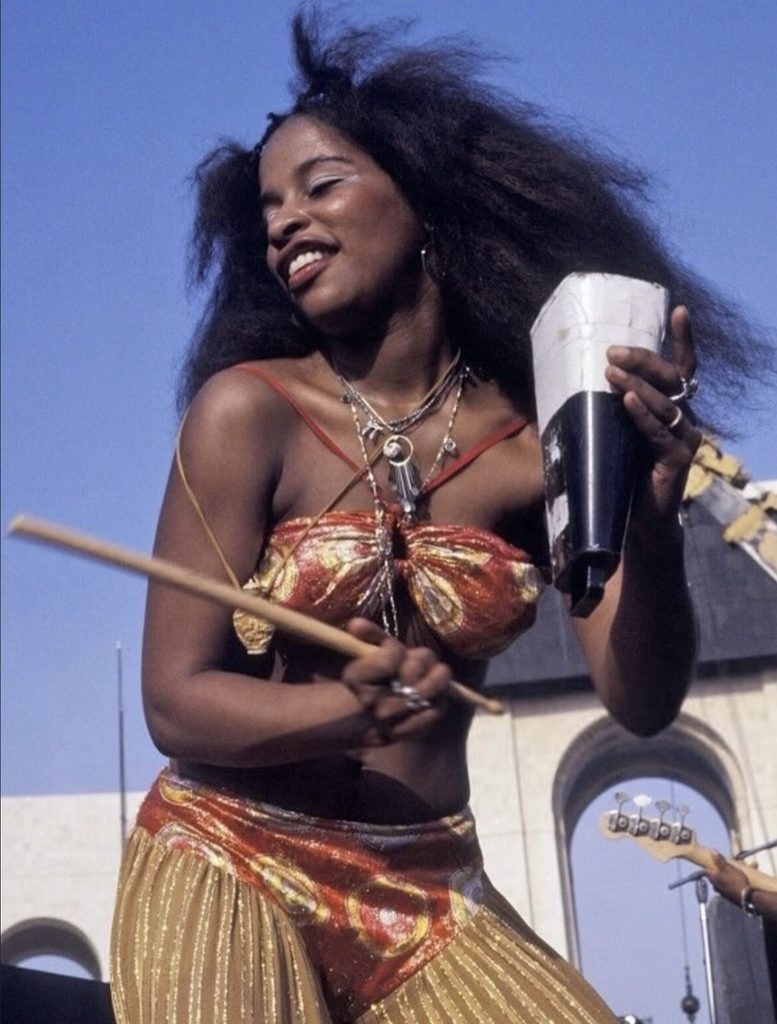
Who made the ’80s look and sound like the ’80s?
This story begins a Music Custodian editorial investigation into Black music, style, technology and cultural authorship in the 1980s.
#ChakaKhan #BlackMusicHistory #80sMusic #BlackExcellence #MusicCustodian