Afrobeats Heat Different continues to document what those sounds are doing while the map is still changing.
From Young Jonn and Rema to Yemi Alade, FOLA, The Cavemen., Gyakie, Medikal, Octopizzo and a closing South African movement, this week’s 19-track Afrobeats Heat Different documents an African music ecosystem becoming increasingly difficult to contain within a single definition.
The bigger African music becomes, the less useful it feels to insist that one word should explain everything happening inside it.
This week’s Afrobeats Heat Different begins somewhere familiar.
Young Jonn opens with Hold Somebody. Rema follows with Oh No. Shoday, Yemi Alade, FOLA, Bella Shmurda, Zlatan, KAESTYLE, M3lon and Abefe establish an opening movement rooted heavily in contemporary Nigerian pop.
But stay with the playlist long enough and the map changes.
J’Dess and The Cavemen. bring another relationship with Nigerian musical tradition into the room. Gyakie, Medikal and Larruso widen the Ghanaian presence. Octopizzo and AratheJay create an East African connection. Daecolm and DJ Maphorisa enter through a Zimbabwean-born, South London-raised artist meeting one of South Africa’s most influential contemporary producers. And by its final stretch, the playlist has moved decisively into South African musical territory.
Nineteen records.
Several musical traditions.
Multiple generations.
One increasingly difficult question:
When African music can move this freely, what exactly are we still asking Afrobeats to contain?
EDITORIAL OVERVIEW — THE CULTURAL THESIS OF AFROBEATS HEAT DIFFERENT
Afrobeats remains one of the most consequential cultural exports Africa has produced in contemporary popular music.
But its success has created an interesting problem.
The word has become powerful enough to travel further than some of the distinctions existing inside the music it describes.
What begins as Nigerian and Ghanaian popular music can quickly become a commercial umbrella beneath which amapiano, highlife, alternative R&B, rap, street-pop, electronic music and numerous regional traditions encounter one another.
This week’s Afrobeats Heat Different does not attempt to resolve that contradiction.
It documents it.
Nigeria remains the gravitational centre of the opening sequence, but it is not the boundary of the playlist.
Ghana enters.
East Africa enters.
Southern Africa increasingly takes over the closing movement.
Inherited musical languages encounter contemporary production. Established stars sit beside artists still constructing their first meaningful audiences. Collaboration repeatedly moves across borders.
The result is not one African sound.
It is a network of sounds increasingly capable of existing in conversation with one another.
And perhaps that is a more useful way to understand African popular music in 2026.
Not as one centre expanding endlessly outward.
But as several centres becoming increasingly connected.
Young Jonn is where this week’s journey begins.
The nineteen records around him demonstrate how far that journey can now travel.
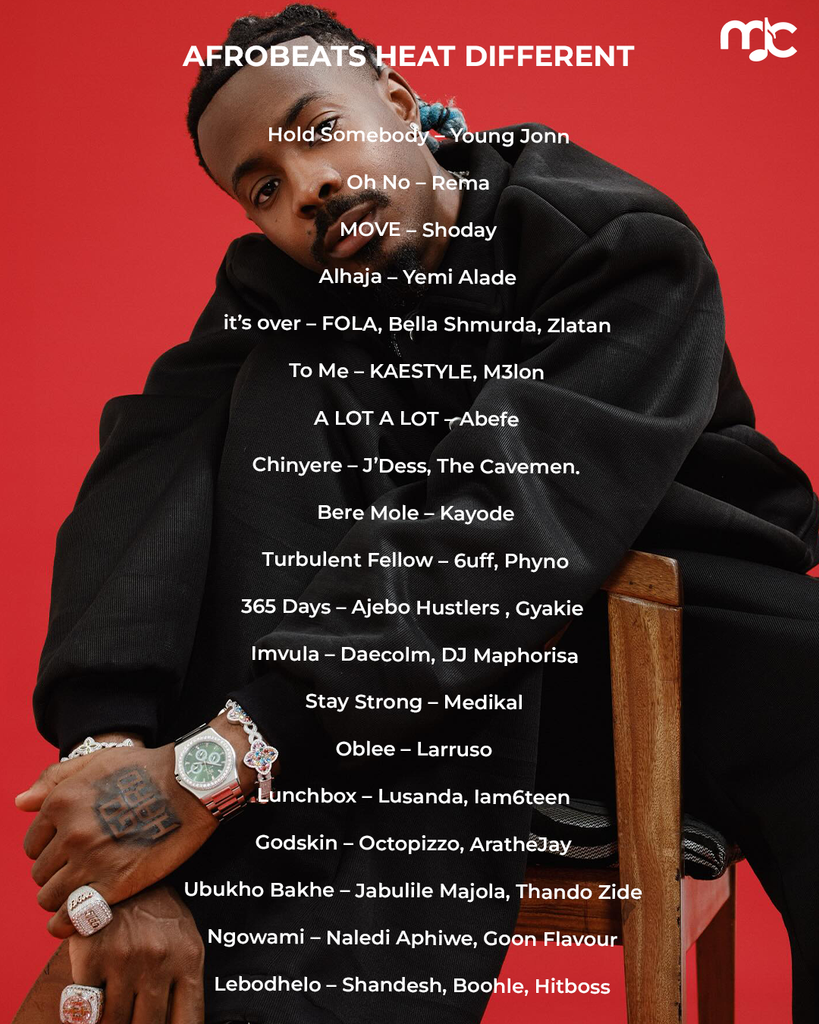
19 Tracks
COVER STORY — YOUNG JONN KNOWS HOW TO MOVE
Young Jonn occupies an unusual position within contemporary Nigerian pop.
Before audiences became accustomed to seeing him at the centre of his own records, he had already spent years helping construct records for other people.
Production came first.
The transition into performing therefore did not begin with someone learning music in public. It introduced audiences to another expression of someone who already understood how records were assembled.
That distinction remains useful when listening to Hold Somebody.
The record does not need to behave like a dramatic declaration of artistic reinvention.
Instead, it continues the transformation that has gradually turned Young Jonn from a producer associated with other artists’ hits into a recognisable pop proposition of his own.
And transformation is particularly appropriate for this edition.
Because the playlist surrounding him is doing something similar.
It begins inside territory listeners may readily associate with contemporary Afrobeats before gradually complicating that familiarity.
Nigeria gives way to Ghana.
Pop gives way to inherited musical language.
Rap enters.
East Africa enters.
South African rhythms increasingly shape the final movement.
The centre keeps moving.
Young Jonn understands something about that.
His career has depended on movement too.
From behind the record to the front of it.
From producer to recording artist.
From helping define other people’s sound to constructing a public musical identity of his own.
Hold Somebody therefore gives this week’s playlist more than an opening track.
It gives it a useful metaphor.
COVER STAR RATIONALE
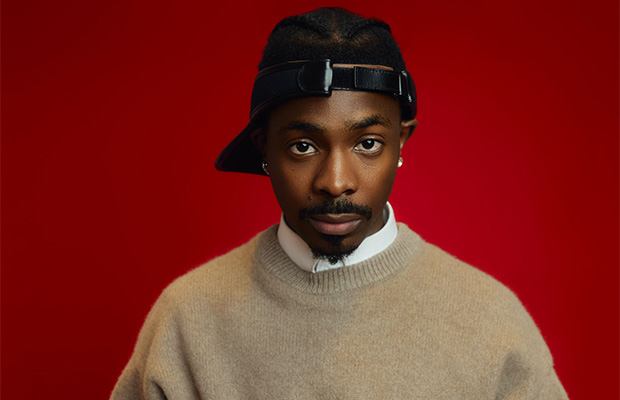
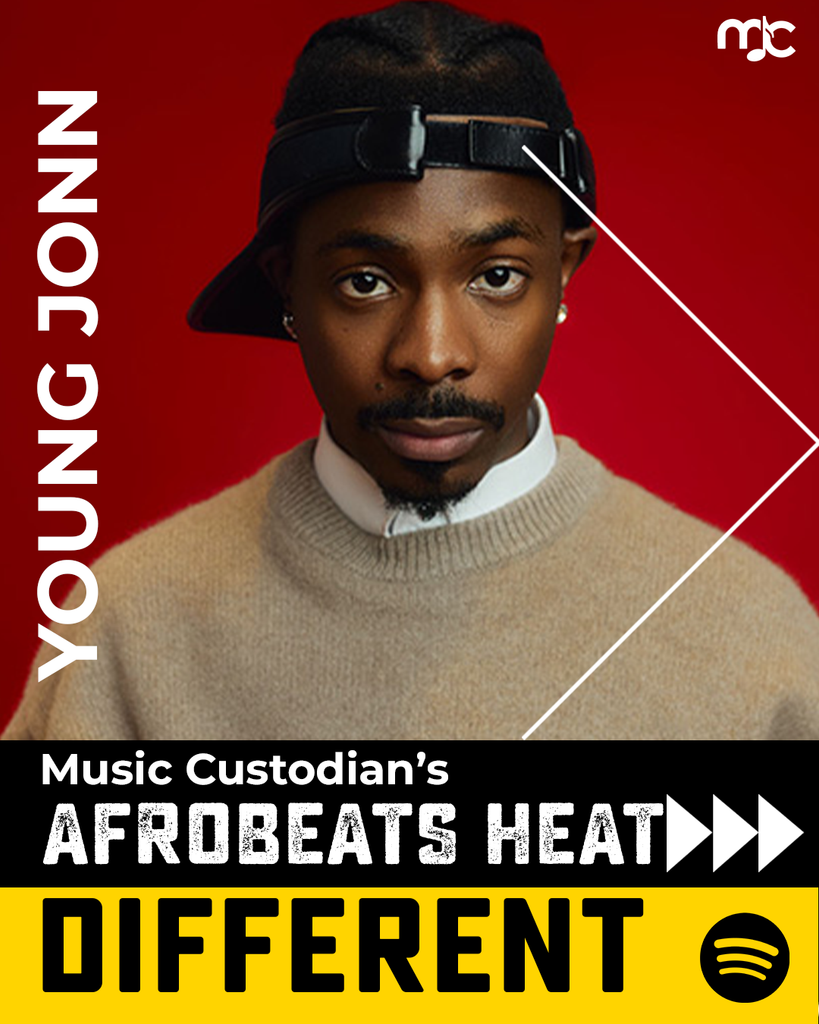
Cover Artist: Young Jonn
Cover Record: Hold Somebody
Release: September 9, 2026
Young Jonn takes the cover because Hold Somebody provides the clearest opening point for this week’s editorial journey.
The cover is not a weekly award.
Nor does it automatically declare one record superior to the other eighteen.
Within Afrobeats Heat Different, the cover identifies the artist through whom the wider story of the week can begin.
Young Jonn’s own career makes him particularly useful in an edition concerned with movement.
He has occupied multiple positions within Nigerian popular music: producer, collaborator, songwriter and increasingly visible recording artist.
That ability to move between roles reflects something happening across the wider African music ecosystem.
The old boundaries are becoming less stable.
Artists move between genres.
Producers become performers.
Regional sounds enter global pop.
Traditional musical knowledge appears inside contemporary production.
Collaborations connect cities that once operated largely inside separate markets.
Young Jonn does not represent all of those movements.
He does not need to.
He simply provides the first door into a playlist full of them.
SEQUENCING RATIONALE — FROM THE CENTRE OUTWARD
Hold Somebody opens because Young Jonn gives the playlist an immediately recognisable Nigerian pop centre.
Rema’s Oh No follows, extending that contemporary pop vocabulary before Shoday’s MOVE and Yemi Alade’s Alhaja broaden the opening run across different generations and expressions of Nigerian mainstream music.
Then comes it’s over.
FOLA, Bella Shmurda and Zlatan bring three distinct personalities into one record, reinforcing a pattern increasingly central to contemporary African music: collaboration is becoming infrastructure.
It is not simply decoration around individual careers.
Features connect audiences.
Scenes overlap.
Artist communities become visible.
Musical identities travel through one another.
KAESTYLE and M3lon’s To Me, followed by Abefe’s A LOT A LOT, continue the Nigerian movement before the playlist reaches an important transition.
Chinyere — J’Dess and The Cavemen.
Here, the relationship with musical inheritance becomes more explicit.
The Cavemen.’s contemporary engagement with highlife reminds us that new African music is frequently old African knowledge learning another language.
Kayode’s Bere Mole follows before 6uff and Phyno’s Turbulent Fellow returns the sequencing toward rap and another form of cultural specificity.
Then the geography widens again.
Ajebo Hustlers and Ghana’s Gyakie connect on 365 Days.
Daecolm and DJ Maphorisa’s Imvula pushes the playlist toward Southern Africa through a Zimbabwe-born, South London-raised artist whose musical world increasingly crosses Afrobeat, Afrohouse and R&B, meeting Maphorisa’s South African production universe.
Medikal’s Stay Strong and Larruso’s Oblee strengthen the Ghanaian movement.
Then comes Lunchbox from Lusanda and Iam6teen before perhaps the playlist’s clearest East African bridge arrives:
Godskin — Octopizzo and AratheJay.
Kenya and Ghana meet.
Not as a regional quota.
As part of the actual musical conversation.
And from there, the final movement becomes increasingly South African.
Ubukho Bakhe — Jabulile Majola and Thando Zide.
Ngowami — Naledi Aphiwe and Goon Flavour.
Lebodhelo — Shandesh, Boohle and Hitboss.
The playlist begins with Young Jonn.
It ends somewhere entirely different.
That journey is intentional.
THIS WEEK’S 19 RECORDS
| # | TRACK | ARTIST(S) |
|---|---|---|
| 1 | Hold Somebody | Young Jonn |
| 2 | Oh No | Rema |
| 3 | MOVE | Shoday |
| 4 | Alhaja | Yemi Alade |
| 5 | it’s over | FOLA, Bella Shmurda, Zlatan |
| 6 | To Me | KAESTYLE, M3lon |
| 7 | A LOT A LOT | Abefe |
| 8 | Chinyere | J’Dess, The Cavemen. |
| 9 | Bere Mole | Kayode |
| 10 | Turbulent Fellow | 6uff, Phyno |
| 11 | 365 Days | Ajebo Hustlers, Gyakie |
| 12 | Imvula | Daecolm, DJ Maphorisa |
| 13 | Stay Strong | Medikal |
| 14 | Oblee | Larruso |
| 15 | Lunchbox | Lusanda, Iam6teen |
| 16 | Godskin | Octopizzo, AratheJay |
| 17 | Ubukho Bakhe | Jabulile Majola, Thando Zide |
| 18 | Ngowami | Naledi Aphiwe, Goon Flavour |
| 19 | Lebodhelo | Shandesh, Boohle, Hitboss |
TRACK SPOTLIGHTS — SIX RECORDS WORTH SITTING WITH
HOLD SOMEBODY — Young Jonn
Young Jonn’s strongest advantage as a recording artist may still be the instinct developed during his years as a producer: understanding what a record needs without overcrowding it.
Hold Somebody opens this edition because it carries immediacy without requiring spectacle.
But its placement also allows Young Jonn’s career to become part of the editorial argument.
African popular music increasingly rewards artists capable of moving between roles rather than remaining trapped inside the identity through which audiences first encountered them.
Young Jonn has already demonstrated that movement.
Now the question is how far his artist identity can continue travelling.
IT’S OVER — FOLA, Bella Shmurda & Zlatan
Three artists occupying different positions within contemporary Nigerian music meet here.
That alone makes the record useful to the sequencing.
But the larger significance lies in what collaboration increasingly does within African popular music.
It transfers audiences.
It creates networks between scenes.
It places emerging voices beside established ones.
It allows careers to intersect rather than develop as isolated verticals.
The collaboration is becoming infrastructure.
And records like this make that infrastructure audible.
CHINYERE — J’Dess & The Cavemen.
One of the easiest mistakes to make when discussing contemporary African music is treating tradition and modernity as opposing forces.
They rarely are.
The Cavemen.’s career has repeatedly demonstrated how highlife can function as a living musical language rather than archival nostalgia.
With J’Dess, Chinyere extends that conversation.
Its importance within this playlist is therefore not that it represents something “traditional” among contemporary records.
It demonstrates that inherited African musical knowledge remains contemporary precisely because artists continue finding new contexts in which it can live.
365 DAYS — Ajebo Hustlers & Gyakie
Nigeria and Ghana have always occupied foundational positions within the history represented by the term Afrobeats.
But contemporary collaboration between both markets increasingly feels less ceremonial.
It feels normal.
That normality matters.
Ajebo Hustlers and Gyakie do not need the record to announce itself as a Pan-African collaboration for the collaboration to carry continental meaning.
The border crossing is embedded inside the music itself.
And perhaps that is when regional exchange becomes most interesting — when movement stops requiring explanation.
IMVULA — Daecolm & DJ Maphorisa
Daecolm’s biography already complicates straightforward geography.
Born in Zimbabwe, raised in South London and increasingly moving between London and Johannesburg, his musical identity has developed across several cultural environments.
Pairing him with DJ Maphorisa therefore feels particularly appropriate.
Imvula connects Daecolm’s increasingly borderless Afrobeat, Afrohouse and R&B sensibilities with Maphorisa’s South African production world.
The result is representative of a wider development across African music: artists do not simply cross borders after records are completed.
Increasingly, the crossing itself is part of how the records are made.
GODSKIN — Octopizzo & AratheJay
This is one of the week’s most useful records for Music Custodian’s wider Pan-African listening project.
Octopizzo brings Nairobi into conversation with AratheJay’s Ghanaian world, creating an East-West connection that does not need Lagos to function as intermediary.
That matters.
A genuinely continental music ecosystem cannot depend indefinitely on every meaningful African collaboration passing through one dominant market.
The more interesting future is networked.
Nairobi speaks to Accra.
Johannesburg speaks to Lagos.
Kampala speaks to Dar es Salaam.
Abidjan speaks to Dakar.
The map becomes richer when African cities can increasingly encounter one another directly.
Godskin belongs inside that possibility.
ARTISTS TO WATCH THIS WEEK
Young Jonn
Not because appearing on the cover suddenly makes his evolution noteworthy, but because the longer arc remains interesting. The producer-to-artist transition has already succeeded at visibility. The next question is longevity: what does Young Jonn’s recording career become once the novelty of that transition has disappeared?
FOLA
His continued presence within contemporary Nigerian releases suggests something larger than a sequence of features and singles. What matters now is whether those appearances consolidate into a distinct artistic identity capable of surviving the speed of the current market.
6uff
Recurring appearances matter.
A useful editorial playlist should remember what it previously discovered rather than treating every Friday as cultural amnesia.
6uff’s continued presence around increasingly established collaborators gives Music Custodian reason to keep watching.
AratheJay
The Ghanaian artist’s appearance alongside Octopizzo provides another useful signal around an artist whose movement deserves continental attention. Collaborations of this kind can become important bridges between audiences that do not always encounter one another naturally.
Naledi Aphiwe
Her place inside the playlist’s South African closing movement reinforces why the final section matters. Afrobeats Heat Different should not simply discover songs; it should help determine which developing voices deserve to become more visible within Music Custodian’s wider editorial radar.
WHY THIS PLAYLIST MATTERS
The easiest version of New Music Friday is a list.
The more useful version is a document.
Nineteen songs arrived here from different artists, scenes and musical traditions.
But curation becomes meaningful only when we begin asking why they belong together.
Young Jonn can open beside Rema because both occupy recognisable spaces within contemporary Nigerian pop.
Yemi Alade can exist alongside FOLA because African music does not progress through permanent generational replacement.
J’Dess and The Cavemen. can carry highlife knowledge into the same listening journey as Daecolm and DJ Maphorisa’s cross-border contemporary production.
Gyakie and Medikal can expand the Ghanaian presence before Octopizzo and AratheJay connect East and West Africa.
And a playlist beginning in Nigerian pop can end inside a distinctly South African musical movement without somehow ceasing to document contemporary African popular music.
That is precisely the point.
The bigger African music becomes, the more difficult it is to explain through one centre.
Lagos remains enormously consequential.
So does Johannesburg.
Accra.
Nairobi.
And numerous other cities developing their own artists, audiences, institutions and musical languages.
The future may therefore belong less to one African music capital than to a network of centres capable of exchanging sound, knowledge, collaborators and audiences.
That does not make geography irrelevant.
It makes geography more interesting.
Because the records capable of travelling furthest increasingly do not have to erase where they came from.
They can carry somewhere specific into somewhere new.
African music is not moving toward one sound.
It is becoming more confident in having many.
And Afrobeats Heat Different should continue documenting what those sounds are doing while the map is still changing.