The 68th Grammy Awards returned to Los Angeles with all the theatre, prestige, and cultural tension that now defines Music’s Biggest Night. Held in the heart of L.A. and organised by the Recording Academy, the ceremony once again reminded the world that the Grammys are not just an award show; they are a mirror reflecting where the global music industry currently stands.
Broadcast live on the CBS Television Network and streamed globally via Paramount+, the 2026 edition delivered spectacle, historic wins, predictable outcomes, and controversial moments in equal measure. From Bad Bunny’s genre-shifting dominance to heated conversations around African representation, the night extended far beyond the stage and into timelines, group chats, reaction videos, and industry think pieces.


At Music Custodian, our responsibility goes beyond reporting winners and red carpet moments. We document culture, yes, but more importantly, we interrogate it. And the 68th Grammy Awards gave us a lot to interrogate.
Beyond the trophies, this year’s Grammys reignited long-standing debates about ecosystem power, voting structures, and whose culture gets centred and rewarded.
One argument that resurfaced strongly online is the idea that the Grammys, particularly in Hip-Hop and R&B, function as “L.A. awards.” This is not an emotional claim; it is structural.
There are approximately 15,000 Recording Academy voting members, and the Academy itself acknowledges that the Los Angeles Chapter is its oldest and largest. In genres that are still deeply regional in sound, culture, and community, that imbalance matters.
Hip-hop and R&B do not sound the same everywhere. Atlanta does not sound like Los Angeles. New York does not sound like Miami. Texas does not sound like Chicago. Each region carries its own sonic history, cultural codes, and community context.
When the largest voting footprint sits in one city, it creates an inherent advantage. Even artists who are not originally from Los Angeles but relocate there benefit from proximity to voters, listening sessions, industry events, and informal spaces where taste and perception are shaped long before ballots are cast.
In a peer-voting system, proximity is power.
A Possible Fix
If the Recording Academy truly wants the Grammys to represent the “best in the country”, then the process must reflect the country, not just its biggest chapter.
A practical solution would be to cap voting power by city for genres like Hip-Hop and R&B. Imagine a geographically balanced system: 2,000 voters from Los Angeles, 2,000 from New York, 2,000 from Atlanta, 2,000 from Miami, 2,000 from Texas, and so on.
The voting remains peer-based, but it becomes geographically fair.
Until structural adjustments like this are considered, these awards, at least within certain genres, will continue to struggle with credibility. Because when process skews, meaning follows.
Cultural Impact, Global Wins, and Deserved Recognitions
Despite ongoing structural concerns, it would be dishonest to downplay the cultural weight of many of this year’s wins. Bad Bunny’s historic Album of the Year victory reaffirmed the unstoppable rise of non-English music on the global stage, while Kendrick Lamar’s continued dominance further cemented his status as one of the most critically consistent artists of his generation.
Leon Thomas’ success across R&B categories signalled a renewed appetite for musically layered, performance-driven storytelling, as Doechii’s wins confirmed her position as one of the most compelling rap mavericks of this era.


Kehlani’s recognition, particularly in performance and songwriting, served as a timely reminder that emotional resonance still holds currency. These moments were not accidental — they reflected reach, impact, and sustained artistic excellence. With artists like Tyler, The Creator, Lady Gaga, and Sabrina Carpenter also featuring prominently across major categories, the night underscored just how competitive and culturally charged today’s musical landscape has become.
Beyond the headlines, the ceremony also carried a quiet but deeply significant moment for African music history. Before the main ceremony even began, the weekend opened with a historic moment for African music. Fela Anikulapo Kuti was posthumously honoured with a Grammy Lifetime Achievement Award at the Recording Academy’s Special Merit Awards on Saturday, January 31, making him the first African artist to receive the honour. The award was accepted on his behalf by his children, Yeni, Kunle, Shalewa, and Femi Kuti — a moment that quietly bridged generations of African cultural influence.


As ever, the Grammys proved to be less about unanimous agreement and more about sparking conversation, a reflection of an industry constantly negotiating culture, power, and progress.
The Category That Broke the Internet
Just when the night seemed to be settling into its rhythm, the moment arrived that would dominate timelines, group chats, and think pieces long after the lights went down. When the Grammys announced Tyla as the winner of Best African Music Performance for Push 2 Start, the African music conversation cracked wide open. Across Nigerian online spaces in particular, reactions came fast and loud. Fans, critics, tastemakers, and industry executives all stepped into the discourse, many speaking from deeply emotional and invested positions.
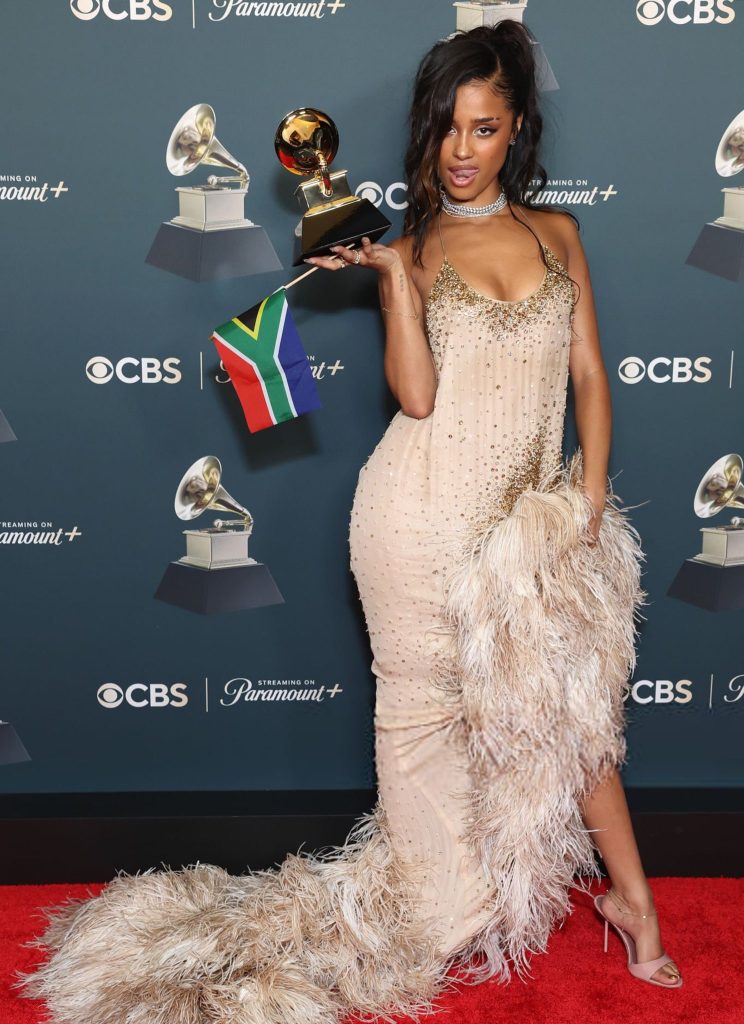
For some, the win felt expected, a natural outcome of Tyla’s global momentum. For others, it was swiftly labelled “Afrobeats’ biggest robbery at the Grammys.” At the heart of the debate sat a familiar, unresolved question: is this category meant to be genre-driven, or is it simply an Africa-wide designation? Critics argued that Push 2 Start leans more toward pop than a distinctly African sonic identity, raising concerns about whether texture, rhythm, and cultural roots are being softened in pursuit of global palatability.
Supporters countered with the numbers: reach, international reception, cultural visibility, and Tyla’s undeniable upward trajectory. By the end of the night, Nigeria walked away from the 2026 Grammy Awards without a win despite nominations in two categories, while Tyla secured her second Grammy victory, following her 2024 breakthrough with Water. The win further solidified her status as one of Africa’s most dominant contemporary exports.
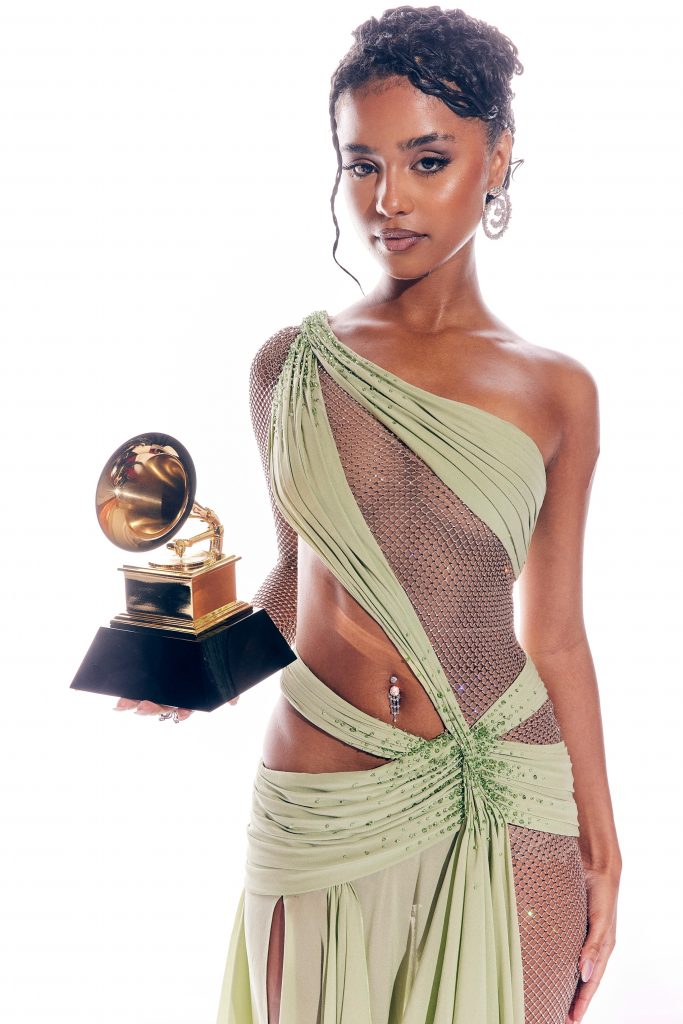
She emerged victorious from a heavyweight lineup that included Burna Boy (Love), Davido and Omah Lay (With You), Ayra Starr and Wizkid (Gimme Dat), as well as Eddy Kenzo and Mehran Matin (Hope & Love). By any measure, it was a fiercely competitive category and one that continues to fuel necessary conversations about sound, identity, and recognition on the global stage.
Separating Critique from Agenda
What remains troubling is how quickly wins in this category are often discredited, not through thoughtful critique but through personal agendas and nationalistic bias. The Grammys, flawed as they are, do not erase an artist’s merit simply because your preferred nominee did not win.
Yet, beyond the noise and hot takes, there is a pattern that continues to feel unsettling. Wins in this category are often rushed into discredit, not through measured critique or honest analysis, but via personal agendas and nationalistic sentiment. The Grammys, for all their imperfections, do not suddenly strip an artist of merit simply because a different favourite did not walk away with the trophy.
Nomination, in itself, is recognition. Winning is affirmation. And Tyla’s impact is not abstract — it is measurable. Culturally, commercially, and globally, the numbers speak plainly, as does the scale of her audience. Since its introduction in 2024, the Best African Music Performance category has offered African music a wider global lens. Yes, the category comes with limitations. Yes, its criteria demand a clearer definition. But none of these realities diminishes the achievements of those who have won within it.
In time, perhaps artists like Tyla will be recognised beyond regional framing, standing firmly within global pop and performance categories where their work already competes. Until then, a win remains exactly what it is: a win.
The Bigger African Conversation: Validation vs Infrastructure
As the dust settled and the timelines cooled, a familiar question resurfaced, one that shows up every awards season, but felt especially loud this year: should African artists continue chasing validation from international institutions, or should the focus shift entirely toward building our own?


As with most things in this industry, the answer isn’t extreme. It lives somewhere in the middle. Calls to strengthen African-owned award systems are not only valid but necessary.
However, the uncomfortable truth is that the African music industry is still in the process of building the infrastructure, governance, and long-term investment credibility required to sustain an institution with the global trust and influence of the Grammys.
That reality doesn’t signal impossibility; it simply points to a longer road ahead. Global recognition should never replace local value, but it also cannot be ignored in a world where international platforms continue to shape touring circuits, brand partnerships, distribution pipelines, and cultural exchange. For now, both conversations must exist side by side.
Our Position at Music Custodian
At Music Custodian, neutrality doesn’t mean standing on the sidelines. It means approaching culture with care, staying unbiased, and always prioritising clarity over noise and context over spectacle.
We operate at the intersection of documentation and discernment. Beyond reporting what happens, we interrogate why it matters, how it connects, and what it reveals about the systems shaping culture. Music, for us, is never sound; it is infrastructure, access, proximity, power, and perception playing out in real time.
The 68th Grammy Awards reinforced this truth. Long after the trophies were handed out, the conversations remained loud, emotional, and necessary, a reflection of an industry still grappling with its structures and contradictions.
And while much of the night will be remembered for the debates it sparked, the wins themselves remain an essential part of the record. Below is the complete list of winners from the 2026 Grammy Awards — a snapshot of the artists, projects, and performances that defined Music’s Biggest Night.
FULL WINNERS LIST
Album of the Year
Bad Bunny – Debí Tirar Más Fotos – WINNER
Justin Bieber – Swag
Sabrina Carpenter – Man’s Best Friend
Clipse – Let God Sort Em Out
Lady Gaga – Mayhem
Kendrick Lamar – GNX
Leon Thomas – Mutt
Tyler, the Creator – Chromakopia
Record of the Year
Rosé & Bruno Mars – APT
Kendrick Lamar with SZA – Luther – WINNER
Bad Bunny – DtMF
Sabrina Carpenter – Manchild
Doechii – Anxiety
Billie Eilish – Wildflower
Lady Gaga – Abracadabra
Chappell Roan – The Subway
Song of the Year
Billie Eilish – Wildflower – WINNER
Lady Gaga – Abracadabra
Doechii – Anxiety
Rosé & Bruno Mars – APT.
Bad Bunny – DtMF
Huntr/x – Golden
Kendrick Lamar with SZA – Luther
Sabrina Carpenter – Manchild
Best Pop Solo Performance
Lola Young – Messy – WINNER
Justin Bieber – Daisies
Sabrina Carpenter – Manchild
Lady Gaga – Disease
Chappell Roan – The Subway
Best Pop Vocal Album
Lady Gaga – Mayhem – WINNER
Justin Bieber – Swag
Sabrina Carpenter – Man’s Best Friend
Miley Cyrus – Something Beautiful
Teddy Swims – I’ve Tried Everything But Therapy (Part 2)
Best Contemporary Country Album
Jelly Roll – Beautifully Broken – WINNER
Kelsea Ballerini – Patterns
Tyler Childers – Snipe Hunter
Eric Church – Evangeline v the Machine
Miranda Lambert – Postcards from Texas
Best Música Urbana Album
Bad Bunny – Debí Tirar Más Fotos – WINNER
Feid – Ferxxo Vol X: Sagrado
J Balvin – Mixteip
Nicki Nicole – Naiki
Trueno – EUB Deluxe
Yandel – Sinfónico (En Vivo)
Best New Artist
Olivia Dean – WINNER
Katseye
The Marías
Addison Rae
Sombr
Leon Thomas
Alex Warren
Lola Young
Best Rap Album
Kendrick Lamar – GNX – WINNER
Clipse – Let God Sort Em Out
Glorilla – Glorious
JID – God Does Like Ugly
Tyler, the Creator – Chromakopia
Best Dance-Pop Recording
Lady Gaga – Abracadabra – WINNER
Selena Gomez & Benny Blanco – Bluest Flame
Zara Larsson – Midnight Sun
Tate McRae – Just Keep Watching
PinkPantheress – Illegal
Best Rap Performance
Clipse – Chains & Whips (ft Kendrick Lamar & Pharrell Williams) – WINNER
Cardi B – Outside
Doechii – Anxiety
Kendrick Lamar – TV Off (ft Lefty Gunplay)
Tyler, the Creator – Darling, I (ft Teezo Touchdown)
Best Country Solo Performance
Chris Stapleton – Bad As I Used to Be – WINNER
Tyler Childers – Nose on the Grindstone
Shaboozey – Good News
Zach Top – I Never Lie
Lainey Wilson – Somewhere Over Laredo
Best Rap Song
Kendrick Lamar ft Lefty Gunplay – TV Off – WINNER
Doechii – Anxiety
Clipse, Pusha T & Malice ft John Legend & Voices of Fire – The Birds Don’t Sing
Tyler, the Creator ft GloRilla, Sexyy Red & Lil Wayne – Sticky
GloRilla – TGIF
Best Pop Duo/Group Performance
Cynthia Erivo & Ariana Grande – Defying Gravity – WINNER
Huntr/x – Golden
Katseye – Gabriela
Rosé & Bruno Mars – APT.
SZA featuring Kendrick Lamar – 30 for 30
Best R&B Album
Leon Thomas – Mutt – WINNER
Givēon – Beloved
Coco Jones – Why Not More?
Ledisi – The Crown
Teyana Taylor – Escape Room
Best Rock Album
Turnstile – Never Enough – WINNER
Deftones – Private Music
Haim – I Quit
Linkin Park – From Zero
Yungblud – Idols
Best Dance/Electronic Album
FKA twigs – Eusexua – WINNER
Fred Again – Ten Days
PinkPantheress – Fancy That
Rüfüs Du Sol – Inhale/Exhale
Skrillex – F U Skrillex You Think Ur Andy Warhol But Ur Not!! <3
Best R&B Performance
Kehlani – Folded – WINNER
Justin Bieber – Yukon
Chris Brown – It Depends (ft Bryson Tiller)
Leon Thomas – Mutt
Summer Walker – Heart of a Woman
Best Traditional R&B Performance
Leon Thomas – Vibes Don’t Lie – WINNER
Durand Bernarr – Here We Are
Lalah Hathaway – Uptown
Ledisi – Love You Too
SZA – Crybaby
Best R&B Song
Kehlani – Folded – WINNER
Summer Walker – Heart of a Woman
Chris Brown ft Bryson Tiller – It Depends
Durand Bernarr – Overqualified
Leon Thomas – Yes It Is
Best Music Video
Doechii – Anxiety – WINNER
Sabrina Carpenter – Manchild
Clipse – So Be It
OK Go – Love
Sade – Young Lion
Best African Music Performance
Tyla – PUSH 2 START – WINNER
Burna Boy – Love
Davido ft Omah Lay – With You
Eddy Kenzo & Mehran Matin – Hope & Love
Ayra Starr feat. Wizkid – Gimme Dat
Best Global Music Performance
Bad Bunny – EoO – WINNER
Ciro Hurtado – Cantando en el Camino
Angélique Kidjo – Jerusalema
Yeisy Rojas – Inmigrante Y Qué?
Shakti – Shrini’s Dream (live)
Anoushka Shankar – Daybreak (ft Alam Khan & Sarathy Korwar)
Check out the official full list on the Recording Academy’s website.