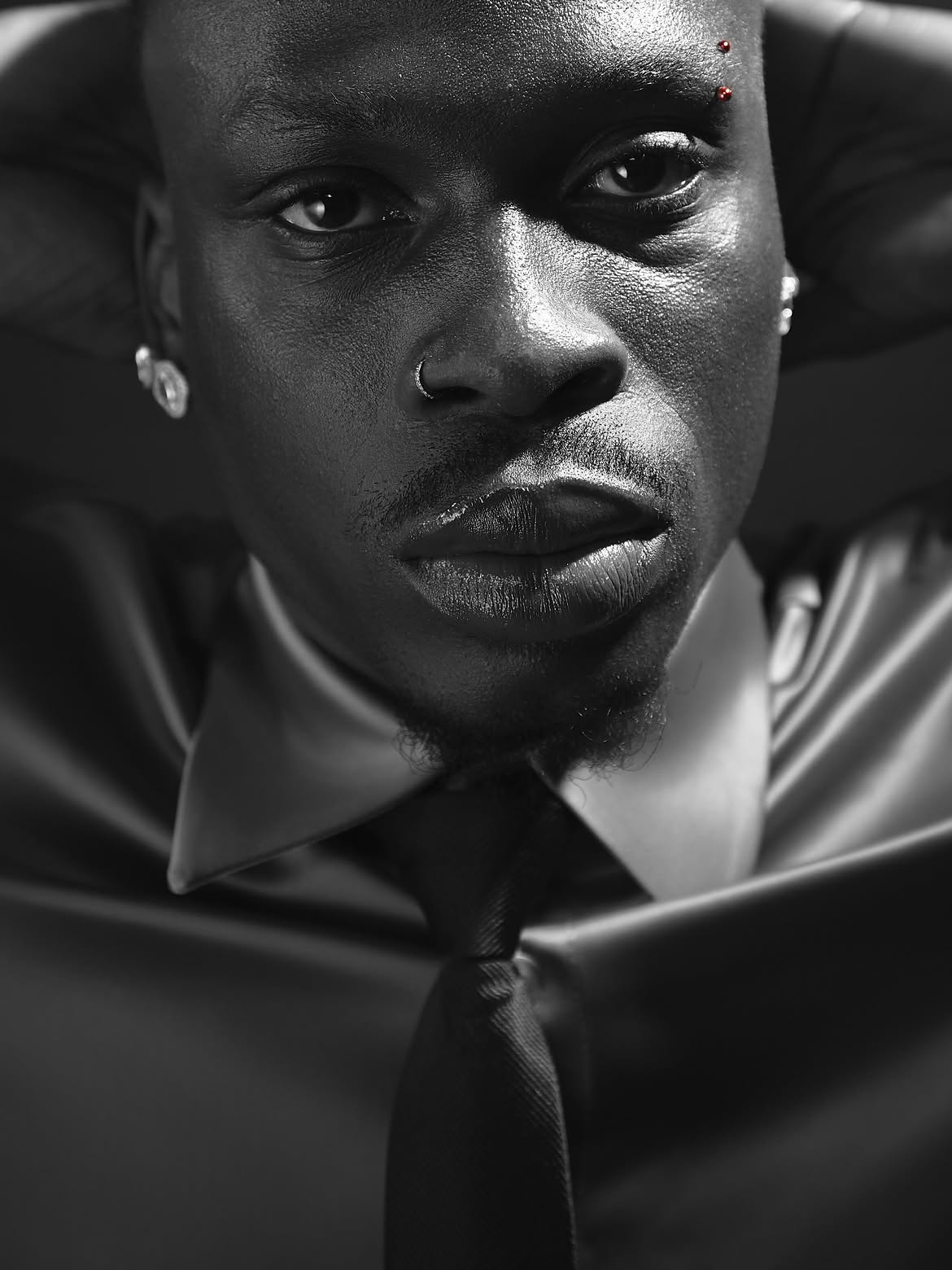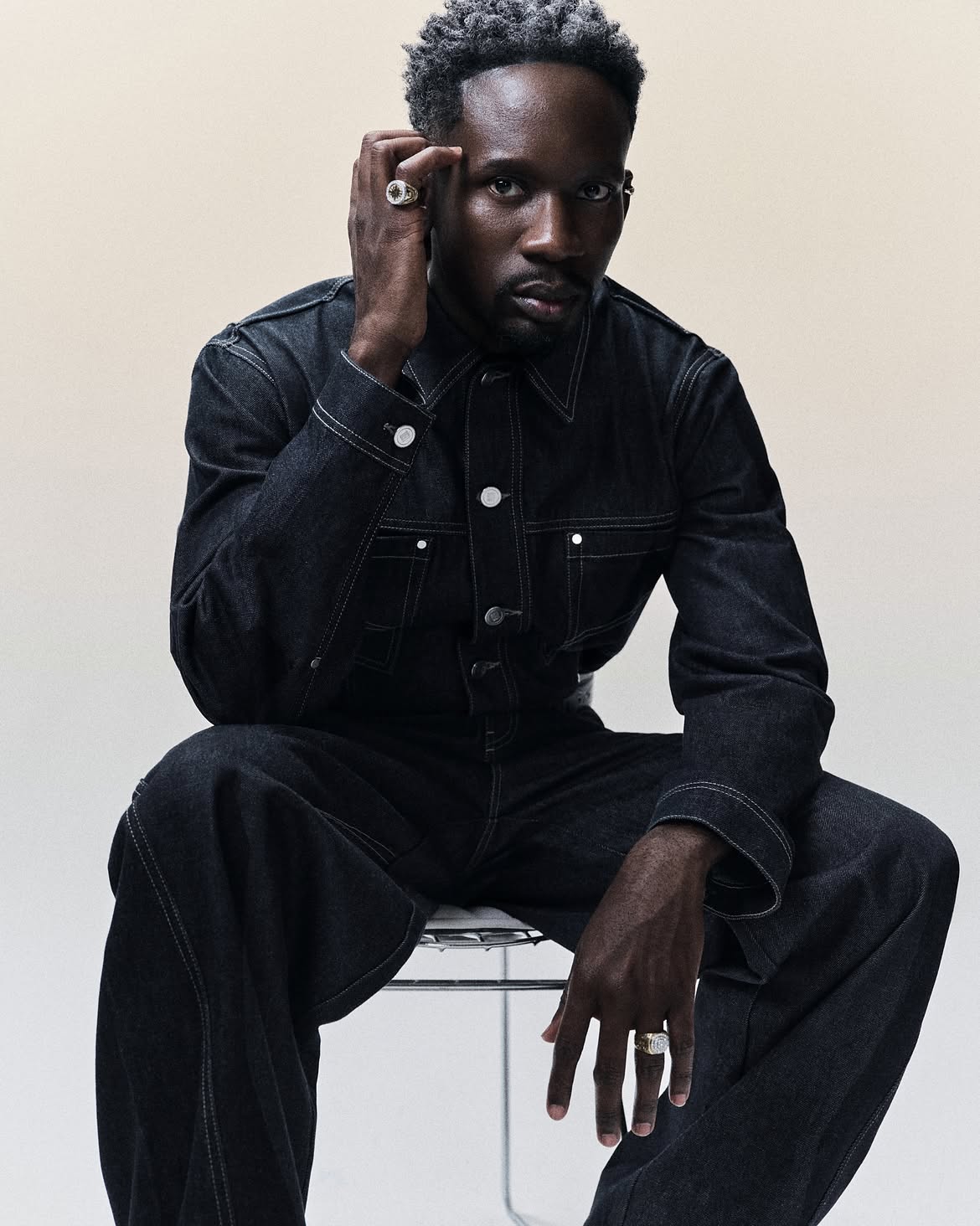
From Mr Eazi and MOLIY’s Ghana-Nigeria conversation to Terry Apala’s reworking of Apala, DopeNation’s Ghanaian rhythmic vocabulary and a new generation of street-pop and rap voices, this week’s Afrobeats Heat Different finds African music moving forward without becoming distant from where it came from.
African pop does not have to abandon its old musical languages to sound like the future.
That distinction matters in a musical landscape whose international expansion is often narrated through movement away from home: another territory reached, another global collaboration secured, another genre boundary crossed. Yet some of the more interesting developments in contemporary African music are happening in the opposite direction. Artists are reaching backwards and sideways at the same time, treating inherited rhythms, languages and regional identities not as relics to preserve untouched, but as living material from which something contemporary can still be built.
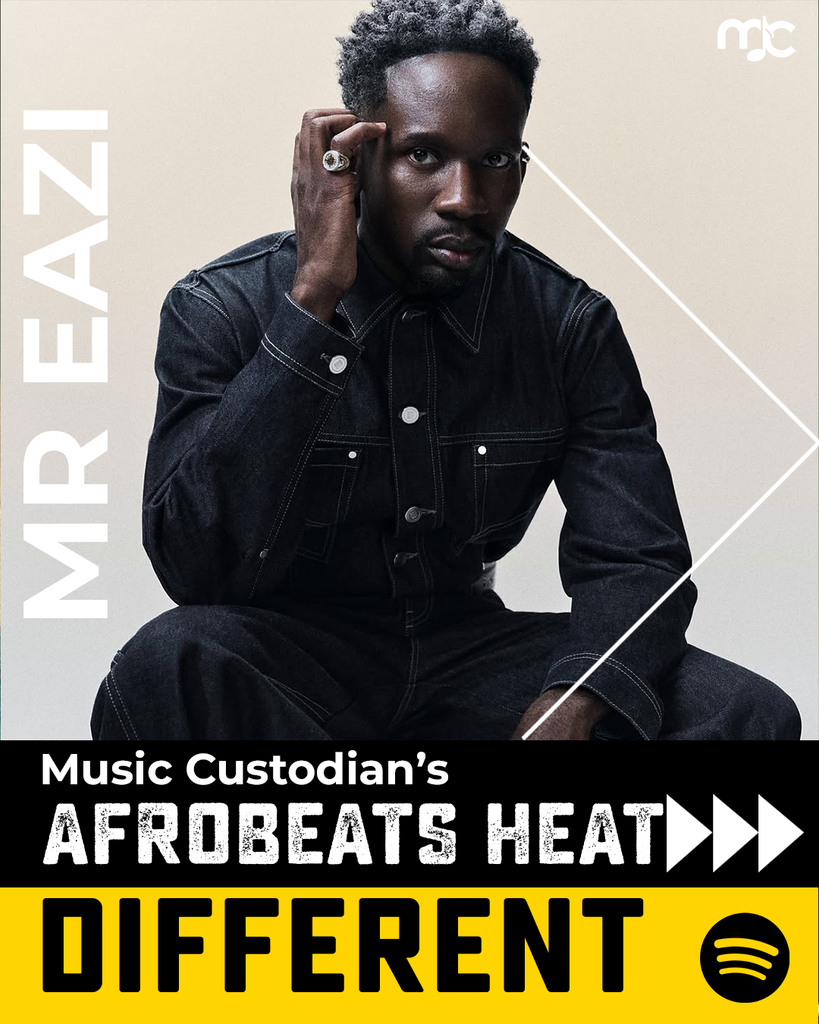
This week’s Afrobeats Heat Different captures that tension particularly well.
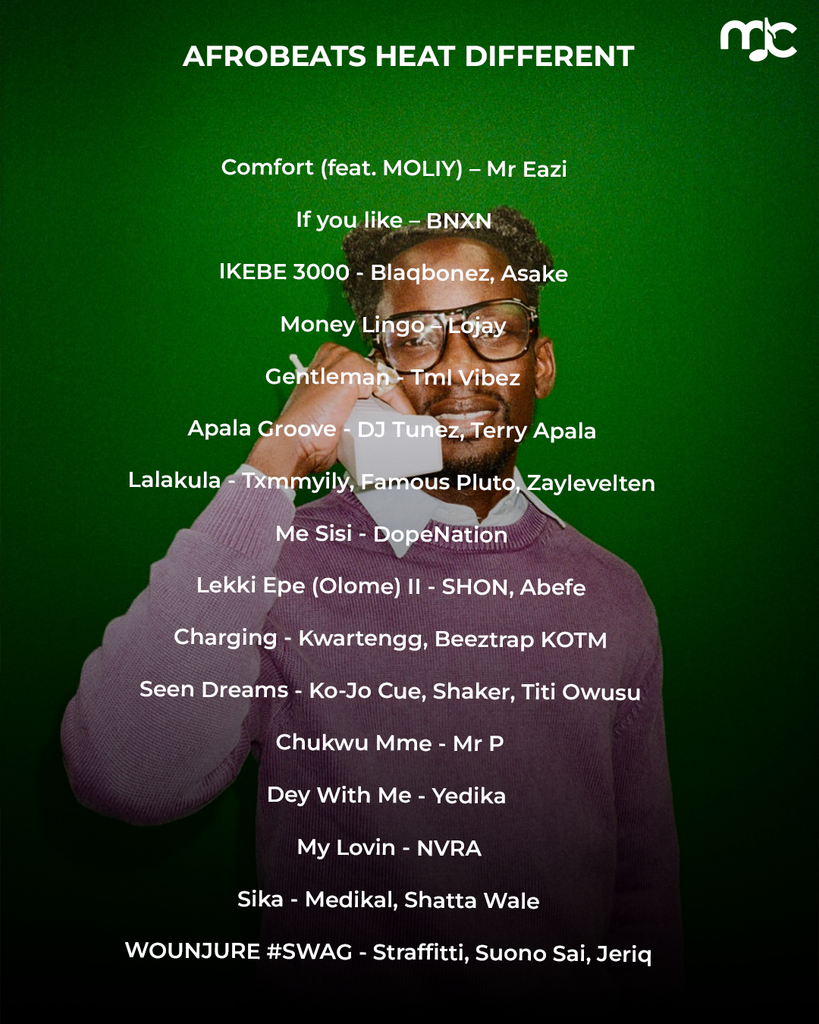
Across 16 records, the playlist moves between Ghana and Nigeria, Afropop and hip-hop, street music and romance, indigenous expression and internet culture. Yoruba Apala appears beside contemporary production. Ghanaian highlife ideas encounter newer dance forms. Igbo expression carries faith into modern Afropop. Rap refuses to sit outside the wider Afrobeats conversation. And newer artists share the same listening space as some of African music’s most established names.
At the centre of it all is an artist whose career has long complicated the idea that African music must belong neatly to one place.
Mr Eazi Returns to a Familiar Conversation
Mr Eazi’s “Comfort,” featuring MOLIY, is an appropriate centre for this edition precisely because cultural movement is already embedded in his musical history.
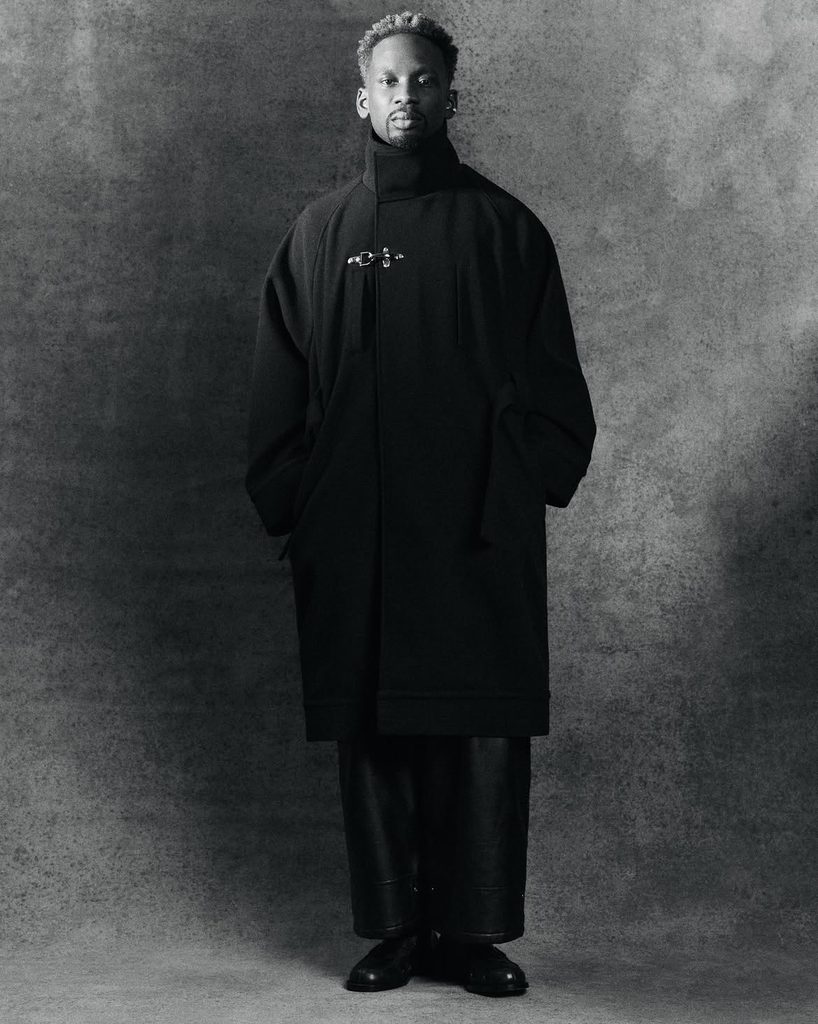
His Banku identity emerged through the meeting of Ghanaian highlife influence and Nigerian rhythmic ideas, making the relationship between the two countries more than a convenient collaborative narrative around a new single. Ghana has long been part of the musical vocabulary through which Mr Eazi became Mr Eazi. MOLIY introduces another route through that conversation: a Ghanaian-American artist whose own Afro-fusion vocabulary draws from pop, R&B, highlife and dancehall.
“Comfort” therefore works because neither artist needs to surrender the musical experiences that distinguish them.
Mr Eazi supplies the record’s relaxed centre; MOLIY brings a brighter vocal presence around it. The chemistry lies less in attempting to manufacture some grand continental fusion than in allowing two compatible identities to occupy the same record comfortably.
That makes the song useful beyond itself.
African collaboration is sometimes discussed as though crossing a border automatically produces cultural significance. It does not. A Nigerian artist featuring a Ghanaian artist is still capable of producing an entirely ordinary record. Geography alone cannot manufacture chemistry.
What “Comfort” offers instead is continuity.
Mr Eazi’s long-standing Ghana-Nigeria relationship meets an artist from a newer generation whose own musical identity has been shaped by Ghana and movement beyond it. The result feels less like two markets being connected and more like an existing African musical conversation continuing through different voices. Ayo’s cover rationale identifies exactly that continuity: an established Ghana-Nigeria musical relationship encountering a newer generation of Afro-fusion.
And once “Comfort” establishes that centre, the rest of this week’s playlist begins revealing different versions of the same question:
What can African music carry forward without remaining musically still?
Tradition Does Not Have to Stay Where It Was Found
Perhaps the clearest answer arrives through DJ Tunez and Terry Apala’s “Apala Groove.”
Apala carries a history much older than the contemporary Afrobeats economy surrounding it. Here, Terry Apala’s rhythmic approach keeps that traditional identity audible while DJ Tunez places it within a modern dance environment. That distinction is important.
There is a difference between using tradition decoratively and allowing tradition to participate in the construction of something new. African popular music has always transformed through encounters between inherited forms and new technologies, cities, audiences and social realities. The survival of a musical language does not necessarily depend upon freezing it at the point at which an earlier generation encountered it.
Sometimes survival happens through mutation.
That same elasticity appears elsewhere.
DopeNation’s “Me Sisi” carries a distinctly Ghanaian rhythmic identity through the duo’s meeting of highlife, Afrobeats and Ghanapiano. Medikal and Shatta Wale’s “Sika” places ambition and money inside a Ghanaian rap-and-dancehall conversation, while Mr P’s “Chukwu Mme” turns toward faith, gratitude, survival and hope through Igbo-rooted expression and highlife touches.
None of these records is performing cultural preservation in the archival sense.
They are doing something more ordinary and, perhaps because of that, more revealing: using inherited cultural vocabulary because it remains useful.
The language is still alive enough to make new music with.
The Street Keeps Changing the Grammar
But African musical identity is not inherited only from traditional forms.
Cities create traditions too.
Street language, neighbourhoods, internet humour, dance culture and rapidly evolving youth vocabularies increasingly function as cultural material in their own right. “Lalakula” by Txmmyily, Famous Pluto and Zaylevelten arrives from that internet-driven street-pop environment, while SHON and Abefe’s “Lekki Epe (Olombe) II” locates itself explicitly within Lagos language, place and contemporary street culture.
That belongs in the same conversation as Apala.
Not because both possess the same historical depth, but because culture is not produced only by looking backwards. It is also being manufactured around us in real time.
The phrases circulating online today, the neighbourhood references embedded in records, the dances moving between TikTok and physical streets, the slang that makes perfect sense in Lagos and requires explanation somewhere else – these too become part of the record African popular music leaves behind.
AHD should be capable of hearing both.
Rap Never Left the Conversation
Then there is hip-hop.
Blaqbonez and Asake’s “IKEBE 3000” brings rap energy into contact with Asake’s melodic, hook-driven instinct. Ko-Jo Cue, Shaker and Titi Owusu widen the Ghanaian side of the playlist through “Seen Dreams,” where rap and melody share space. Medikal and Shatta Wale approach the same ecosystem from rap and dancehall, while Straffitti, Suono Sai and Jeriq close the selection with “WOUNJURE #SWAG.”
Their inclusion matters because the language surrounding African popular music can sometimes make “Afrobeats” appear more sonically coherent than the actual ecosystem has ever been.
Rap, R&B, highlife, street-pop, dancehall, indigenous forms and electronic experimentation routinely share artists, producers, audiences and cultural spaces. The borders between them are often more useful to categorisation systems than they are to the musicians themselves.
AHD is therefore not interested in forcing every record under one sonic definition.
The playlist is interested in the conversation happening between them.
The Sequence: From Recognition to Discovery
The opening stretch remains deliberately accessible.
“Comfort” gives way to BNXN’s “If You Like,” before Blaqbonez and Asake increase the energy through “IKEBE 3000.” Lojay’s “Money Lingo” brings nightlife and Nigerian street vocabulary into view, while Tml Vibez’s “Gentleman” keeps the sequence inside the melodic street-pop world before “Apala Groove” begins pulling the playlist more explicitly toward questions of inheritance and identity.
From there, the geography widens.
DopeNation, Kwartengg, Beeztrap KOTM, Ko-Jo Cue, Shaker, Titi Owusu, Medikal and Shatta Wale ensure Ghana is not represented merely through MOLIY’s presence on the cover record. Ghanaian music becomes part of the body of the playlist itself. Meanwhile, Yedika and NVRA provide softer, developing voices alongside the more recognisable names.
That balance matters.
A weekly playlist becomes less useful as an editorial product when recognition becomes its only organising principle. The biggest artists will rarely struggle to be found on release day. Discovery becomes valuable when editorial curation can place a developing voice beside an established one and argue that both deserve to exist within the same account of the week.
Artists to Watch
This is where Kwartengg, SHON, Yedika and NVRA become particularly useful to the edition.
They occupy different positions within the selection, but collectively they preserve AHD’s discovery function. Kwartengg’s “Charging,” with Beeztrap KOTM, brings another Ghanaian voice into a record concerned with readiness and momentum. SHON’s “Lekki Epe (Olombe) II,” alongside Abefe, is rooted in contemporary Lagos language and place. Yedika’s “Dey With Me” provides one of the playlist’s softer Afropop moments, while NVRA’s “My Lovin” introduces another developing melodic voice.
Their inclusion should not be read as a prediction of who becomes the next star.
Discovery is more useful than prophecy.
What matters is that their records have entered the weekly cultural field alongside artists with considerably larger catalogues and audiences. If AHD continues documenting those appearances over time, the playlist itself begins accumulating memory: who appeared, when they appeared, what they sounded like, and how their music changed afterwards.
That is when curation becomes archive.
That is the AHD argument this week: African pop is not moving in one direction. It is expanding sideways – across borders, languages, genres and generations. Comfort gives that wider movement a warm, recognisable centre.
| # | TRACK | ARTIST(S) |
| 1 | Comfort (feat. MOLIY) | Mr Eazi |
| 2 | If You Like | BNXN |
| 3 | IKEBE 3000 | Blaqbonez, Asake |
| 4 | Money Lingo | Lojay |
| 5 | Gentleman | Tml Vibez |
| 6 | Apala Groove | DJ Tunez, Terry Apala |
| 7 | Lalakula | Txmmyily, Famous Pluto, Zaylevelten |
| 8 | Me Sisi | DopeNation |
| 9 | Lekki Epe (Olombe) II | SHON, Abefe |
| 10 | Charging | Kwartengg, Beeztrap KOTM |
| 11 | Seen Dreams | Ko-Jo Cue, Shaker, Titi Owusu |
| 12 | Chukwu Mme | Mr P |
| 13 | Dey With Me | Yedika |
| 14 | My Lovin | NVRA |
| 15 | Sika | Medikal, Shatta Wale |
| 16 | WOUNJURE #SWAG | Straffitti, Suono Sai, Jeriq |
Why This Playlist Matters
African music’s global expansion will inevitably create pressure around legibility. The larger the audience becomes, the greater the temptation to identify a handful of sounds that travel easily and allow those sounds to stand in for an enormously complicated musical continent.
This week’s AHD quietly argues against that flattening.
There is no single direction of travel here. Mr Eazi and MOLIY meet through histories shaped across Ghana, Nigeria and elsewhere. Terry Apala carries an older Yoruba musical vocabulary into contemporary production. DopeNation locate experimentation within Ghanaian rhythm. Mr P brings indigenous language and faith into Afropop.
Nigerian street-pop creates culture from neighbourhood and internet language. Rap continues occupying the same ecosystem rather than standing outside it. Newer voices emerge beside established ones.
The point is not that African popular music is returning to tradition.
It is that tradition, modernity and experimentation were never required to be opposites.
Perhaps that is one of the more interesting signs of confidence in African pop right now. Artists can reach for global audiences without automatically translating every culturally specific part of themselves out of the music. They can inherit without merely imitating. They can experiment without pretending history did not happen.
The old musical languages are not disappearing. They are finding new forms.
And this week, African music sounds entirely comfortable doing both.