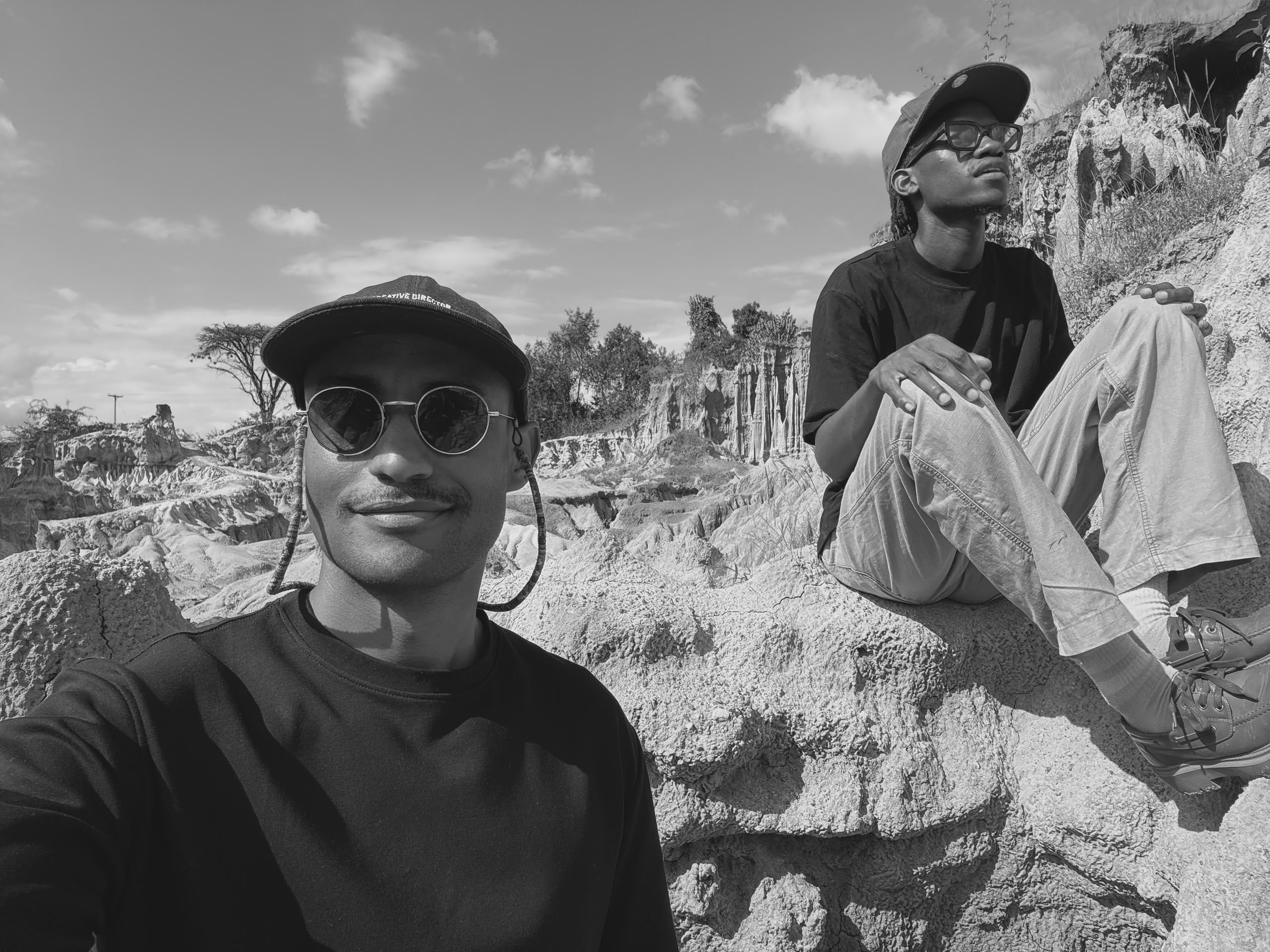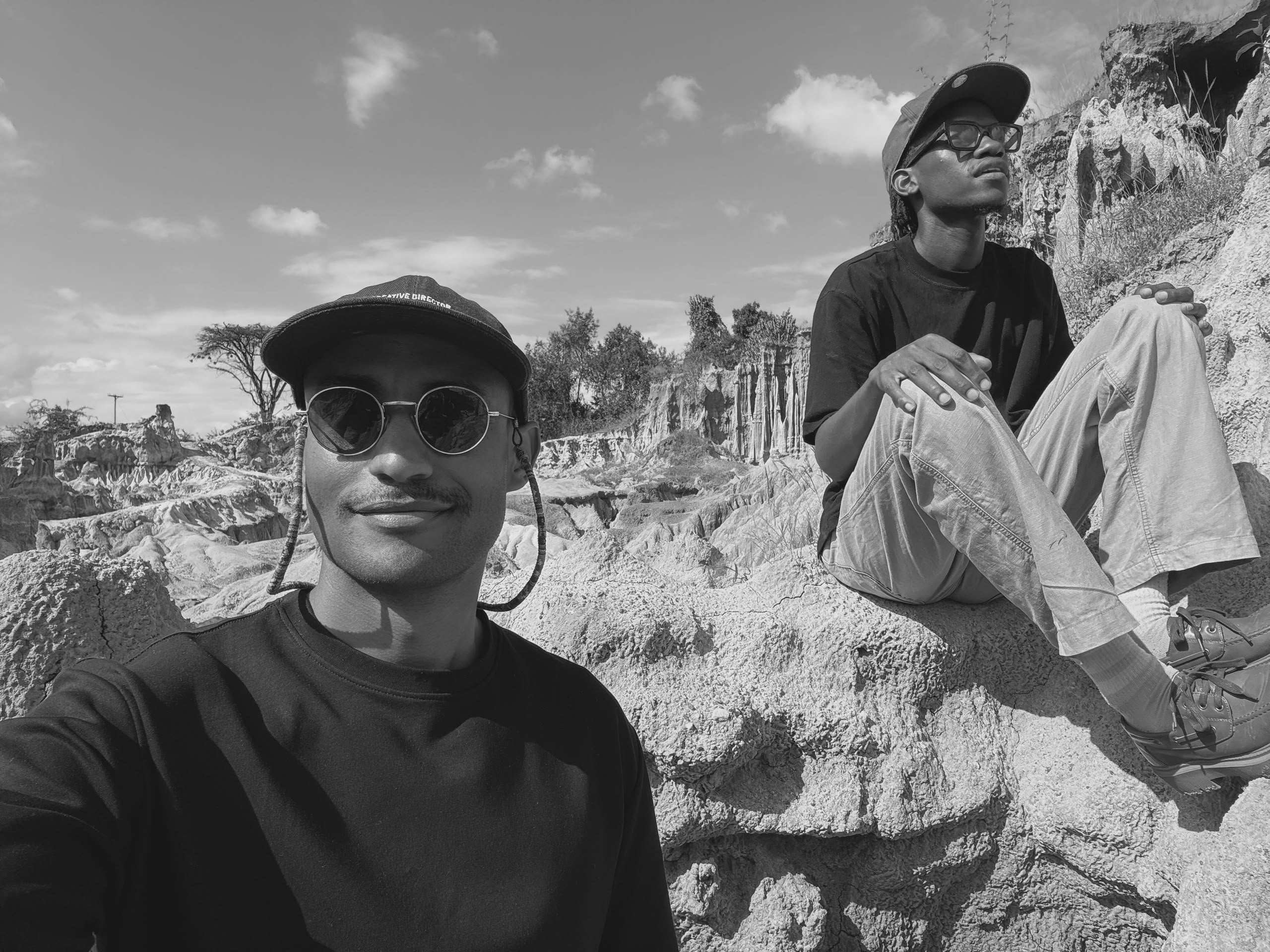
Bringing together Maa, Swahili, Sesotho and Amharic alongside musical traditions stretching from Kenya and Ethiopia to Lesotho, Mozambique and North Africa, on Eshi, Jua’s latest CHIKKA experiment asks a more interesting question about Pan-African music: what if connection does not require sameness?
Africa has spent generations being described through its differences.
Different languages. Different borders. Different spiritual traditions. Different rhythms. Different histories shaped by migration, colonialism, geography and memory.
But somewhere underneath those differences are conversations that have been happening for much longer than the modern borders separating them.
On “Eshi,” Ethiopian-Kenyan producer duo Jua attempts to make one of those conversations audible.
Released as the third single from their forthcoming debut album, the record brings Kenyan singer Silayio and Lesotho artist Morena Leraba into the duo’s developing CHIKKA sound, alongside Mozambican mbira player Muhamago and Kenyan drummer Tony of Sarabi. Across the record, Maa, Swahili, Sesotho and Amharic intersect with instrumentation, rhythm and sampled voices drawn from several parts of the continent.
On paper, it could easily become an exercise in Pan-African maximalism.
In practice, its more interesting proposition is considerably simpler:
Africans do not have to become culturally identical to recognise something in one another.

Four Languages, Several Africas
“Eshi” means “yes” in Amharic.
That affirmation becomes the conceptual centre of a record concerned with faith, ancestry and identity – ideas Jua describes through the metaphor of Africans as “children of the water,” moving through life guided by ancestry, spirituality and something beyond themselves.
Silayio opens in Maa before later introducing Swahili affirmations. Morena Leraba brings Sesotho into the chorus, extending a practice already associated with his work: placing the traditional music of Lesotho, particularly Famo, into conversation with electronic music, Afrohouse and hip-hop.
But language is only one layer.
At the centre of the instrumentation is the Mbira Nyunga Nyunga, performed by Mozambican sound artist and film composer Muhamago. The 15-key thumb piano associated with northern Mozambique and Zimbabwe supplies much of the record’s melodic atmosphere, while Tony contributes percussion and sampled Amazigh chants introduce another cultural reference from North Africa.
Suddenly, “Eshi” is not simply moving between East and Southern Africa.
Its geography is considerably messier.
And that may be the point.
Pan-Africanism Without Flattening Africa
There is a temptation whenever musicians describe a project as “Pan-African” to search immediately for the thing supposedly shared by everybody.
One African rhythm.
One African identity.
One African sound.
But Africa becomes less interesting when its differences are flattened in pursuit of unity.
“Eshi” suggests another possibility.
Connection does not require sameness.
The phrase appears explicitly within Jua’s own framing of the record, but it also offers a useful way of thinking about contemporary Pan-African music more broadly.
A Maasai vocal tradition does not need to become Sesotho to communicate with it.
An Ethiopian producer does not need to remove what is Ethiopian from his imagination to collaborate with a Kenyan.
A Mozambican instrument does not lose its history simply because it appears inside electronic production.
The cultural value lies precisely in allowing those identities to remain legible while discovering where they intersect.
That is a more demanding form of Pan-Africanism.
Not “we are all the same.”
But:
“we are different, and still capable of recognising one another.”
CHIKKA Is Becoming Bigger Than a Rhythm
That idea also helps explain why Music Custodian has continued paying attention to the wider CHIKKA project.
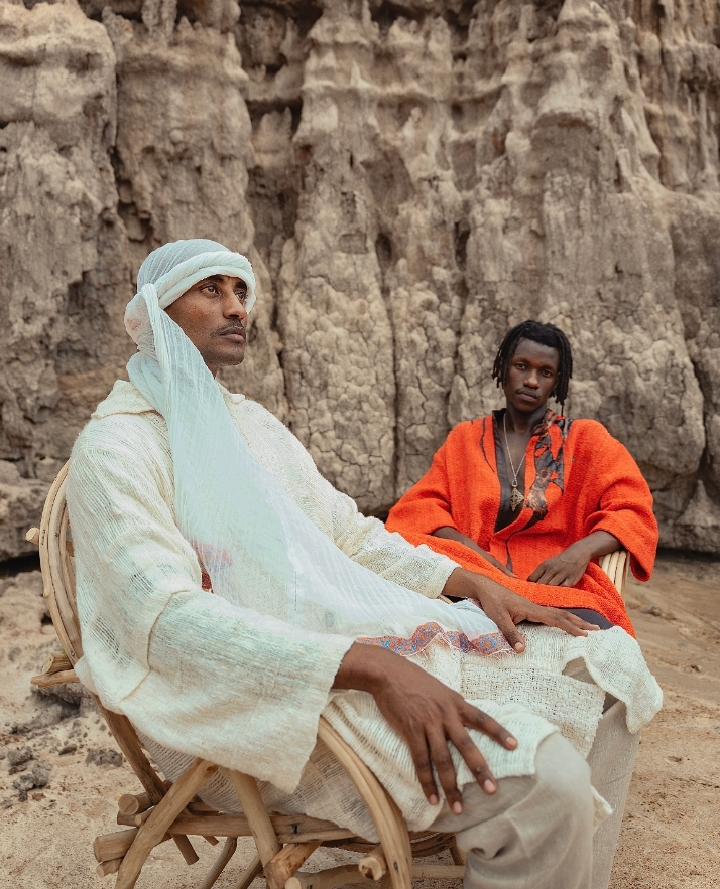
Jua – comprising Ethiopian producer and researcher ISAT IRAT (Guta Wakuma Chimsa) and Kenyan producer MR. LU* – began working together in Nairobi while investigating rhythmic connections across East African music. Their project eventually developed into CHIKKA, which combines cultural research with contemporary electronic production.
Its starting point has been the interconnected 6/8 and 3/4 rhythmic traditions found across parts of the region.
But “Eshi” indicates that CHIKKA becomes more interesting when it stops functioning simply as a proposed sound and starts functioning as a research question.
What musical knowledge has travelled between African communities?
Which rhythms appear across borders under different names?
What happens when musicians recognise relationships between traditions usually discussed separately?
And how can contemporary production make those relationships audible without reducing centuries of cultural complexity to an aesthetic sample pack?
Those questions matter because CHIKKA is being developed on an ambitious scale.
Jua’s forthcoming 12-track album brings together more than 30 artists from seven countries, according to the project’s current materials. It is also the first flagship project emerging from Misrak Studio, the Nairobi-based music innovation hub established around cross-cultural collaboration, research and creative exchange.
At that scale, the project becomes more than two producers experimenting with time signatures.
It becomes an argument about East Africa as a place from which musical research can generate new contemporary culture.
Nairobi as a Meeting Point
There is another story underneath “Eshi” worth noticing.
Much of this experimentation is happening in Nairobi.
That matters.
Music Custodian has spent considerable time documenting a Nairobi ecosystem increasingly comfortable with the idea that international relevance does not necessarily require abandoning local cultural intelligence.
The city’s contemporary music scene already contains artists moving between R&B, hip-hop, electronic music, Gengetone, Afro-pop, traditional musical knowledge and increasingly fluid collaborations across East Africa and beyond.
Jua adds another dimension to that ecosystem: Nairobi as a laboratory for cultural exchange.
Through Misrak Studio and its DARAJA initiative – whose name itself means “bridge” in Swahili – musicians, producers and researchers are being brought together specifically to investigate shared musical heritage and build new work from those encounters.
That is creative infrastructure.
And if Nairobi continues developing institutions capable of connecting artists, researchers, studios, cultural archives and international networks, its importance to African music may eventually be measured by more than the stars it produces.
It may also be measured by the conversations it makes possible.
Ancestry Without Nostalgia
Perhaps “Eshi” is most compelling when considered through its relationship with ancestry.
African cultural heritage is often presented in contemporary popular culture as something behind us — an archive to reference, costume to wear, rhythm to sample or aesthetic to retrieve.
Jua approaches ancestry differently.
Here, ancestry is directional.
The artwork reinforces that idea visually: a contemporary Black figure reaches toward an ancestral figure while the North Star functions as a symbol of direction. Jua describes the image as a dialogue between those who came before, those alive now and wherever they may be going next.
That distinction is important.
Ancestry does not have to mean returning backwards.
It can mean understanding what travelled far enough through history to arrive inside the present – and deciding what to carry forward.
For African musicians working within increasingly globalised industries, that question may become even more consequential.
Technology can make music geographically borderless almost instantly.
Streaming can carry a Kenyan record to Brazil.
Electronic production can combine instruments from several continents inside one laptop.
Algorithms can place culturally unrelated songs beside each other because their sonic characteristics appear compatible.
But technology cannot automatically provide context.
That still requires people.
Researchers.
Musicians.
Communities.
Archives.
Memory.
And respect.
The Bridge Matters More Than the Destination
“Eshi” ultimately arrives at an interesting moment for African music.
The continent’s global visibility has expanded dramatically, but the international conversation still tends to organise African music around a handful of commercially dominant genres and markets.
There is considerably more happening underneath that surface.
Musicians are rediscovering relationships between regions.
Producers are crossing linguistic borders.
Older instruments are entering electronic environments.
Local languages are travelling globally without necessarily translating themselves first.
And cities like Nairobi are becoming meeting points through which some of those exchanges can occur.
That is why the most interesting thing about “Eshi” may not ultimately be whether CHIKKA becomes the next recognisable East African genre.
Perhaps it does.
Perhaps it doesn’t.
The more consequential achievement would be creating a framework through which musicians begin hearing connections they previously overlooked.
Because Pan-African culture has never required Africa to speak with one voice.
It requires something harder:
the willingness to listen when another African voice sounds different from our own.
“Eshi” brings several of those voices into the same record.
Maa remains Maa.
Sesotho remains Sesotho.
Amharic remains Amharic.
Swahili remains Swahili.
The mbira carries its own history.
The rhythms carry theirs.
And somewhere between them, something new becomes possible.
Not because the differences disappear.
Because they finally meet.
Curated by our playlist department, each edition captures the records, voices and collaborations shaping the city right now.