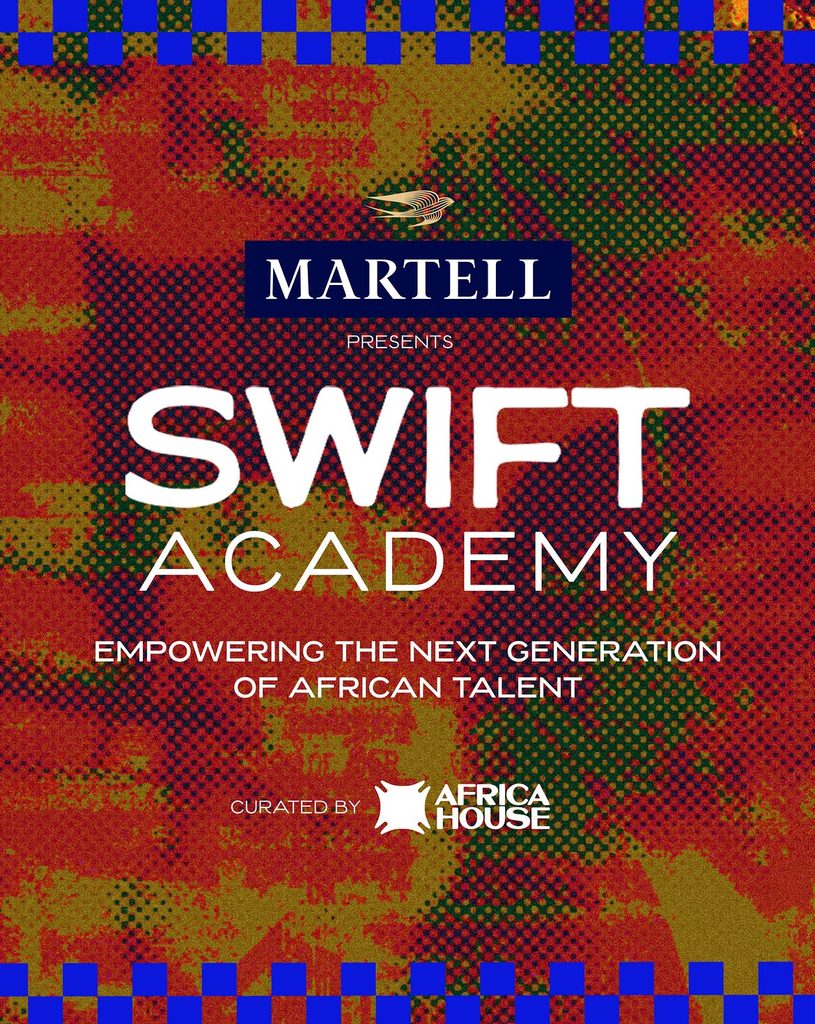
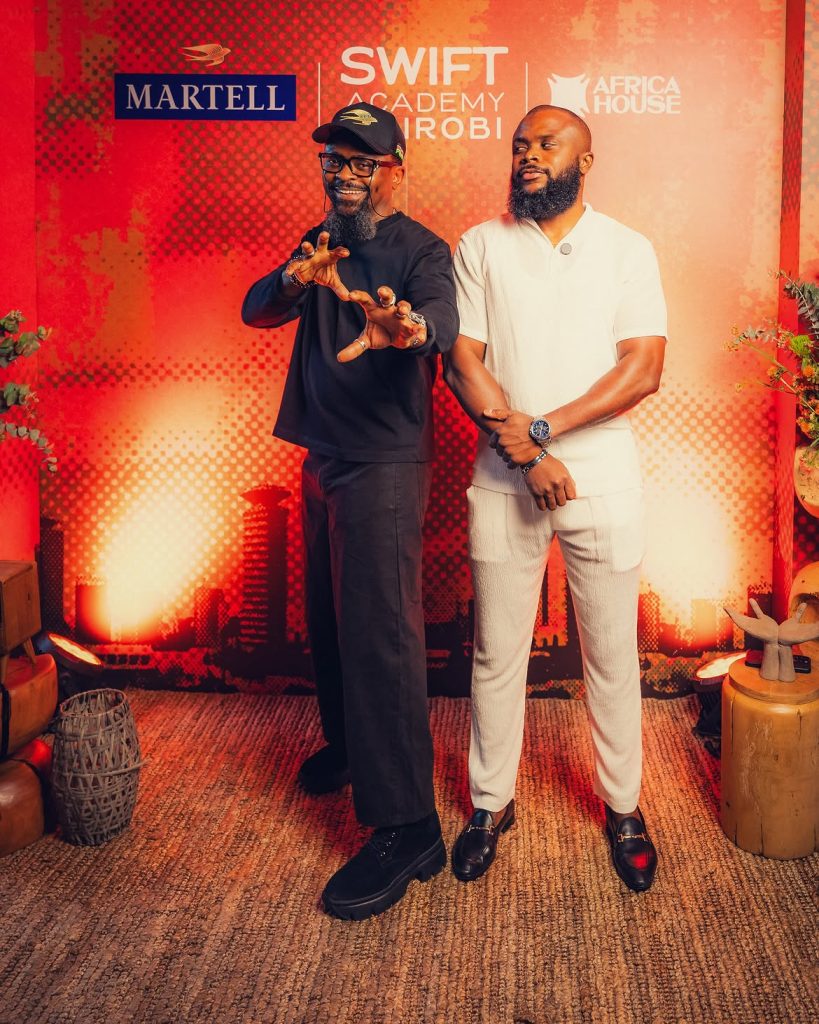
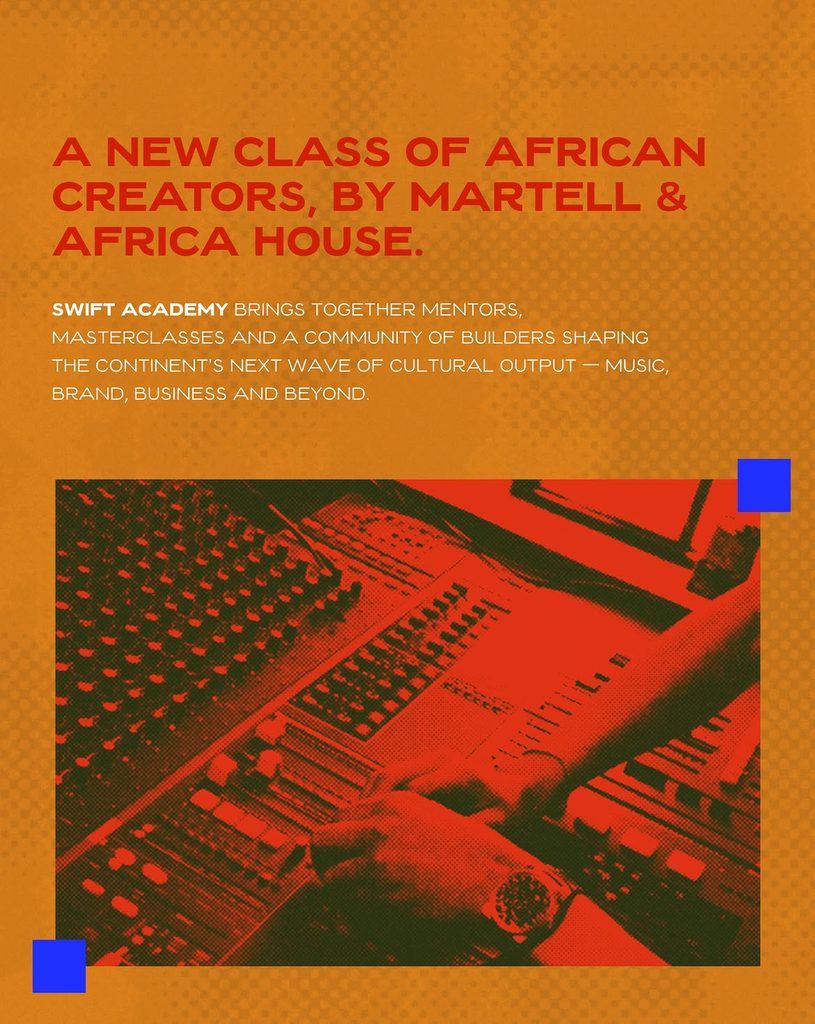
Created by Martell and curated by Africa House, Swift Academy has selected 25 emerging creatives and music professionals for its inaugural Nairobi cohort. Behind the mentorship, grants and industry access sits a larger question: what can global brands contribute to African music once sponsorship moves beyond visibility and begins investing in the people and infrastructure sustaining the culture?
African music does not have a visibility problem in the way it once did.
Its artists headline international festivals, move across global charts, collaborate beyond the continent and increasingly occupy the centre of conversations that once treated African popular culture as peripheral.
But visibility and infrastructure are not the same thing.
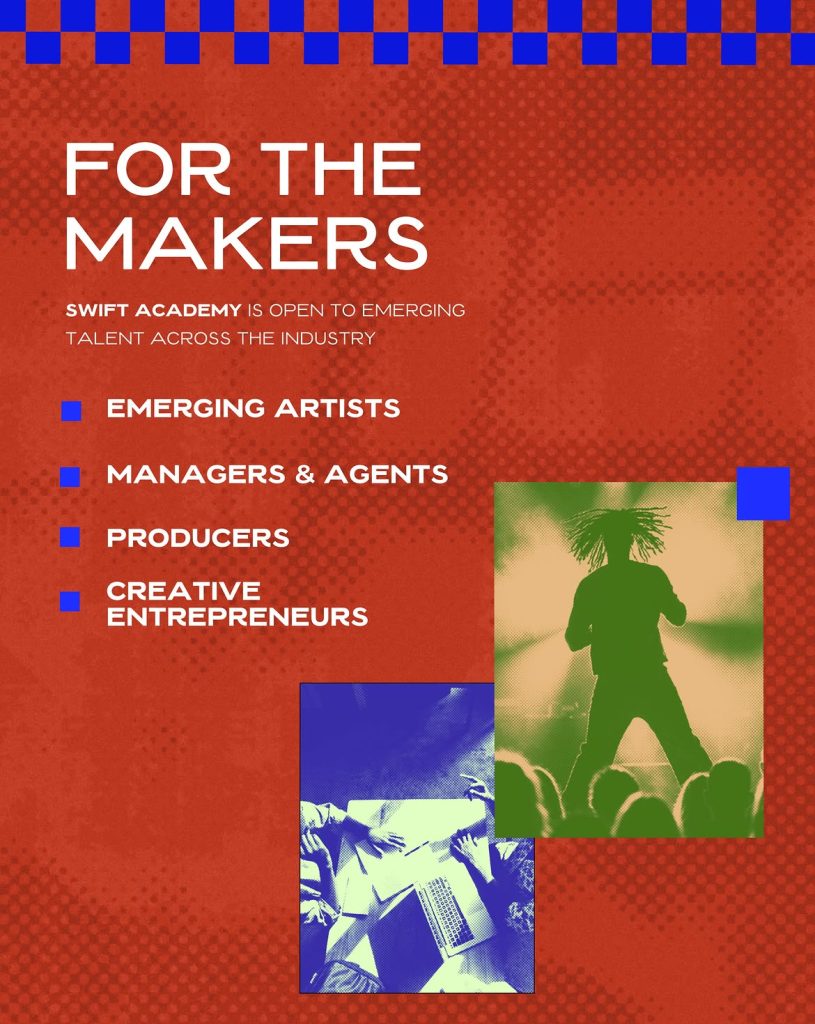
Behind every artist moving internationally sits a wider ecosystem of managers, journalists, publicists, producers, creative directors, lawyers, strategists, photographers, filmmakers, executives and cultural workers whose professional development will partly determine whether Africa’s current musical momentum becomes a sustainable industry.
That makes Swift Academy, Martell’s new Pan-African talent-development initiative curated by Africa House, worth examining beyond the familiar language of brand activation.
Nairobi is where the experiment begins.
Why Swift Academy Nairobi?
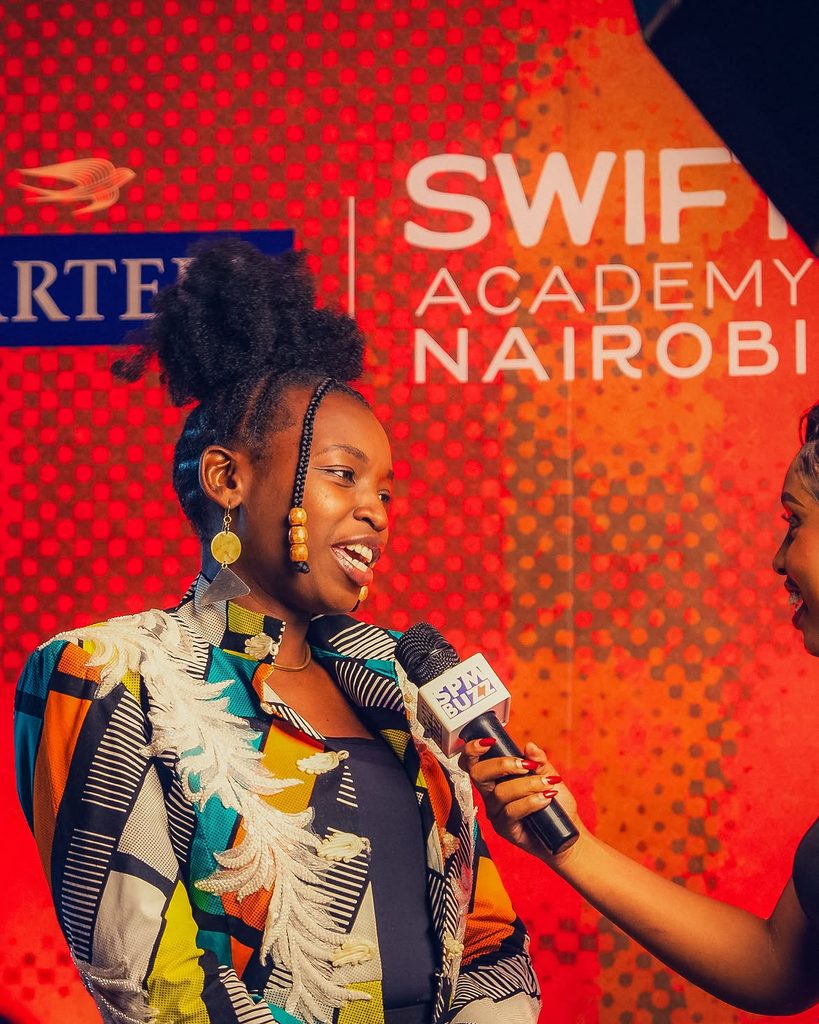
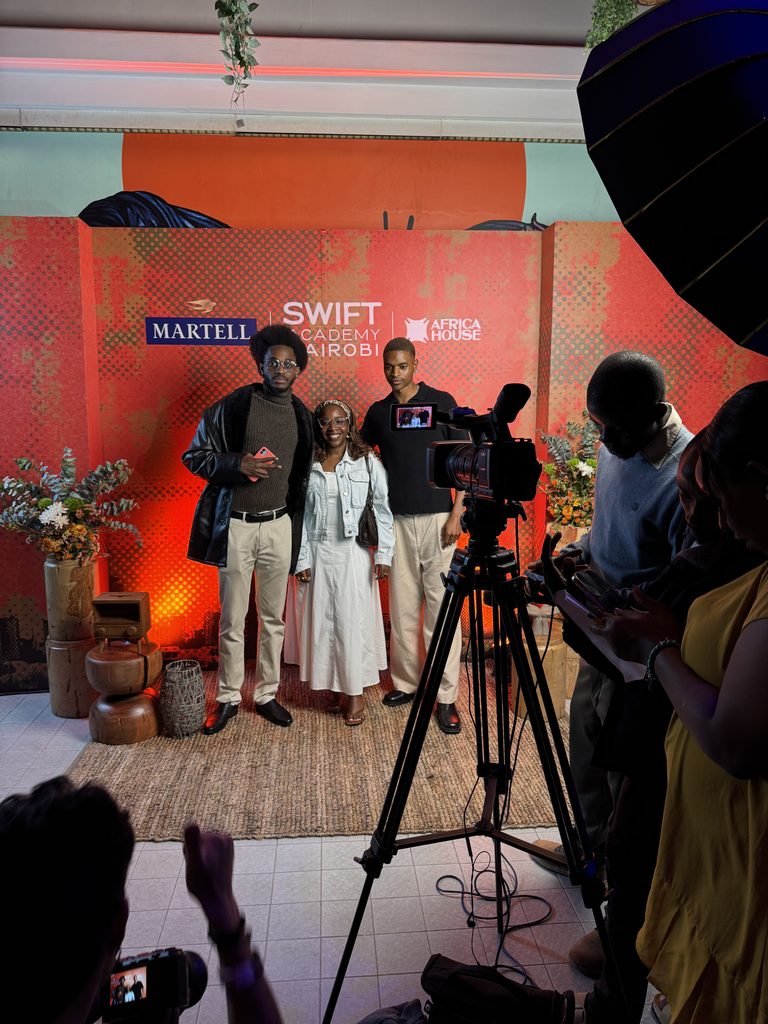
Swift Academy has launched its first cohort in Kenya’s capital, bringing together 25 emerging music creatives and industry professionals for a programme spanning mentorship, practical workshops, networking, creative collaboration and professional development.
The choice of Nairobi is significant.
For years, conversations about Africa’s globally expanding music industry have understandably concentrated on commercially powerful centres including Lagos and Johannesburg.
But Nairobi is increasingly demonstrating another kind of value.
It is becoming a meeting point.
Across music, media, technology, cultural institutions and independent creative communities, the Kenyan capital is developing an ecosystem in which artists and professionals from different parts of East Africa – and increasingly the continent – can encounter one another.
Swift Academy arrives within that environment rather than creating it.
And Martell appears to recognise that distinction.

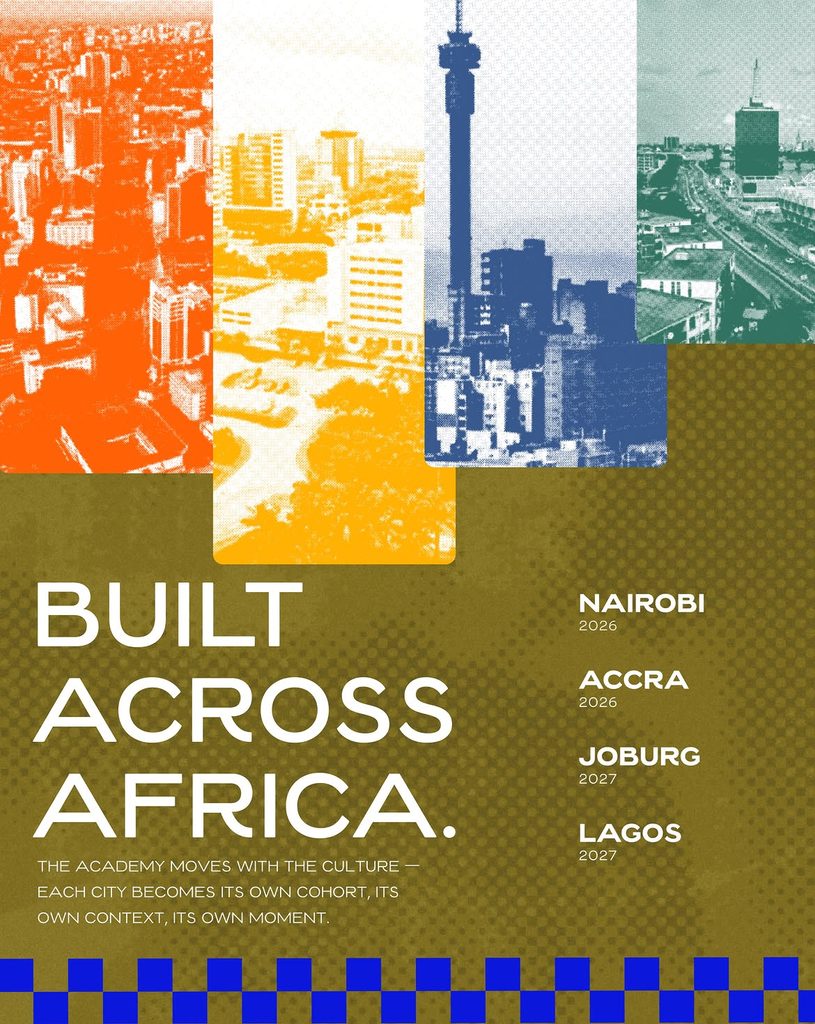
Its official programme describes Nairobi as the launch city for a wider continental movement, with Accra also scheduled for 2026 before Johannesburg and Lagos cohorts follow in 2027.
The programme therefore begins not in Africa’s largest music market, but in a city whose importance to the continent’s creative economy is still being negotiated.
That is interesting.
Swift Academy Is Twenty-Five People, But an Entire Ecosystem
Swift Academy’s architecture also deserves attention because it does not define African music development exclusively through artists.
The Nairobi cohort extends across the wider music ecosystem.
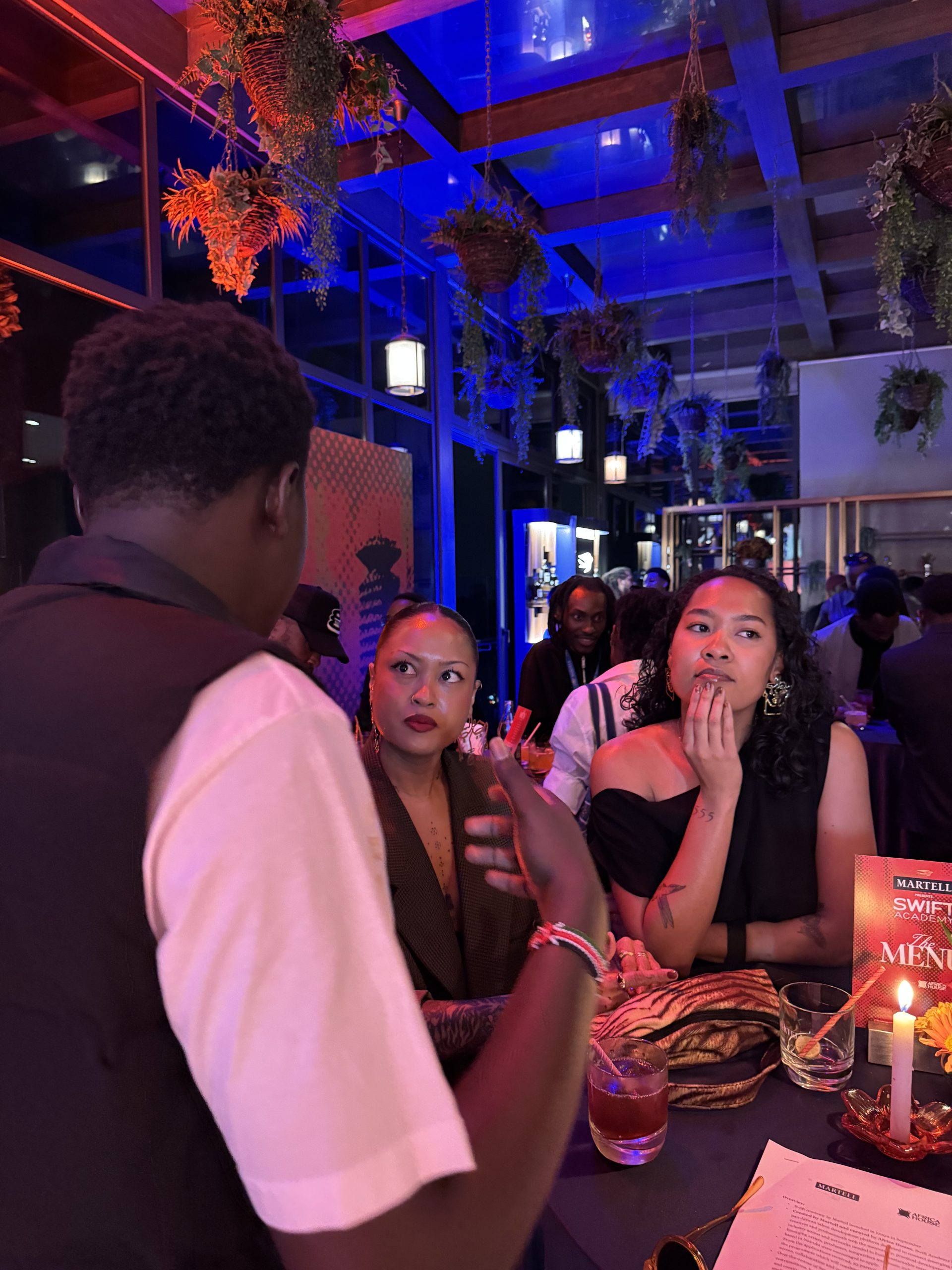
Participants receive access to mentor-led conversations, workshops, networking mixers, collaborative opportunities and individual mentorship, with the programme culminating in progress presentations and a showcase in October.
Martell’s programme also lists a creative development grant, digital creator tools, studio access and access to a cultural hub for co-working, networking and collaboration.
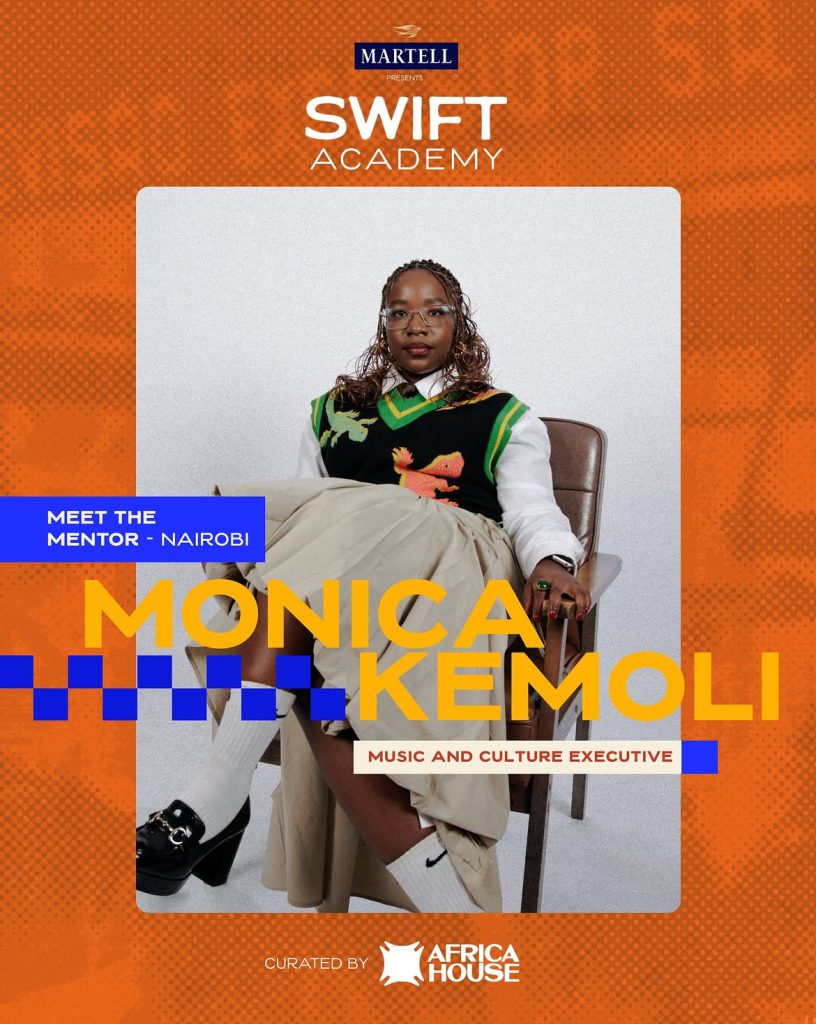
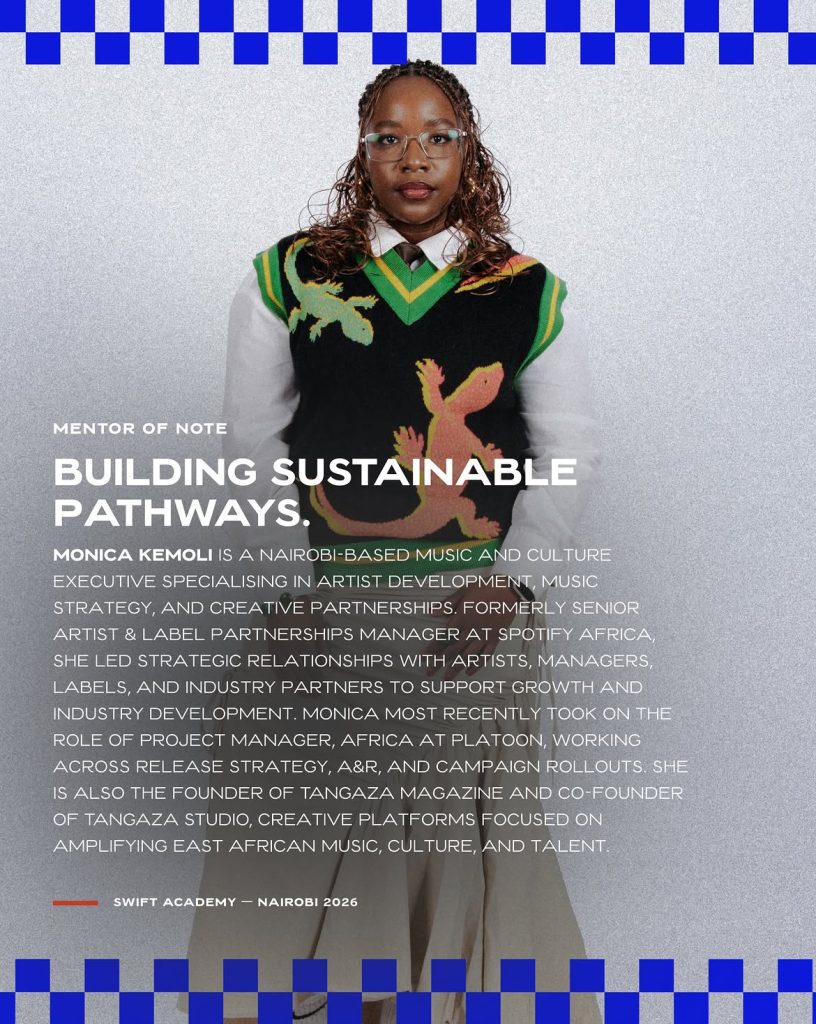
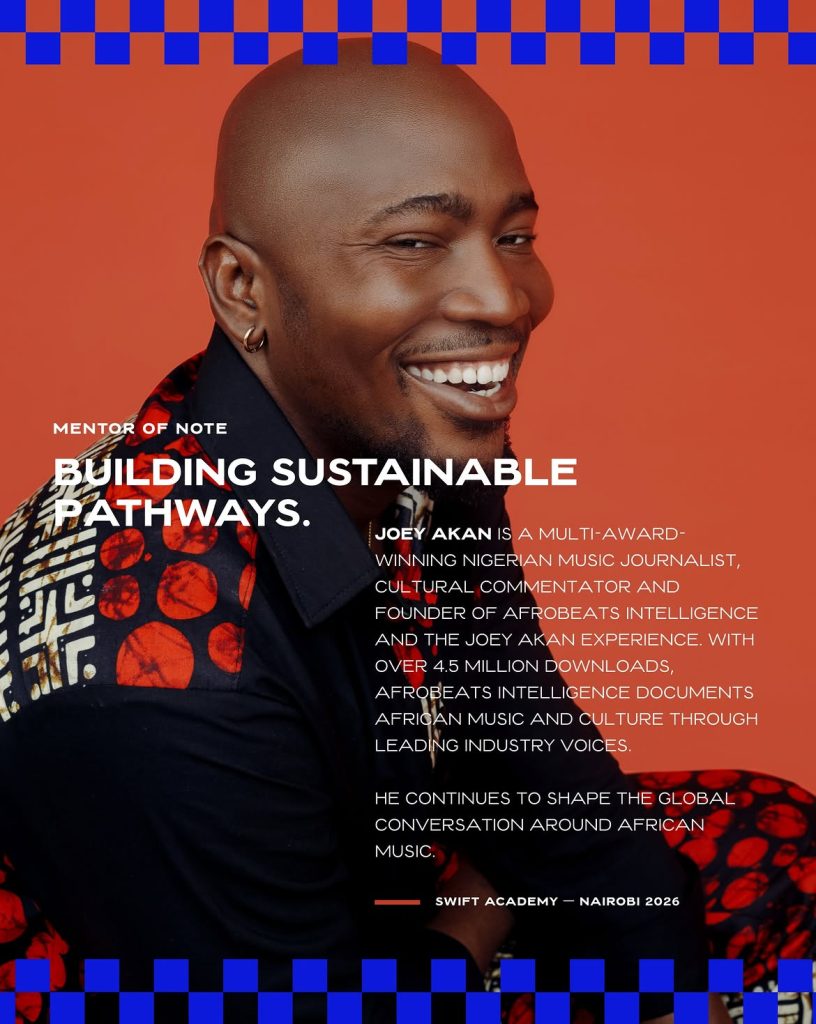
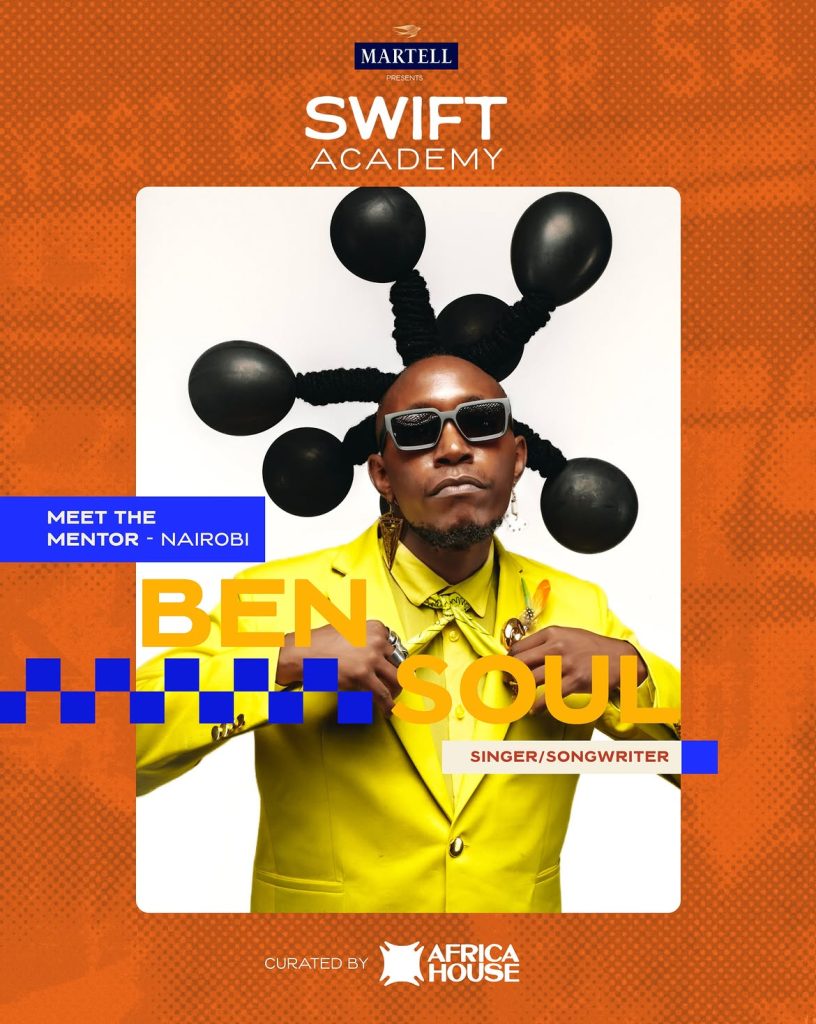
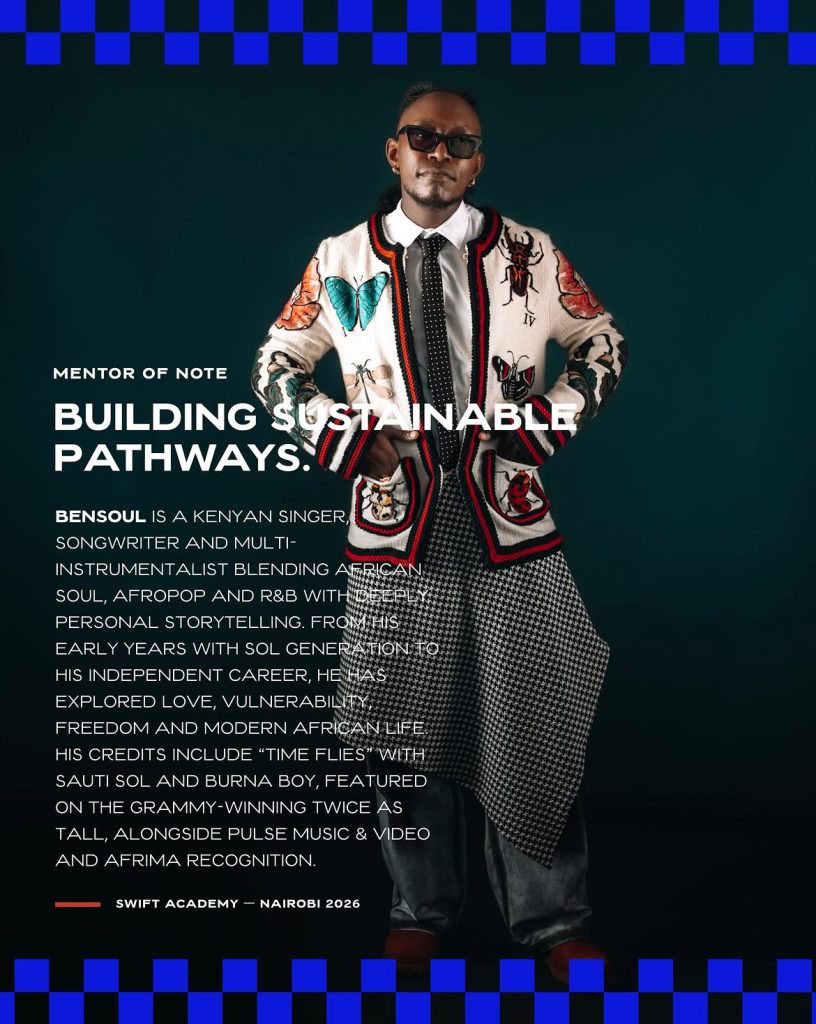
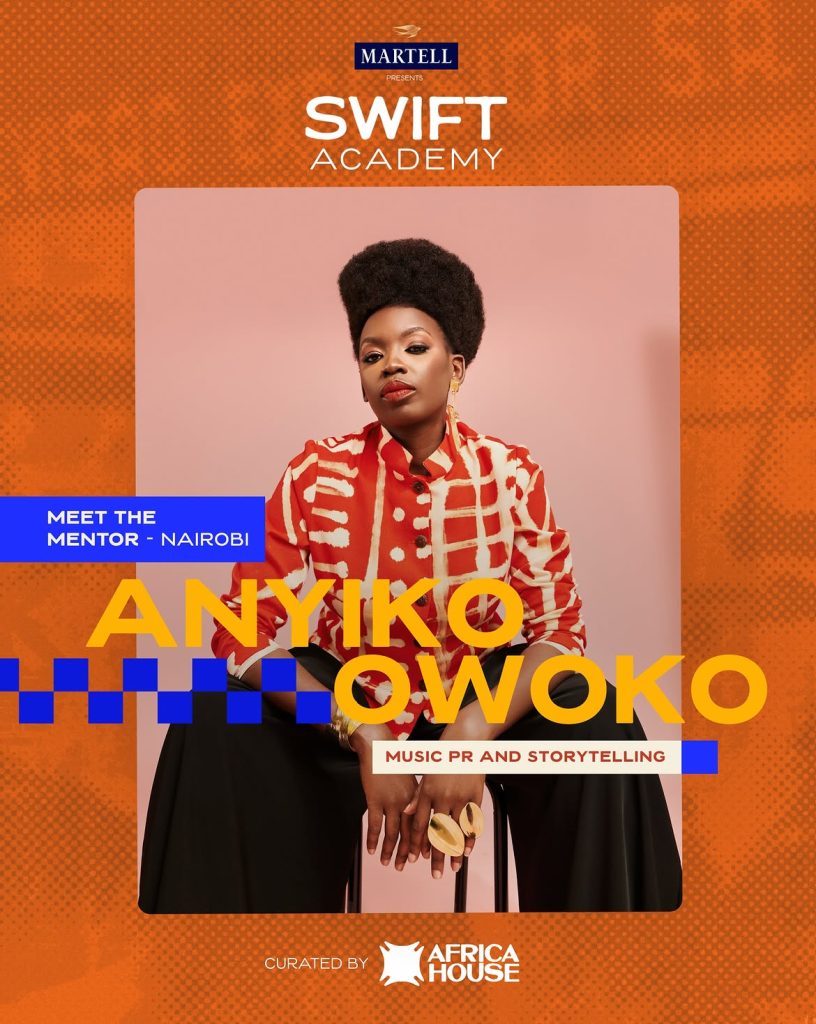
Its mentor network includes Kenyan singer-songwriter Bensoul, music and culture executive Monica Kemoli, publicist and curator Anyiko Owoko, artist and producer Njerae, and Nigerian music journalist and cultural commentator Joey Akan, among others.
That mixture matters.
If Africa’s music economy is going to become more sustainable, development cannot stop at discovering the next recording artist.

The people surrounding the artist have to develop too.
A stronger manager creates stronger careers.
A better journalist creates stronger cultural documentation.
A knowledgeable publicist creates stronger narratives.
A sophisticated creative director changes how African music presents itself visually.
Better business professionals help ensure cultural momentum becomes economic value.
Infrastructure is ultimately people before it becomes buildings.
From Sponsoring Culture to Strengthening It
Global alcohol brands have occupied African music spaces for years.
Concerts, nightlife, festivals, artist partnerships and branded experiences have made beverage companies some of the most visible corporate participants in contemporary African entertainment.
That relationship has created value.
It has also occasionally raised a more difficult question:
What remains after the event ends?
Swift Academy offers Martell an opportunity to answer that question differently.

The company says the programme emerged partly from recognising a gap between the growth of African music and the professional ecosystem supporting it. The wider initiative aims to support 100 emerging creatives during its first year as it moves through African markets.
That represents a potentially meaningful shift in the relationship between global brands and African culture.
Sponsorship primarily asks: What cultural moment can the brand participate in?
Infrastructure investment asks: What can exist tomorrow because the brand participated today?
The distinction matters, a stage disappears, a campaign ends, a billboard comes down – but knowledge, professional relationships, equipment, capital, access and functioning creative networks can continue producing value long after the branding has left the room.
The Real Test Comes Later
That does not mean Swift Academy should be celebrated without scrutiny simply because its intentions sound useful.
Its real value will become clearer after Nairobi’s inaugural cohort leaves the programme.
Do participants receive meaningful opportunities from the relationships formed?
Does mentorship continue?
Does the development grant materially advance projects?
Do participants collaborate with one another?
Does access extend beyond the Academy?
Can careers be traced forward because something tangible happened inside the programme?


And when Swift Academy reaches Accra, Johannesburg and Lagos, will those cohorts eventually connect into a functioning Pan-African professional network?
Those are more interesting measurements than impressions or social-media visibility.
Because if the initiative works, its greatest product may not be its final showcase.
It may be the network created between the people who entered it.
Nairobi as Creative Infrastructure
There is also a larger Nairobi story developing here.
Music Custodian has increasingly encountered projects positioning the city not simply as somewhere music is made, but somewhere African creative infrastructure can be built.
Studios are becoming research spaces.
Music communities are becoming professional networks.
International companies are forming local partnerships.
Artists are collaborating across borders.
Creative professionals are building institutions around the culture rather than waiting for institutions elsewhere to validate it.
Swift Academy joins that movement.
And Nairobi being its starting point deserves to be remembered if the programme eventually becomes a significant continental platform.
Not because Nairobi needs to become another Lagos.
Not because East Africa requires a single music capital.
But because Africa’s creative economy becomes stronger when more cities possess the infrastructure required to generate opportunity.
What Comes After Visibility?
African music’s global breakthrough has answered one important question.
The world is listening.
The next questions are harder.
Who owns the companies surrounding the music?
Who develops the next generation of executives?
Who documents the culture?
Who understands intellectual property?
Who builds sustainable touring infrastructure?
Who trains managers?
Who funds experimentation?
Who connects one African market to another?
Who creates opportunities for the thousands of people whose work makes an artist’s career possible?
And what role should multinational brands play in that ecosystem?
Swift Academy cannot answer all of those questions.
It does not need to.
But its Nairobi launch represents an interesting acknowledgement that the next phase of African music development cannot be built through celebrity visibility alone.
Culture needs infrastructure.
And infrastructure needs investment in people.


For the 25 creatives entering Swift Academy’s inaugural Nairobi cohort, the programme now has an opportunity to demonstrate what that investment can actually produce.
The launch is over.
What they build afterwards will be the more important story.