A week before the release of RNB, Bridget Blue walked into KODA Nairobi with a blank board – her album cover, unsigned, unmarked, and unfinished. By the end of the night, it was filled. Every person in the room had left something behind: a name, a message, a trace of presence. That version became the final artwork.
It is a simple gesture, but a telling one.
For an artist whose earlier work often leaned on observation and narrative distance, RNB marks a shift inward. Released on March 31, 2026 via ONErpm, the album doesn’t just present songs but also a point of view; one that is not imagined, not borrowed, but lived.
“For so long I avoided writing from my perspective,” – she notes
“This time round I just wanted to say what I like.”
The title itself carries that intention. RNB, short for “Rhythm and Blue,” functions both as genre reference and personal declaration – R&B as she interprets it, shaped by her experiences, her timing, her voice.

Bridget Blue’s trajectory has been gradual, but deliberate. From posting covers in her teenage years to securing a record deal shortly after high school, her career has unfolded in public, piece by piece. Her debut album Colours (2022) positioned her as a capable storyteller, earning multiple nominations at the All Africa Music Awards. Since then, her catalogue has expanded through collaborations and features, each release adding dimension rather than distraction.
With RNB, that evolution becomes more defined.
The album arrives after a measured buildup. Between late 2024 and early 2026, she released singles including “I Choose You” with Bien, “Mbuzi,” and “Ni Wewe.” These records hinted at a sonic direction, but the full project clarifies it – warm, unhurried, and emotionally anchored.
Across its 12 tracks, RNB moves through themes of identity, vulnerability, and self-definition. It opens with “Ngozi Kama Jua,” a meditation on self-worth and Black beauty, grounding the project in introspection before extending outward. Songs like “Sober” and “Set Me Free” explore emotional and economic realities with a quiet honesty – the tension between composure and internal strain, a familiar duality within many urban African experiences.
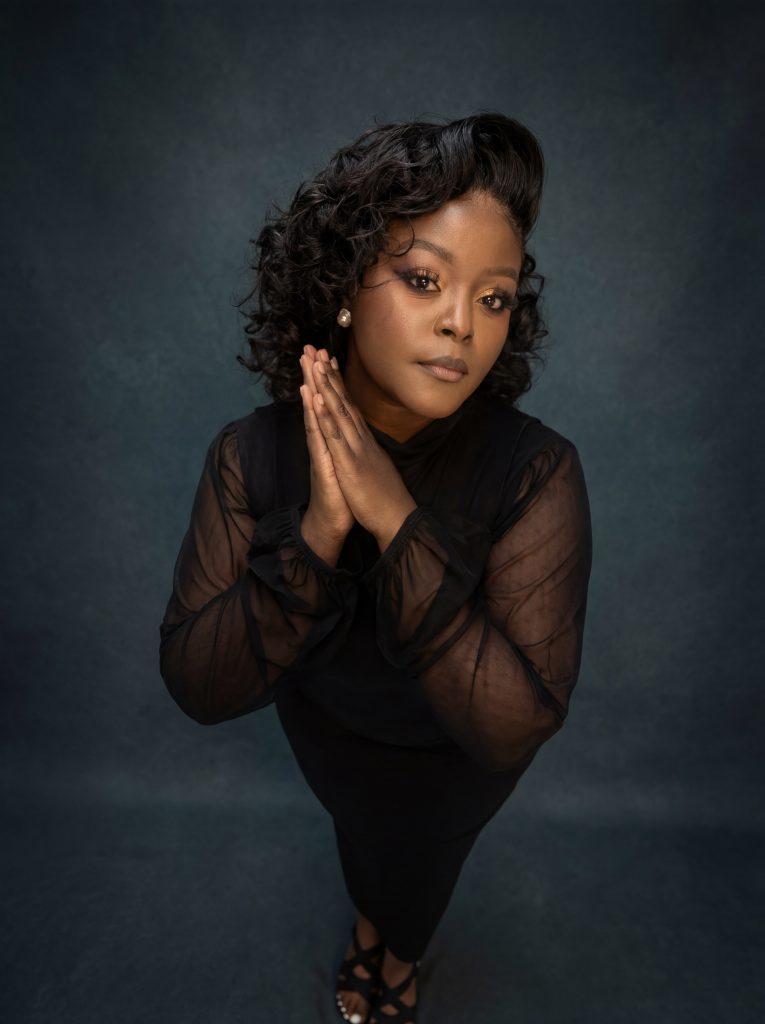
The project’s focus track, “9 to 5,” sits at the centre of its messaging. It resists limitation – socially, creatively, economically. The song speaks to a generation negotiating ambition in environments that often demand restraint.
Elsewhere, “Mimi na Wewe,” featuring Nikita Kering’, has emerged as an early standout. Framed around female friendship rather than romance, the record reframes intimacy as something enduring, communal, and foundational. The phrase “mimi na wewe milele” – “me and you forever” – extends beyond sentiment into statement.
Early streaming data reflects this resonance, with the track leading engagement across platforms in the project’s first week.
Beyond the individual songs, RNB exists within a broader moment.
Kenyan R&B has been steadily reclaiming space – not as an imported genre, but as a localized, evolving form. Artists like Njerae, Bien, and Nikita Kering’ have contributed to this shift, expanding both sound and audience. Bridget Blue belongs to this movement, but more importantly, she has been part of its construction.
What distinguishes RNB is not scale, but presence.
There is a difference between making music that fits and making music that reflects. Here, Bridget Blue leans into the latter. The writing is more direct. The voice is more centred. The perspective is less concerned with interpretation and more committed to articulation.
The blank board she carried into that room in Nairobi is no longer blank.
And neither, it seems, is the story she is choosing to tell.
Our Nairobi Grooves playlist below explores a musical journey that celebrates unity, culture, and the electrifying pulse of the African continent; featuring the vibrant and eclectic sounds of Nairobi, and the best of East Africa.