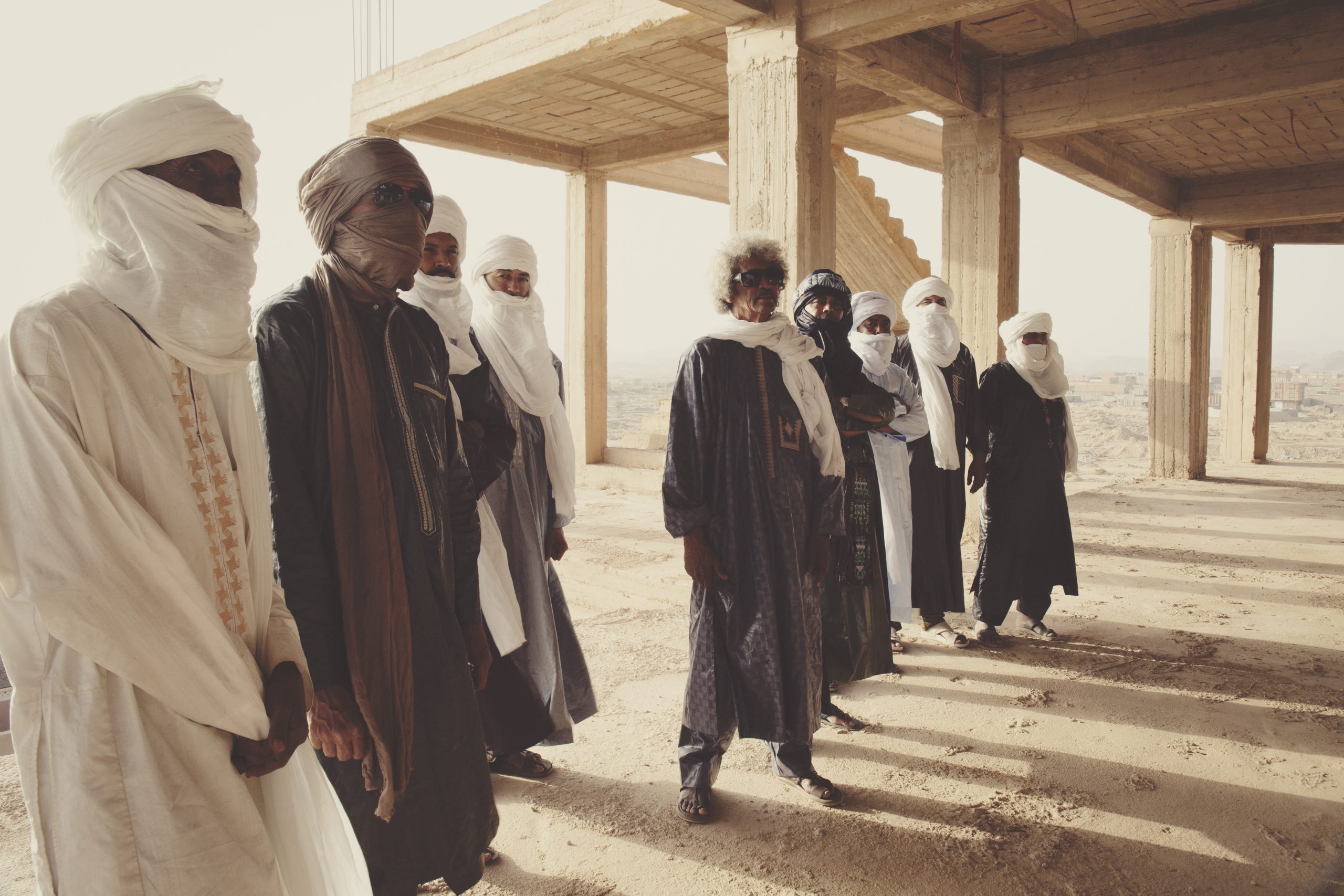
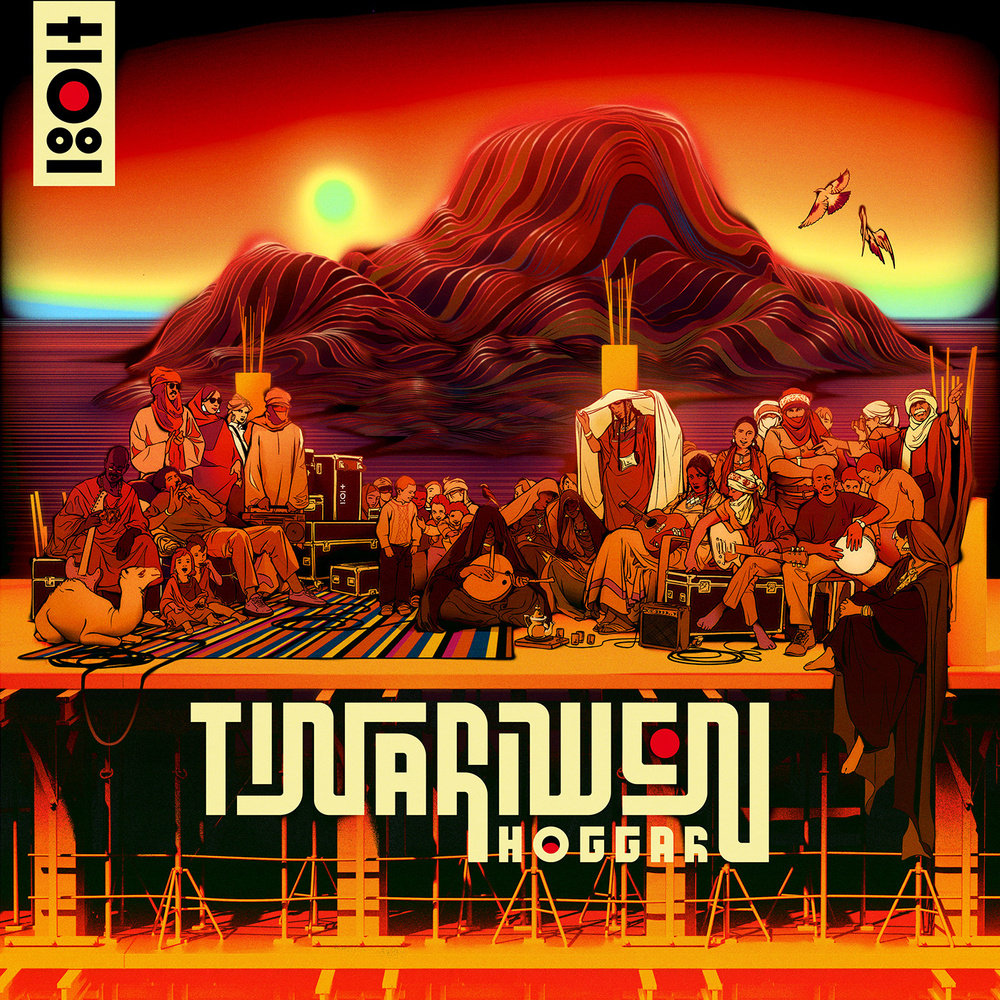
More than 45 years into their journey, Tinariwen are not slowing down – they are circling back. With the announcement of Hoggar, their tenth studio album set for release on March 13 via their own imprint, Wedge, the Tuareg pioneers reaffirm what has always set them apart: music not as industry product, but as cultural testimony.
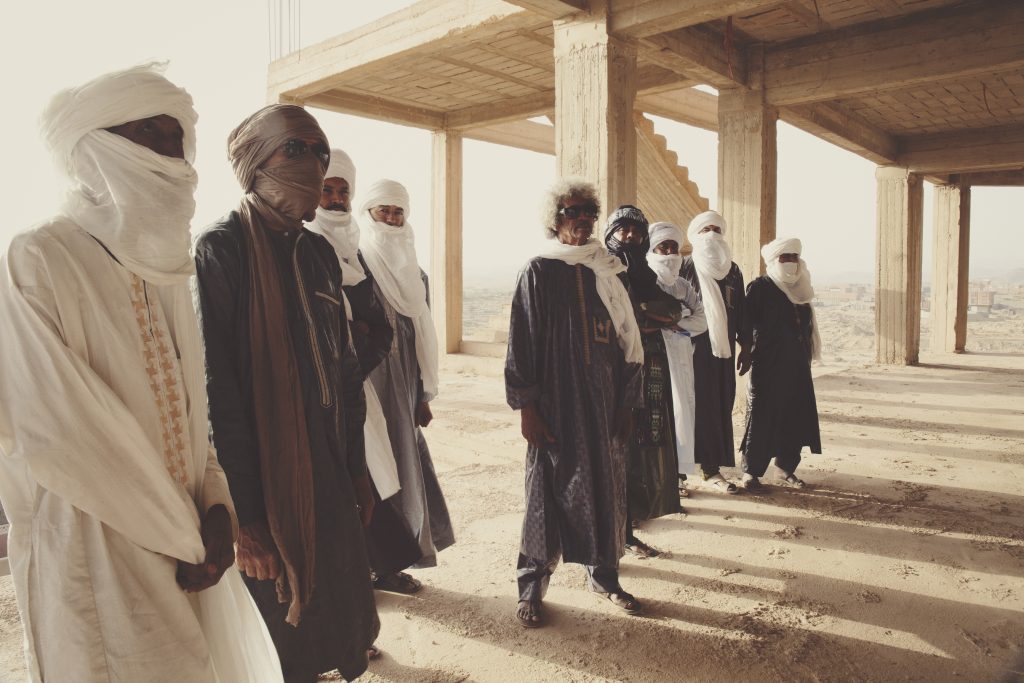
Formed in the desert borderlands between Mali and Algeria, Tinariwen have long served as sonic chroniclers of Tuareg life – exile, resistance, longing, and survival encoded into blues-inflected guitar lines and communal chants sung in Tamasheq.
While the global music world has spent the last two decades celebrating their influence, Hoggar feels deliberately inward-facing. It is a return to origins: acoustic guitars, campfire harmonies, and the collective spirit that defined the band’s earliest years before international acclaim arrived.
Named after the Hoggar mountains – a symbolic homeland for displaced Tuareg people – the album stands as both geography and philosophy. These mountains rise defiantly from the Sahara, visible for miles, much like Tinariwen’s music has continued to assert presence despite political unrest, displacement, and loss. In that sense, Hoggar is not simply an album; it is a marker of continuity.
Recorded in Tamanrasset, southern Algeria, in a studio built by the next-generation Tuareg band Imarhan, the project bridges generations. Founding members Ibrahim Ag Alhabib, Abdallah Ag Alhousseyni, and Touhami Ag Alhassane wrote alongside younger artists such as Iyad Moussa Ben Abderrahmane, Hicham Bouhasse, and Haiballah Akhamouk, ensuring that Tinariwen’s legacy remains porous – open to renewal rather than sealed in reverence.
That spirit of transmission is especially evident on the album’s lead single, “Sagherat Assani,” featuring Sudanese singer and oud player Sulafa Elyas. The song’s journey – from Sudan to the Sahara, learned in Al Kufrah in 1989 and carried forward decades later – mirrors Tinariwen’s wider mission: songs as vessels that outlive borders, regimes, and time itself. Elyas’ voice also underscores the album’s commitment to honoring women’s presence in traditional Tuareg music, a space increasingly constrained by cultural and political restrictions.
Hoggar also marks several rare and poignant reunions. Ibrahim and Abdallah sing together for the first time in over 30 years, breaking long-held traditions within the group. Tinariwen also reunite with co-founder Liya ag Ablil (Diarra) after 25 years, while longtime admirer José González makes a guest appearance – not as a commercial feature, but as a listener stepping respectfully into a lineage.
Lyrically, the album confronts the present without abandoning hope.
Themes of political instability in northern Mali, cultural erosion, and communal resilience run throughout the record, balanced by the warmth of collective voices and intricate melodies.
Where earlier projects like Amatssou looked outward through collaborations with Western producers, Hoggar looks homeward – reaffirming Tinariwen’s role not just as musicians, but as custodians of memory.
As Tinariwen prepare for a global tour spanning Europe and beyond, Hoggar arrives as a reminder: African music did not begin with streaming, nor will it end with trends. Some sounds exist to bear witness, to anchor people to place, and to make room for future generations to speak.
In Hoggar, Tinariwen do exactly that – standing tall, like the mountains themselves.