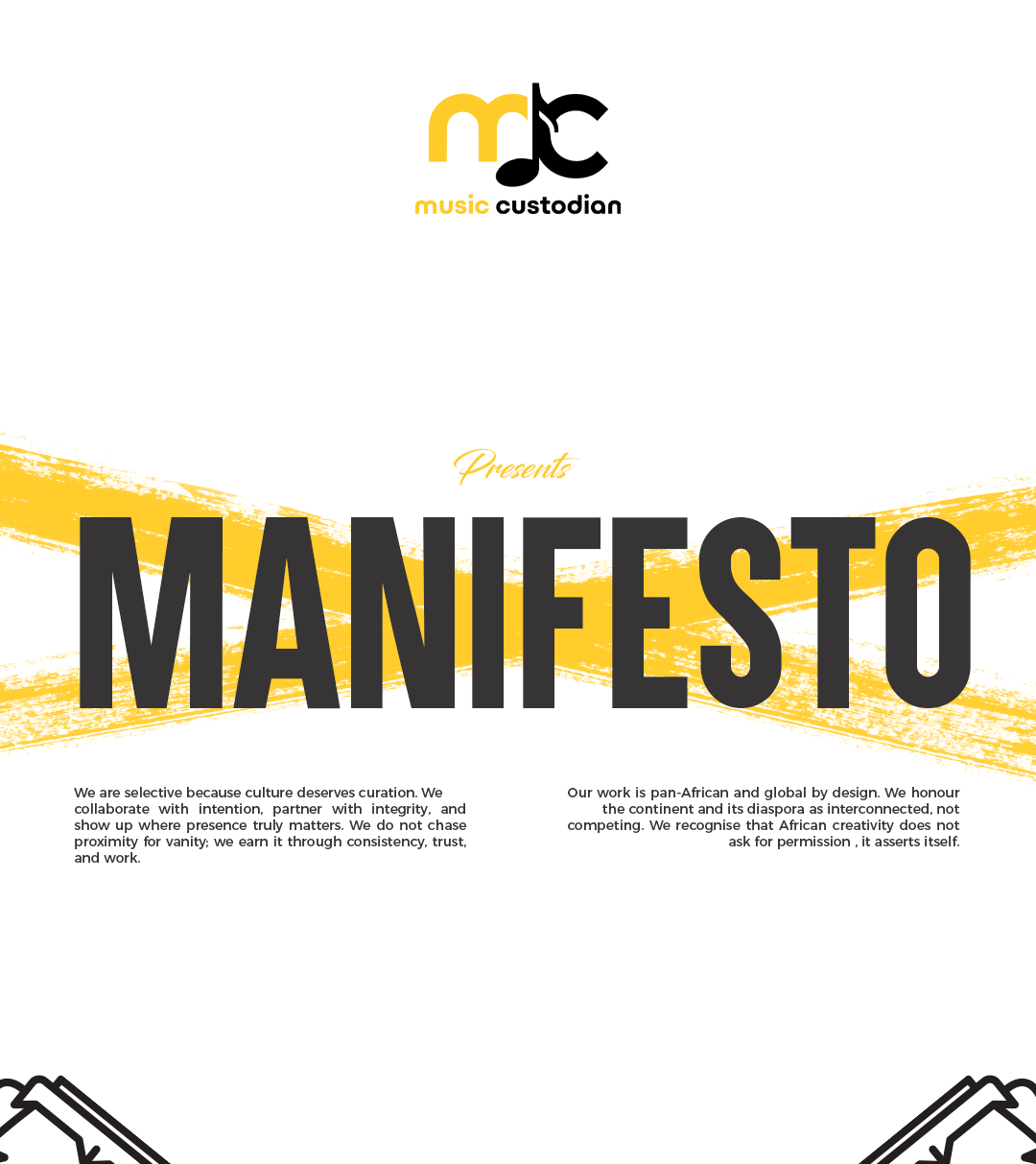
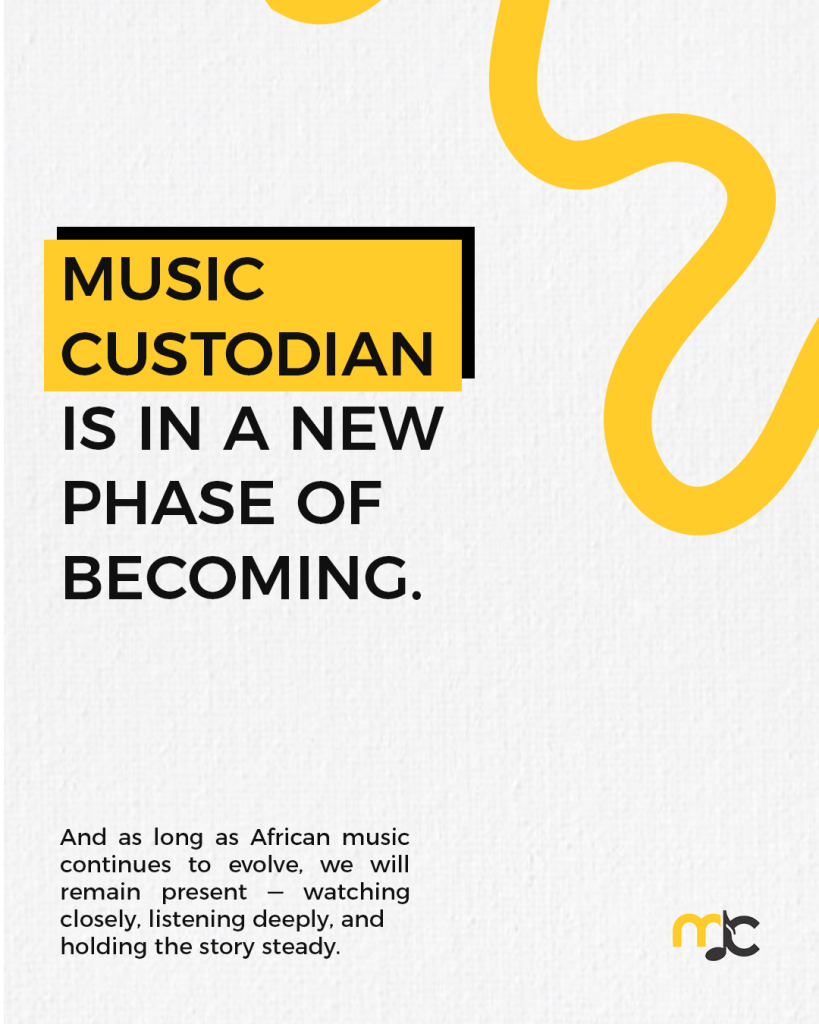
In an era where attention is fleeting and culture is often reduced to trends, Music Custodian exists as a living archive , we think of a space where African music is not just announced, but understood; not just amplified, but contextualized; not just celebrated, but protected.
From its earliest days as a bespoke communications consultancy, the work has always gone beyond deliverables. It has been about proximity to culture, discernment of quality, and a responsibility to document African creativity with care. Over time, this responsibility expanded. What began as strategy and storytelling evolved into a platform, then a practice, and now an institution-in-progress – one that sits between the artists, the industry, and the future.
A living archive does not freeze culture in time. It moves with it.
Music Custodian pays attention to the rhythms beneath the noise: the quiet build-ups, the overlooked contributors, the long arcs of influence that don’t always announce themselves loudly. It recognises that African music is not a monolith, nor is it a moment ; it is an ecosystem shaped by geography, memory, struggle, innovation, and joy.
This is why our work resists haste.
We document legends with the same care we give to emerging voices. We treat scenes, sounds, and stories as interconnected – because culture is not created in isolation. Every editorial decision, every partnership, every presence at a festival or listening session is guided by a single question: does this add to the record, or merely to the noise?
Music Custodian is not neutral. It is deliberate.
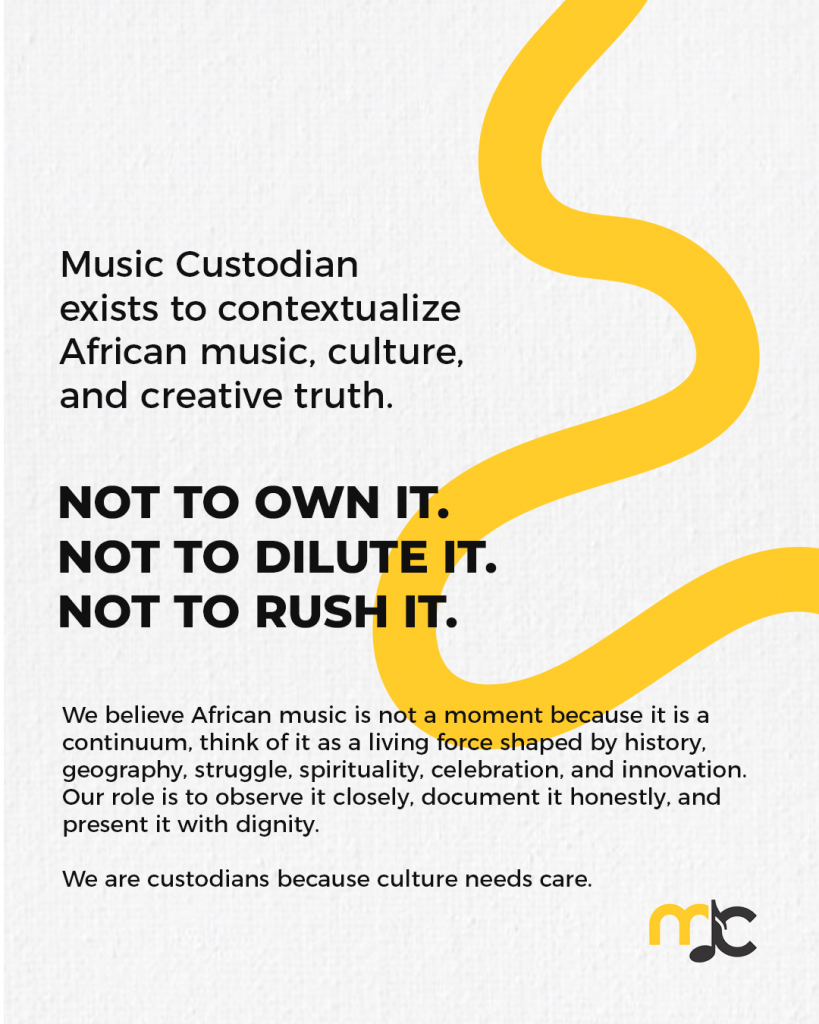
It believes that African music deserves guardianship ; not ownership, not exploitation, not dilution. Guardianship means holding space, setting standards, and thinking in decades, not cycles. It means understanding that what we choose to platform today shapes what is remembered tomorrow.
As a living archive, Music Custodian is shaped by those who contribute to it — writers, strategists, creatives, artists, partners, and audiences across the continent and the diaspora. Some stay for seasons. Some stay for chapters. All leave fingerprints on the work.
The archive grows not because it accumulates content, but because it accumulates truth.
And as African music continues to expand its global presence, Music Custodian remains committed to doing the slower, deeper work: preserving context, elevating craft, and ensuring that when the world listens, it hears Africa clearly in its fullness, complexity, and brilliance.
This is not about being first.
It is about being faithful to the culture long after the moment has passed.